Jonathan Taylor - Meyer-Hofmann AG
Здесь есть возможность читать онлайн «Jonathan Taylor - Meyer-Hofmann AG» весь текст электронной книги совершенно бесплатно (целиком полную версию без сокращений). В некоторых случаях можно слушать аудио, скачать через торрент в формате fb2 и присутствует краткое содержание. Год выпуска: 2016, ISBN: 2016, Издательство: Smashwords, Жанр: Триллер, Детективная фантастика, на английском языке. Описание произведения, (предисловие) а так же отзывы посетителей доступны на портале библиотеки ЛибКат.
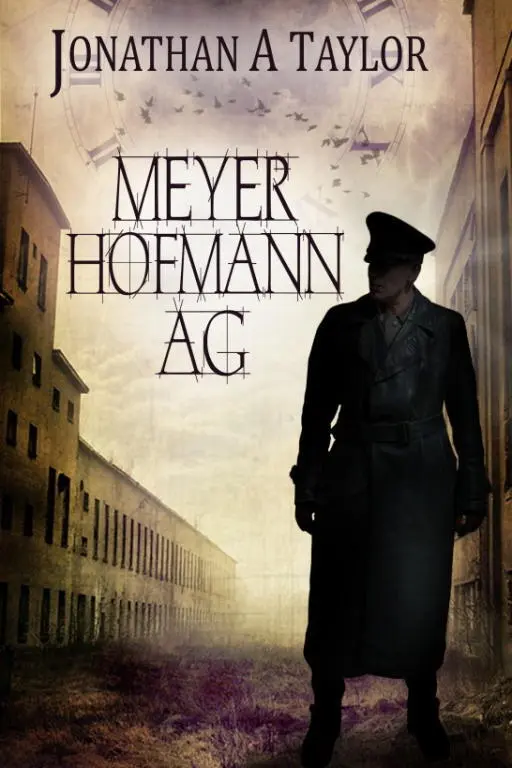
- Название:Meyer-Hofmann AG
- Автор:
- Издательство:Smashwords
- Жанр:
- Год:2016
- ISBN:978-1-370-07282-8
- Рейтинг книги:3 / 5. Голосов: 1
-
Избранное:Добавить в избранное
- Отзывы:
-
Ваша оценка:
Meyer-Hofmann AG: краткое содержание, описание и аннотация
Предлагаем к чтению аннотацию, описание, краткое содержание или предисловие (зависит от того, что написал сам автор книги «Meyer-Hofmann AG»). Если вы не нашли необходимую информацию о книге — напишите в комментариях, мы постараемся отыскать её.
Meyer-Hofmann AG — читать онлайн бесплатно полную книгу (весь текст) целиком
Ниже представлен текст книги, разбитый по страницам. Система сохранения места последней прочитанной страницы, позволяет с удобством читать онлайн бесплатно книгу «Meyer-Hofmann AG», без необходимости каждый раз заново искать на чём Вы остановились. Поставьте закладку, и сможете в любой момент перейти на страницу, на которой закончили чтение.
Интервал:
Закладка:
The left side of the screen didn’t hold any more encouraging news for those watching. The advance team in Iran had dug a small bunker on the top of a hill, two miles from the reactor at Bushehr. They too were being massacred, but this time, by a barrage of mortar shells. Men could be seen scrambling for non-existent cover as shells landed all around them. Their webcams shook as the munitions detonated in the stony desert ground, sending huge plumes of dust, rocks, and soldiers into the hot desert air. Switching to a mounted camera, the room watched the distant horizon as the shapes of men and heavy machinery made their way towards the site. Tanks and armoured vehicles flanked by open-topped trucks filled with troops appeared. As, one by one, the cameras went black, the control room was left stunned.
“What has happened?” Bremen broke the silence.
“We have been betrayed! It is not possible. How, who? Where is Von Klitzing?”
“There is no answer on his mobile, sir, and the airline cannot confirm that he is on the flight from Tel Aviv,” one of the operators shouted up from his control panel, whilst pulling the big headphones from his head.
The room was now loud with conjecture. Opinions and prognoses were being swapped between the puzzled men at their stations. On top of the confusion came the shrill scream of the base alarm.
Looking back at the screens, only the stock markets were calm. Normally so keen to pass on bad news, they remained unchanged, the shares’ downward spiral showing no sign of abating. The right-hand screen was now only a static storm of broken connections, whilst the centre screen showed pictures of blood and destruction. By this time, the camps in Syria, Lebanon, and Egypt had erupted into battles between the clones and their hosts. The Arab soldiers turned on their guests with Kalashnikovs and Simonov self-loading carbines. Vastly outnumbered, the clone soldiers and their mercenary support was no match for the Arabs, and they too met their deaths.
“Sir, there are reports of an attack at the south boundary,” another operator shouted up to the gallery.
“What? An attack by whom?” The man looked down, listening intensely into his headset that he pressed hard against his right ear.
“Military, sir, Austrian Military. They have breached the boundary and are attacking the main building.”
On the fields of Ellmau, soldiers raced across the open land towards the small white concrete building that housed the entrance to the Meyer-Hofmann control centre. The small red-and-white circular insignia of the Austrian armed forces on the arm of their uniforms.
Back in the control room, Bremen made up his mind and, drawing his weapon, he left the control room just as the dull thud of an explosion could be heard above them. Moving quickly down the small corridors of the complex, He was joined by a small team of four second-generation clones, who took up position in front and behind him. Leaving the main corridor via white steel doors halfway down the bare hallway, they entered service tunnels that ran for over a mile down to the main road to Kitzbühel. There was always a contingency plan, and escape tunnels built into all Meyer-Hofmann buildings. As the doors clanged shut behind them, two of the guards pounded the door’s handles with the butts of their rifles, sealing them tight. Machine gun fire could now be heard in the complex, and it was clear that there was not much time.
“Come on, get a move on!” Bremen barked.
The march down the dark, damp halls took a little under seven minutes. Bremen reached the steps to his escape out of breath and fighting for air. They could hear the distant echo of the steel doors behind them being pummelled by the chasing troops. A flight of stairs was now the only thing between them and freedom. It led to more steel doors, but this time, they were directly above their heads. The clone guards nodded to one another and put their backs into the doors, pushing them up and to the side, leaving a clear exit to the fields above them.
The sun was blinding, and as the men emerged in the light of day, the clones took cover, pulling Bremen to the ground with them. Three cars had taken up position on the road just a hundred metres to the right. Waiting for the group, their drivers were standing beside the vehicles, each accompanied by a clone soldier. Both the drivers and the clones held their hands above their heads. Two Apache helicopters hovered above them and behind the cars as a loudspeaker boomed out orders.
“Put your weapons on the ground and your hands above your heads!”
There was no use in fighting. Bremen immediately complied, returning to his feet, hands above his head. The clones adopted another policy, opening fire on the helicopters, their colleagues and drivers immediately following suit. As the last two clones escaped the confines of the base, they put their submissive commander to the ground with a rugby tackle. The Apaches backed up, dodging the hail of bullets from the clones’ semi-automatic weapons before opening fire themselves. The M230 chain gun mounted under the helicopter’s nose sprayed the field with 625 rounds of thirty-millimetre ammunition per minute. Bursting through the waiting cars and then churning the soft turf and grass of the field, the steady stream of death worked its unerring path in the direction of the small group of men.
“You idiots!” Bremen screamed, spinning around and trying to get back to the exit of the base.
Five bullets hit him almost simultaneously, lifting him off his feet like a puppet, before dumping him down the waiting stairwell. He landed at the foot of the stairs, nearly colliding with the Austrian troops who had arrived at the base’s exit. Dead eyes stared up at them, a body twisted and broken at their feet. In the field, the clones had fared no better, having been hit by a hail of fire with no chance of escape. The certainty of their demise left them without choices, and they found themselves waiting for the impact of the bullets. They watched as the ground in front of them heaved and spat dirt into the air. That spectacle and the drumming in their ears as the bullets battered the soil could hardly prepare them for the force that would hit, and they were not to be disappointed by the violence of their deaths. Knocked onto their backs in the grass, they watched each other’s bodies dance to the music of the machine guns. Small fountains of blood and flesh sprayed into the air blocking their view. The white puffy Austrian clouds slowly rolled across the light blue sky, as they submitted to their fate. The rumble and crack of weapons fire ceased, and quiet fell on the meadow. A single Admiral butterfly fluttered past one clone’s face, hovering as if to assess his injuries before disappearing from view as his heavy chest rose and fell for the last time.
46
Günther Müller had found the same files on an SD card in one of Britt Peterson’s Nikon cameras as had been found on the Swarovski USB stick.
Britt was a very clever lady, he thought as he scrolled through the card’s contents on his computer screen. Without her, the world would have been in a real mess right now.
It read like something from a science fiction movie. Britt had put together a comprehensive piece of work. Starting with a detailed history of Meyer-Hofmann’s creation at the end of the second world war. The file had been put together chronologically, starting with Professor Furtner’s original notes and a description of the ‘resurrection process’. Then came a list of the young women from the insemination program, accompanied by medical records and Furtner’s scribbled notes next to each mother’s name. That had all taken place at an Army Hospital close to Nuremberg in Southern Germany, and it was there that the children came into the world. The first two years of their lives had been catalogued in detail. Blood types, hair colour, physical markings, and even a rudimentary DNA test had been run on the children. Furtner had even attempted to describe how the children may look in five, ten, and fifteen years. The foster families were spread around the world and rarely in allied countries. From South America to Asia, it must have been a massive logistical problem at a time of war. Even more amazing was the network of safe houses, sleepers, and spies they had used to move the children.
Читать дальшеИнтервал:
Закладка:
Похожие книги на «Meyer-Hofmann AG»
Представляем Вашему вниманию похожие книги на «Meyer-Hofmann AG» списком для выбора. Мы отобрали схожую по названию и смыслу литературу в надежде предоставить читателям больше вариантов отыскать новые, интересные, ещё непрочитанные произведения.










Обсуждение, отзывы о книге «Meyer-Hofmann AG» и просто собственные мнения читателей. Оставьте ваши комментарии, напишите, что Вы думаете о произведении, его смысле или главных героях. Укажите что конкретно понравилось, а что нет, и почему Вы так считаете.