Jonathan Taylor - Meyer-Hofmann AG
Здесь есть возможность читать онлайн «Jonathan Taylor - Meyer-Hofmann AG» весь текст электронной книги совершенно бесплатно (целиком полную версию без сокращений). В некоторых случаях можно слушать аудио, скачать через торрент в формате fb2 и присутствует краткое содержание. Год выпуска: 2016, ISBN: 2016, Издательство: Smashwords, Жанр: Триллер, Детективная фантастика, на английском языке. Описание произведения, (предисловие) а так же отзывы посетителей доступны на портале библиотеки ЛибКат.
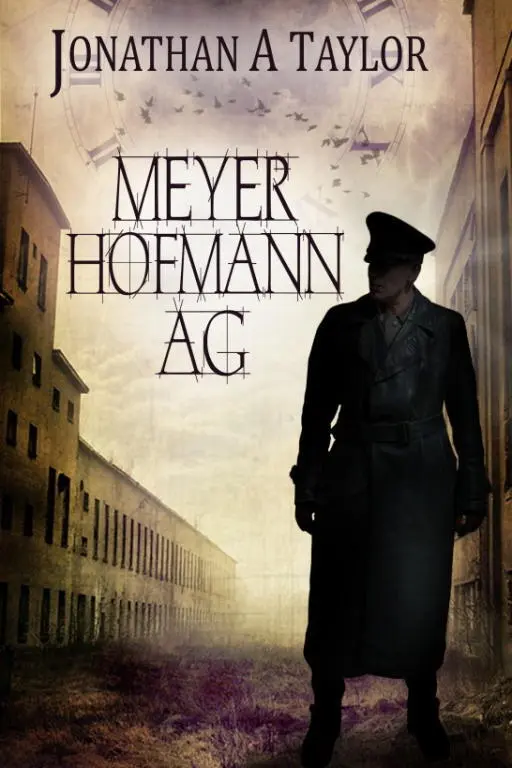
- Название:Meyer-Hofmann AG
- Автор:
- Издательство:Smashwords
- Жанр:
- Год:2016
- ISBN:978-1-370-07282-8
- Рейтинг книги:3 / 5. Голосов: 1
-
Избранное:Добавить в избранное
- Отзывы:
-
Ваша оценка:
Meyer-Hofmann AG: краткое содержание, описание и аннотация
Предлагаем к чтению аннотацию, описание, краткое содержание или предисловие (зависит от того, что написал сам автор книги «Meyer-Hofmann AG»). Если вы не нашли необходимую информацию о книге — напишите в комментариях, мы постараемся отыскать её.
Meyer-Hofmann AG — читать онлайн бесплатно полную книгу (весь текст) целиком
Ниже представлен текст книги, разбитый по страницам. Система сохранения места последней прочитанной страницы, позволяет с удобством читать онлайн бесплатно книгу «Meyer-Hofmann AG», без необходимости каждый раз заново искать на чём Вы остановились. Поставьте закладку, и сможете в любой момент перейти на страницу, на которой закончили чтение.
Интервал:
Закладка:
NO! His silent scream ejected them from the room.
Michael wrestled with his thoughts, trying desperately to make sense in them.
Who was this man?
It was Hofmann’s turn to look into the eyes of strangers. The couple in front of him stood in their eighties lounge; its patterned turquoise carpet and matching three-piece suite was alien to him. These were Michael’s first foster parents, and Hofmann felt himself taking a back seat as Jarvis’s life took its place in their combined consciousness. Michael had hated these people, but for no good reason. Seeing the welcome on their faces now filled him with guilt.
My God, the Greens. Why am I seeing this? Michael watched the scene, spellbound.
Mrs Green was on her knees, trying to console the child sandwiched between the strangers in front of him and the others holding his hands. Michael felt the child’s desperation and need to find an escape, unable to accept the warmth being offered to him. But he remembered her quilted skirts and purple cardigan. The smell of lavender, which filled the house and permeated her clothing. Mr Green was there too, wearing his thick eyeglasses, which made his eyes look disproportionate to his head. They were good people, and Michael had lived with them for the best part of a year.
Turning away from the scene, they found themselves on the steps of Leeds University, watching a young woman float past them. The huge sandstone building and clock tower were a blur, as that vision of loveliness blew through. It was love at first sight, a concept that had been alien to Michael until that moment. Love, a word he had read in books and seen in the faces of friends but never felt himself. The girl was disappearing into a crowd of commuters, and Michael felt that pang of loss, just before the men awoke.
Both staring at the same cold white ceiling, they remained perfectly aware of each other’s presence and were unable to decide what to do. Michael desperately tried to understand what was happening to him; Hofmann, all too aware of the process taking place. For a moment, neither man could separate himself from the other. Then Hofmann felt a bolt of fear course through him, as he watched his right hand grip his injured left arm, squeezing him into unconsciousness.
Lying very still, scared that a wrong movement or thought may rob him of control, Michael held the wound tightly. For some reason, he was sure that as long as he could feel the pain, he could hold supremacy. Although he did not really understand what had happened to him, he was at even more of a loss as to what he could do about it.
Michael remembered Hofmann’s life as vividly as if it were his own. Trying to relax as much as he could, he reran the different scenes through his mind again.
The man had been a confidant of Hitler, an industrialist during the last war. He believed he and his colleagues could be reborn through their children, and getting that poor girl pregnant was all part of their plan. Filled with panic, he delved deeper into the memories, searching for a lifeline. Watching the scenes play out, he was able to remember the man’s thoughts and feelings. His name was Hofmann. Heinz Hofmann.
Hofmann’s childhood hopes and dreams were not unlike those of any child during his school years. From dreams of becoming a professional footballer to marrying his first love. An apprenticeship in his father’s company had proved to be the turning point. The man had led a normal life until then. The company had been his passion—it manufactured parts for the car industry, and his father had built it up from scratch. In the mid-1920s, however, the company experienced its first loss. As the great depression took hold and demand dropped across the world, profit margins suffered. On top of that, the company faced new and intense competition from local competitors. Jewish-owned companies were undercutting them and became the focus of Hofmann’s outrage. By forming cooperatives, Jewish suppliers had made themselves more cost-efficient than his father’s company. Hofmann had watched his father tear himself apart trying to save the business. Resisting the urgings of his son to make redundancies to streamline the company and make it more competitive, he had waited until the company stood on the brink of bankruptcy before taking his own life instead. Hofmann, forced to take the reins from his father, went about it with a zeal that bordered on the maniacal. He halved the workforce, undercut the competition, and started to source his raw materials from less reputable suppliers. When the bank manager informed him that they were about to foreclose, he broke two of the man’s fingers, before threatening the life of the banker’s only child. By the end of the month, there had been a series of fires at his competitor’s premises, which filled his order books and returned the company to solvency. His success had set the tone for the rest of his business life—he took what he wanted. After he met and went into a joint venture with the equally scruples-free Franz Meyer, their future was written. Misdemeanours turned into serious crimes, fibs into lies, false bookkeeping into corruption, and threats into murders. When the men’s attention was drawn to a young Adolf Hitler, they introduced their business methods into politics. Actively supporting Hitler was in both their interest and his. He was a young man with a future, in a land that was crying out for change. They were businessmen in need of political influence. Helping him to gain power served them both. Hitler’s party had already recognised him as a great orator, able to galvanise the voters’ support. Now, with financial backing, he became the obvious choice for party leader. The way had not been without its setbacks, but even after Hitler’s arrest after the “beer hall putsch” the businessmen’s support helped to get him released within nine months of a five-year sentence. Strangely, this setback had brought Hitler to the attention of the German people, and it was just a matter of time before the Nazi Party got itself elected. Hofmann and Meyer didn’t waste any time convincing Hitler to support the automotive industry—creating new jobs in their industry was what the country needed. After coming to power in the 1930s, the Nazi Party passed its Motorisierung policy, which saw the motor industry as a key to returning the German people to work and prosperity.
The more Michael remembered about the man’s past, the more his feelings swung towards a deep loathing. Michael had his own strong beliefs about life; not all were positive, but he had a strong moral compass. Hofmann had been a monster, and he could feel his corrosive history burning into his brain like non-ethical acid. Flooding him with knowledge and indoctrination that had no place in his mind or soul. Sweat poured from his forehead, yet he felt freezing cold, shaking with anxiety. By the time he managed to push the memories from his mind, he had reached an inescapable conclusion.
Hofmann was a relative and most probably my grandfather. It explains my childhood to some extent. There is no other explanation.
The nefarious nature of the man was poisoning him, and there seemed to be nothing he could do to stop it. He felt the absolute necessity to get out of the building. The concrete walls of the basement were oppressive, but the building had taken on a more iniquitous air, oozing the immorality of its proprietors. Struggling from the bed, he took a brief look in the mirror before picking up his wallet and watch from the bedside table. Unsure of exactly what to do or where to go, he determined that confidence was the best policy and strode through the corridors in the direction of the lift to the club upstairs. A guard sat at a small table next to the lift door. He was a young man, but incredibly well built, and he watched Michael with suspicion. Hitting the elevator’s button, Michael did his best not to make eye contact.
Читать дальшеИнтервал:
Закладка:
Похожие книги на «Meyer-Hofmann AG»
Представляем Вашему вниманию похожие книги на «Meyer-Hofmann AG» списком для выбора. Мы отобрали схожую по названию и смыслу литературу в надежде предоставить читателям больше вариантов отыскать новые, интересные, ещё непрочитанные произведения.









Обсуждение, отзывы о книге «Meyer-Hofmann AG» и просто собственные мнения читателей. Оставьте ваши комментарии, напишите, что Вы думаете о произведении, его смысле или главных героях. Укажите что конкретно понравилось, а что нет, и почему Вы так считаете.