Эбби Луби - Nuclear Romance
Здесь есть возможность читать онлайн «Эбби Луби - Nuclear Romance» весь текст электронной книги совершенно бесплатно (целиком полную версию без сокращений). В некоторых случаях можно слушать аудио, скачать через торрент в формате fb2 и присутствует краткое содержание. Город: Westport, Год выпуска: 2011, ISBN: 2011, Издательство: Armory New Media, Жанр: Триллер, на английском языке. Описание произведения, (предисловие) а так же отзывы посетителей доступны на портале библиотеки ЛибКат.
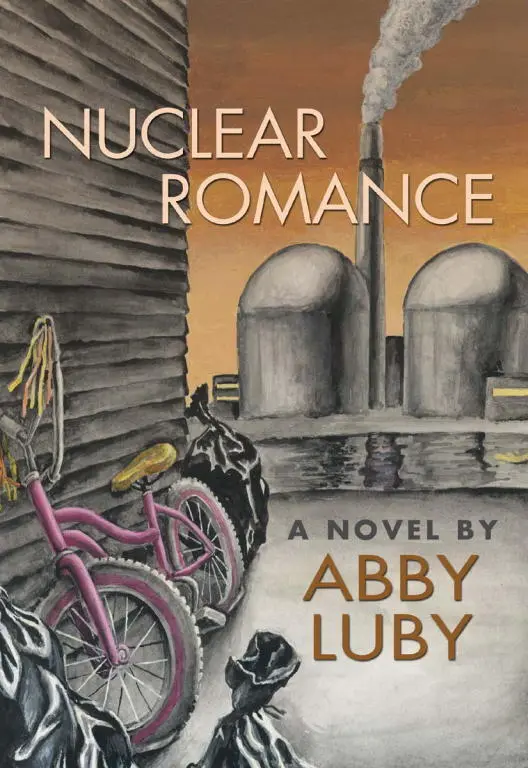
- Название:Nuclear Romance
- Автор:
- Издательство:Armory New Media
- Жанр:
- Год:2011
- Город:Westport
- ISBN:978-1-935073-16-1
- Рейтинг книги:3 / 5. Голосов: 1
-
Избранное:Добавить в избранное
- Отзывы:
-
Ваша оценка:
Nuclear Romance: краткое содержание, описание и аннотация
Предлагаем к чтению аннотацию, описание, краткое содержание или предисловие (зависит от того, что написал сам автор книги «Nuclear Romance»). Если вы не нашли необходимую информацию о книге — напишите в комментариях, мы постараемся отыскать её.
A young woman reporter falls prey to a callous plant executive who is driven to keep the multi-billion dollar nuclear company viable. A clandestine love affair develops against the backdrop of growing anti-nuclear sentiment which escalates after highly radioactive steam escapes from the plant, forcing a mass evacuation.
This novel grips readers’ imaginations with the tension and fear that surround many of today’s nuclear power plants, especially powerful in the aftermath of Japan’s recent and still unfolding nuclear disaster.
Nuclear Romance — читать онлайн бесплатно полную книгу (весь текст) целиком
Ниже представлен текст книги, разбитый по страницам. Система сохранения места последней прочитанной страницы, позволяет с удобством читать онлайн бесплатно книгу «Nuclear Romance», без необходимости каждый раз заново искать на чём Вы остановились. Поставьте закладку, и сможете в любой момент перейти на страницу, на которой закончили чтение.
Интервал:
Закладка:
“I don’t have to listen to this.” She started to reach for her bag, but he grabbed her arm.
“And one other thing. The best journalists have a strong sense of ethics. It separates the men from the boys, or in your case, the professionals from the sleazebags. Don’t be surprised if it gets harder to look yourself in the mirror.”
She yanked her arm away as he slapped a five-dollar bill on the table and stood up.
“Keep the change. You’re going to need it,” he said and left.
Chapter 41
Lou sat at his computer and re-read his story. It was dismal. He had run out of time. The encroaching deadline made Owen frantic. He barked into the phone while editing Aunt May’s yolk-less deviled egg recipe.
Lou slouched over to Owen’s door and was waved in.
“Where’s your story?”
“I need more time on this ALLPower lake story, Owen. I’m just not getting anything from anyone.”
“Everyone upchucking denials?”
“Pretty much. They’re saying Dolan’s story is bogus, that they’re not lakes, just layers of bedrock surrounded by water.”
“So why can’t we print that?”
“I can’t verify it with geologists or the NRC. It’s a weak story, Owen. Give me more time.”
“You gotta be kidding. You’ve had the whole day! Can’t you build on Dolan’s information? You’re the venerable journalist here, right?”
“Right. But I’m coming up with stuff I can’t substantiate. I even checked in with Dolan to see what she knew.”
“You what?”
Uh-oh . Lou knew it was a cardinal rule not to connect with reporters working for other papers considered the competition. But his story was so flimsy that meeting with Chrissy seemed like the only way to save the story. Owen didn’t need to know that it turned out to be a disaster.
“Yeah, well, she wasn’t too helpful.”
“You must’ve made her day, Lou. You—of all people—caving to desperation. You—Mr. Experienced Reporter, and she, a rookie. How embarrassing. You’re unbelievable. Get out of here.”
“What about the story, Owen?”
“Give me what you’ve got. I don’t care how you spin it, just get it to me.”
Lou returned to his desk and tried again to reach Bob.
“Let me guess,” the PR man gloated. “You want to report on the underground plumes, right? Well no one here is going to give you a quote. Sorry.”
“I already spoke to Lipsey. He gave me plenty and never said it was off the record.”
“Guess again. Everything he told you is positively off the record. It all has to be rubber-stamped by me. You print what he said, and it could be the last thing you write. Ever.”
Lou cringed. What a complete scumbag.
“Wait,” said Bob, remembering his mother’s disdain the last time Bob had “no comment.”
“I’ll give you a quote, Lou. ‘There are no lakes.’ That’s your story. That’s all we’re saying—on the record.”
“Lipsey stays in. You can’t control what I write, that’s also on the record,” Lou seethed.
“You’re right. But my quote is all you have, and if I were you, I’d take it. Seems to me you have very little choice.”
“What?”
“We’re in pretty good with your publisher. We’ve taken out enough advertising to bankroll your paper for a year. Not to mention that little item about you and your girlfriend. That should zero out your credibility if certain folks find out.”
Lou took a slow breath and imagined exhaling blackened air through the phone and shooting directly into Bob’s lungs. It was a trick Diana had showed him to expunge negative emotions from his body. He laughed at her then, but it was coming in handy now.
Chapter 42
Lou’s hard-hitting style was considerably watered down. He fell short on new factual information and vaguely referenced Chrissy’s story, which angered Owen, but he didn’t edit it out. Other information was pulled from older stories for fill.
The story was on the bottom of the third page, and when Bob picked up the paper at his mother’s doorstep the next morning, he smiled. He shot the paper to Stella.
“This is more like it. Padera finally got something right.”
He slipped away to get dressed, and she started reading the story.
“Reports of large radioactive lakes were unfounded,” the lead sentence started. Lou quoted a few NRC inspectors. The kicker line was Bob’s straight denial.
“What the hell is this rubbish?” Stella spat out when Bob reemerged, dressed, and ready for work.
She was furious. “What did you do, threaten the guy? I know you hate him, but this is not his story, not his writing.”
“It’s his byline, Ma. Must be his story.”
“What did you do? Hold him up by the gills and read him the ALLPower riot act?
“Now, now, mother. Those aren’t kind words for your sonny boy, are they?”
“Give me a break. I’ve never read such crap. And your quote? You might as well be pissing in the wind while citing nursery rhymes. This is pure fiction.”
She stood up and looked him in the eye.
“Are there lakes of radiated water under the plant or not?”
He faced her, and then looked away. As a teen he would lie to her all the time until she demanded he look her in the eye, making it hard to rattle off his unimaginative fabrications. He busied himself to leave.
“Yes,” he mumbled. “There are large amounts of contaminated water under the plant.”
“Is that so? You know what? You disgust me. Misleading a good reporter like Padera is unconscionable.”
“Ma, you don’t understand. This is just another story that could make people hysterical. There will be an investigation, and then we’ll give him the real story.” If the guy still has a job, Bob thought.
“You’re playing too dirty for my taste, and along with it, you’re breaking your mother’s heart.” She walked into her bedroom and waited for the front door to close. Then she buried her head in her hands.
Charlie Finch, the publisher of the Daily Suburban , held the paper taut while he crunched the edges in his hands. His mouth twisted to one side. He always enjoyed reading Lou’s sports stories; the ones about the nuclear plant seemed okay enough, but not like the sports.
Since the 1950s, Finch’s family had built the paper up from a small, weekly advertiser loaded with coupons and want ads to the popular daily paper. Early on, the leafy little advertiser started to bring in substantial revenue, so much so that it allowed Finch to bankroll the newspaper. His heart was in the news business, and over the decades, the Daily Suburban became known for its focus on both community and national news. But the most popular section was the sports. Finch was getting plenty of offers from mogul media corporations to buy him out, but the paper was his family’s legacy, and he was proud that it stayed independent for so many years.
Finch stroked his jowls. But now times were tough, and he’d do anything to keep the paper going. His biggest advertiser, ALLPower, had been making noise about this Padera fellow. He fidgeted with the paper. Padera’s ALLPower story was a poor attempt to rewrite another reporter’s story, a rookie who scooped the Daily Suburban by getting the story into a major New York City paper. Then there was the unknown whistle-blower who Padera knew and who ALLPower balked about repeatedly.
Finch also heard about a certain love interest of Lou’s that seemed rather unethical. It was all adding up to be a bit too risky for his liking, risky for his business. The paper could well do without the guy. The man tossed the paper aside and called the editor. He owned the paper. He would make demands; he’d call the shots if he had to.
Читать дальшеИнтервал:
Закладка:
Похожие книги на «Nuclear Romance»
Представляем Вашему вниманию похожие книги на «Nuclear Romance» списком для выбора. Мы отобрали схожую по названию и смыслу литературу в надежде предоставить читателям больше вариантов отыскать новые, интересные, ещё непрочитанные произведения.






Обсуждение, отзывы о книге «Nuclear Romance» и просто собственные мнения читателей. Оставьте ваши комментарии, напишите, что Вы думаете о произведении, его смысле или главных героях. Укажите что конкретно понравилось, а что нет, и почему Вы так считаете.