Эбби Луби - Nuclear Romance
Здесь есть возможность читать онлайн «Эбби Луби - Nuclear Romance» весь текст электронной книги совершенно бесплатно (целиком полную версию без сокращений). В некоторых случаях можно слушать аудио, скачать через торрент в формате fb2 и присутствует краткое содержание. Город: Westport, Год выпуска: 2011, ISBN: 2011, Издательство: Armory New Media, Жанр: Триллер, на английском языке. Описание произведения, (предисловие) а так же отзывы посетителей доступны на портале библиотеки ЛибКат.
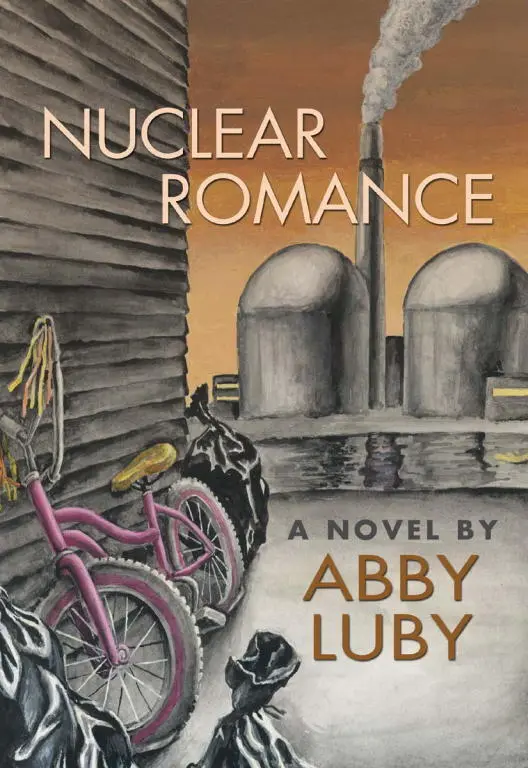
- Название:Nuclear Romance
- Автор:
- Издательство:Armory New Media
- Жанр:
- Год:2011
- Город:Westport
- ISBN:978-1-935073-16-1
- Рейтинг книги:3 / 5. Голосов: 1
-
Избранное:Добавить в избранное
- Отзывы:
-
Ваша оценка:
Nuclear Romance: краткое содержание, описание и аннотация
Предлагаем к чтению аннотацию, описание, краткое содержание или предисловие (зависит от того, что написал сам автор книги «Nuclear Romance»). Если вы не нашли необходимую информацию о книге — напишите в комментариях, мы постараемся отыскать её.
A young woman reporter falls prey to a callous plant executive who is driven to keep the multi-billion dollar nuclear company viable. A clandestine love affair develops against the backdrop of growing anti-nuclear sentiment which escalates after highly radioactive steam escapes from the plant, forcing a mass evacuation.
This novel grips readers’ imaginations with the tension and fear that surround many of today’s nuclear power plants, especially powerful in the aftermath of Japan’s recent and still unfolding nuclear disaster.
Nuclear Romance — читать онлайн бесплатно полную книгу (весь текст) целиком
Ниже представлен текст книги, разбитый по страницам. Система сохранения места последней прочитанной страницы, позволяет с удобством читать онлайн бесплатно книгу «Nuclear Romance», без необходимости каждый раз заново искать на чём Вы остановились. Поставьте закладку, и сможете в любой момент перейти на страницу, на которой закончили чтение.
Интервал:
Закладка:
“If it were true, it shouldn’t matter,” Lou countered. “It wouldn’t affect my reporting. That’s what matters.”
“Maybe. But if your credibility takes a nosedive, the big guy upstairs could yank you out so fast—I wouldn’t be able to do a thing about it.”
His hand on the doorknob, Owen needed to dish out one last dig.
“What ever happened to the occasional fling with the girls from the topless bar? That’s more your style, isn’t it?”
Chapter 35
Chrissy was the first reporter allowed into the plant since the accident, which had happened over a month ago. Bob was planning a media blitz that invited major papers and news outlets to tour the plant and to see how safe everything was and the latest repairs that were near completion.
Chrissy earned the privilege in exchange for her juicy tidbit about Lou and Diana. The night she followed the two, she researched the rather camouflaged hotel and got the real scoop. When she told Bob it was really a sex house, he couldn’t wipe the smile off his face. She did good.
Chrissy drove up to the main security gate, the only entry point between high fences topped with barbed wire. It was like a military checkpoint, with soldiers holding semiautomatic weapons. She parked near the glass office building and was surprised to see just how close the plant was to the river. Bob met her in the lobby and handed her a hard hat.
“Nice to see you, Chrissy. Ready for Nuclear Power 101?”
“Of course. I hope I can keep up. It’s complicated, isn’t it?”
“Nah. You’re a smarty. You’ll get the picture. We’ll start over at the reactor.”
They put on the bright orange hard hats and walked down a dirt road and into the long, rectangular turbine building. The noise was deafening.
“Oh—I forgot the ear plugs! Sorry!” Bob screamed out.
“What?” Chrissy yelled.
He quickly ushered her into the control room and shut the heavy steel door.
“Forgot the ear plugs. Just wasn’t thinking. Sorry.”
“How often do you get down to this building? Is this really your turf?”
“The whole plant is my turf, Chrissy. The entire three hundred acres. I know every inch.”
Workers in the control room briefly acknowledged the visitors. One of the monitors was turned off. Chrissy looked at the men, trying to see if they looked tired, something her editor suggested after reading Lou’s article. As far as she could tell, they looked a bit haggard, but they seemed alert.
Bob pointed out a few monitors showing the inside of the reactor dome. Chrissy pointed to the screen that was off.
“Would that show us the reactor that is being repaired?”
“Not sure. Could be. Let’s get you your radiation detection badges and take a look at the spent-fuel pool. Come on.”
He led her out of the control room past the turbines and a long, wide open canal filled with water that ran from inside the building to outside and directly into the river. A few small fish in the canal were moving lethargically, as if they were drugged.
“What is this?” she asked.
“The canal. The cooling water gets flushed out into the river.”
“Is it radioactive?”
Bob laughed. “No. Of course not! Its water we flush out after it cools the reactors. It’s harmless.”
She vaguely recalled Diana telling her about thermal pollution and how the water returned to the Hudson from the plant was too hot for the fish, causing small fish and some aquatic life to die.
In a few minutes they were in the spent-fuel pool building, where a woman gave her safety goggles and pinned a small dosimeter to her collar.
“Just in case,” said the woman.
“In case what?”
Bob interjected. “We have to measure the radiation every time we go into the spent-fuel pool area. Then we log it for the record. It’s required by the NRC. You won’t be in there long enough to be in any danger.”
They walked through a booth that scanned the body for a radiation level. A number was noted down that would be compared to the reading taken at the end of her visit.
He carefully led her on a wire catwalk with a metal railing that crossed over the spent fuel pool.
“You wouldn’t want to take a dip in that water,” Bob laughed.
“Uh-huh.”
The pool was bigger than she imagined, and the bottom was a jungle of metal cages.
“How do you actually get the spent fuel out of the reactor and into the pool?”
“Very carefully,” Bob chuckled again.
“No. Really.”
Bob explained how the assemblies were carefully lifted out of the reactor and moved through a transfer canal that is temporarily flooded to get the assemblies into the pool.
“It all has to be done underwater. When the spent fuel gets to the pool, a wall swings open, and the fuel is moved inside and stored on the metal racks.”
“Have you sent in divers to look for cracks that might be leaking?” she asked.
“Planning to do that next week. You ready for lunch?”
They ate in the ALLPower cafeteria, and then he waltzed her up to the executive offices where he introduced her to Mike and a few other vice presidents and directors. As they walked past one office Chrissy noticed a large illustration propped up on an easel showing the plant over a cross-section of layered bedrock. Chrissy slowed down and took a closer look. It was something she hadn’t seen before.
Two expanses of blue were penciled in below the plant and looked like large ponds of water. She poked her head into the office and saw a man writing at a desk at the far end of a windowless room.
“Hi. I’m Chrissy Dolan from the Register . Do you have a minute?”
Bob followed her in. “Hi Dan. Chrissy has been covering the plant for the local paper. Chrissy, this is Dan Lipsey. He’s head of special projects.”
The heavyset man lumbered over to shake her hand. Chrissy nodded toward the illustration. “So is this a special project?”
“Yup. It’s about our research on the leaks.”
“The leaks from the spent-fuel pools?” She edged closer to the picture. “What’s all this blue?”
“We think a leak is going into these blue areas. We call them plumes.”
“Just how big are these… plumes?”
“I’d say they’re each about a thousand square feet, more or less.”
Chrissy stared at the picture.
“How deep are we talking about?”
“It varies because of the formation of the bedrock. The deepest could be about thirty or forty feet deep.”
“Really?” Chrissy focused in. “Why are you calling these ‘plumes’? Aren’t they more like… lakes?”
Bob edged in. “We really should go, Chrissy. Dan is a busy man.” He lightly nudged her toward the door. She unhinged him.
“It’s just sitting there? How radioactive is the water?”
The man leaned back against the wall, fingering the outline of a pack of cigarettes in his front pocket. He was enjoying the attention from this pretty young reporter, and it was a rare chance to speak directly to the press without being censored by Bob.
“Oh, I’d say it’s pretty loaded,” he told her. “We’re pretty sure it’s contaminated water from the spent-fuel pool.”
“Will it eventually end up in the river?”
“This type of bedrock is known as Inwood marble. It’s structurally sound and has a low permeability to groundwater, which means the water will have a hard time getting through the bedrock and into the river.”
“So it will just sit there? Is there any plan to drain it? And can it be done safely?”
Bob moved uneasily over to Dan.
“We don’t really have all the details on this, Chrissy, do we Dan? Can we get back to you on all this?”
She knew her time was up.
Читать дальшеИнтервал:
Закладка:
Похожие книги на «Nuclear Romance»
Представляем Вашему вниманию похожие книги на «Nuclear Romance» списком для выбора. Мы отобрали схожую по названию и смыслу литературу в надежде предоставить читателям больше вариантов отыскать новые, интересные, ещё непрочитанные произведения.







Обсуждение, отзывы о книге «Nuclear Romance» и просто собственные мнения читателей. Оставьте ваши комментарии, напишите, что Вы думаете о произведении, его смысле или главных героях. Укажите что конкретно понравилось, а что нет, и почему Вы так считаете.