Timothy Johnston - The Current
Здесь есть возможность читать онлайн «Timothy Johnston - The Current» весь текст электронной книги совершенно бесплатно (целиком полную версию без сокращений). В некоторых случаях можно слушать аудио, скачать через торрент в формате fb2 и присутствует краткое содержание. Город: Chapel Hill, Год выпуска: 2019, ISBN: 2019, Издательство: Algonquin Books of Chapel Hill, Жанр: Триллер, на английском языке. Описание произведения, (предисловие) а так же отзывы посетителей доступны на портале библиотеки ЛибКат.
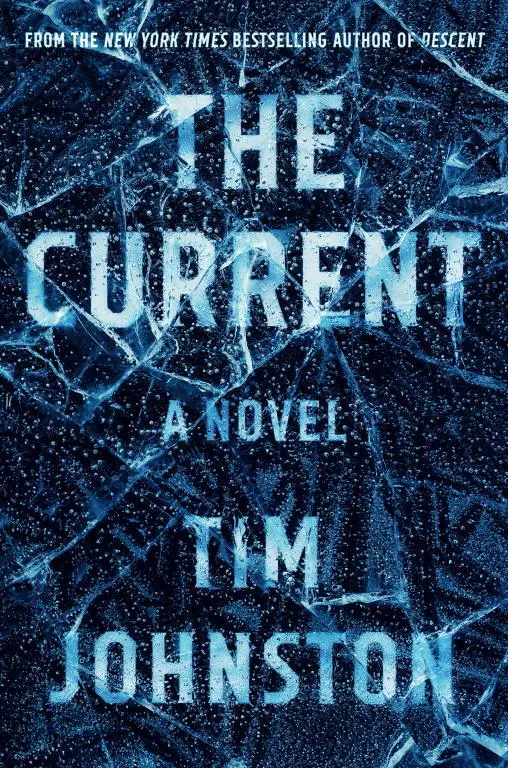
- Название:The Current
- Автор:
- Издательство:Algonquin Books of Chapel Hill
- Жанр:
- Год:2019
- Город:Chapel Hill
- ISBN:978-1-61620-889-9
- Рейтинг книги:4 / 5. Голосов: 1
-
Избранное:Добавить в избранное
- Отзывы:
-
Ваша оценка:
The Current: краткое содержание, описание и аннотация
Предлагаем к чтению аннотацию, описание, краткое содержание или предисловие (зависит от того, что написал сам автор книги «The Current»). Если вы не нашли необходимую информацию о книге — напишите в комментариях, мы постараемся отыскать её.
The Current — читать онлайн бесплатно полную книгу (весь текст) целиком
Ниже представлен текст книги, разбитый по страницам. Система сохранения места последней прочитанной страницы, позволяет с удобством читать онлайн бесплатно книгу «The Current», без необходимости каждый раз заново искать на чём Вы остановились. Поставьте закладку, и сможете в любой момент перейти на страницу, на которой закончили чтение.
Интервал:
Закладка:
He’s gone, isn’t he .
They’re both gone.
It figures .
Why?
Because there wasn’t anything to them in the first place. Faceless, useless boys. They run all over the world like rats .
I’m sorry.
Why are you sorry?
Because it isn’t fair.
Caroline laughed. Fair? Oh, Audrey!
She was out of the wind where she stood, but overhead the pine tree swayed and whispered, and she looked at it more closely and identified it as a white pine. She climbed it with her eyes—thirty, maybe forty feet tall—and remembered a young girl walking in the woods, looking for a tree just her height. A father going out to measure the tree year after year.
Audrey .
What?
Time to go .
She drove down the hill toward the trestle bridge and there was no ice or snow now, and the shoulder where they’d gone off the road into the ditch was a wet soft gravel and she pulled onto it and came to a stop short of the bridge and short of the edge of the riverbank where they’d gone over. She cut the engine again and got out and walked to the edge and stood looking down. There’d been the sound of her boots in the gravel and now that she’d stopped she heard the deep silence of the valley. If you could hear a silence. She stood listening and after a while she heard, or became aware she was hearing, a dry rattling and it was the sound of two old leaves in the treetops, brown and curled and hanging on and batting at each other in the wind.
Caroline’s family had lived in Georgia for generations. One of her way-back grandfathers had fought in the Civil War. Her father was a professor of mathematics at Georgia State, and when Caroline did her impression of him she stuck her chin in the air and made her shoulders big and spoke from her Georgia chest and you could just see him, you could see the man himself: A moving vehicle is no place for luck, daughter. May this vehicle be safeguarded by intelligence, by great care and caution, and not the amputated paw of a rodent .
Her papaw called her Sweetpea and was a mechanical genius who kept the same old pickup running for all of Caroline’s life. Her mother was a middle school teacher. Her older brother, James, was going to be a lawyer.
And if you had never asked her for bus fare she would not have driven you.
And if you had never been put in that dorm room together… and if she had not asked to borrow a pen from you…
Hush now, Audrey, hush .
Colder down here by the bridge and darker but the river was visible in the dusk like a great snake slipping along with no sound, dark and glistening. She was standing at the place above the bank where the car had gone over and where it must have come back up, but there was no sign of those events either, only the grassy fall of the bank, the old yellow reeds twitching in the wind. As if the car had never gone over but instead had kept its hold on the shoulder, the two girls inside it so much luckier than they knew—their hearts racing, the world still spinning as they watched the headlights in the mirrors: the two lights coming slowly down the hill like two little suns descending, the lights growing large in the rear window of the RAV4 as the car or truck or whatever it was pulled up behind them and the driver braked carefully, skillfully in the snow, and stopped—absolutely stopped, well short of the rear bumper. A silence then. A waiting. The girls looking into each other’s eyes in the bright light, their hearts beating, until at last a dome light came on in the cab of the truck—it was a truck, they could now see—and there was a brief snapshot of a man in a billcap, just one man, before this man stepped from the cab and shut the door and the dome light went out again, and he was coming toward them, cautiously, a jacketed man in his billcap, the dark shape of him in the headlights, faceless as a shadow, his boots so loud on the icy pavement and then in the deep snow, laboring his way alongside the car toward the driver’s-side window, gaining it finally and stooping to look inside, and to give them a look: a face lit now by his own headlights and by the escaping green light of the RAV4’s dashlights, the worried face of an old man, taking them in through large wire-frame lenses—one girl, then the other—before saying through the window and fogging the glass with his breath, You girls all right?
Caroline powering down the glass then, revealing him clearly in the frame of the window—bony, leathery old face with a gray stubble and a rim of creamy dentures showing and deep, watery blue eyes behind the lenses— We’re fine, sir, thank you so much , Caroline saying, and the old man cocking a large ear at her so that they both see the pink bit of plastic fitted into the inner whorl and Caroline saying again louder, and with such happiness in her voice, Thank you, sir, thank you so much for stopping!
It would take a while, the old man being old and the girls not knowing how to help, but he would have a tow rope in the back of his truck, and the good old truck would have four-wheel drive, as does the RAV4, and soon enough they’d be back on the road and he would tell them in his gruff old way—a father himself, you could hear in his voice, a grandfather, maybe great-grandfather—to drive more slowly in this weather, that the bridge would be icy too, and when they’d try to pay him he would not even look at the money but would wave them off and climb back into his truck, and he would follow them across the bridge and for a few miles beyond, until at last they’d see his turn signal, see the headlights swerving off into some dark Iowa woods… and only miles later, both of them thinking what might have been had he not come along—not allowing themselves to think what might have been had he been those boys—would they realize they’d never asked his name, nor he theirs. In his memory they would be the two girls he pulled out of the snow by the bridge that time, and in theirs he would be the old man, the kind old feller, who pulled them out of the snow that one winter they drove to Minnesota—who did not bump them, sending them down the riverbank, but instead had saved them—and that’s how it would be until the end of their lives.
ACKNOWLEDGMENTS
It’s one thing to write a story—to bang out a kind of beginning, middle and ending—it’s quite another to bring a finished, cohesive, ready-to-read novel to readers, and for that I have two superb professional families to thank: At Writers House I thank Amy Berkower, agent, guardian angel and voice of clarity every step of the way, and Genevieve Gagne-Hawes—too essential to call an early editor, more like my secret weapon. My everlasting thanks also to Maja Nikolicand Kathryn Stuart, and all the outstanding staff on every floor of that house.
At Algonquin Books and Workman Publishing Co.—simply the greatest publisher any author could hope for—I thank Elisabeth Scharlatt, Elizabeth Johnson, Betsy Gleick, Brunson Hoole, Michael McKenzie, Anne Winslow, Pete Garceau, Craig Popelars, Lauren Moseley, Debra Linn, Frazer Dobsonand everyone else who has worked so hard on behalf of my books and made such a difference in the course of my life—none more so than Chuck Adams, my editor through two novels now and, if my luck holds out, my editor for the next two, and the next two after that.
My thanks to Robert L. Giron and Gival Press, who once upon a time honored a short story called “Water” and gave its author a friendly shove into deeper waters. Also, the University of Memphis, my superb colleagues in the English department there, and all my students everywhere, who have given me so much more than I’ve given them.
Читать дальшеИнтервал:
Закладка:
Похожие книги на «The Current»
Представляем Вашему вниманию похожие книги на «The Current» списком для выбора. Мы отобрали схожую по названию и смыслу литературу в надежде предоставить читателям больше вариантов отыскать новые, интересные, ещё непрочитанные произведения.





Обсуждение, отзывы о книге «The Current» и просто собственные мнения читателей. Оставьте ваши комментарии, напишите, что Вы думаете о произведении, его смысле или главных героях. Укажите что конкретно понравилось, а что нет, и почему Вы так считаете.