Timothy Johnston - The Current
Здесь есть возможность читать онлайн «Timothy Johnston - The Current» весь текст электронной книги совершенно бесплатно (целиком полную версию без сокращений). В некоторых случаях можно слушать аудио, скачать через торрент в формате fb2 и присутствует краткое содержание. Город: Chapel Hill, Год выпуска: 2019, ISBN: 2019, Издательство: Algonquin Books of Chapel Hill, Жанр: Триллер, на английском языке. Описание произведения, (предисловие) а так же отзывы посетителей доступны на портале библиотеки ЛибКат.
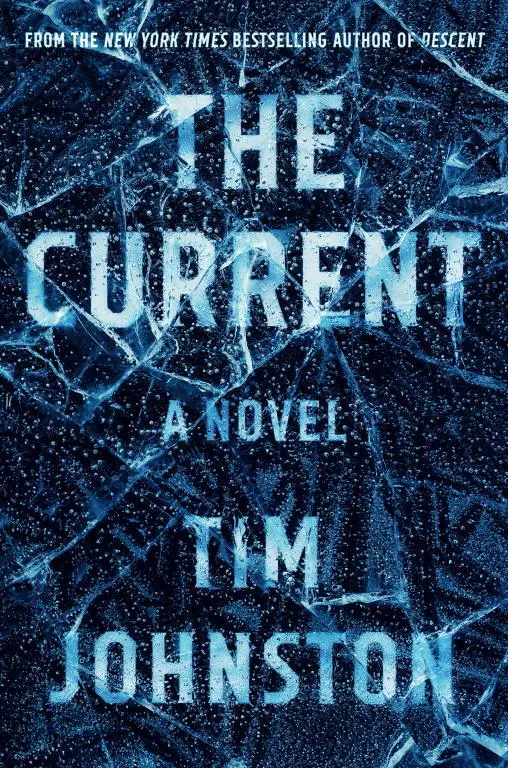
- Название:The Current
- Автор:
- Издательство:Algonquin Books of Chapel Hill
- Жанр:
- Год:2019
- Город:Chapel Hill
- ISBN:978-1-61620-889-9
- Рейтинг книги:4 / 5. Голосов: 1
-
Избранное:Добавить в избранное
- Отзывы:
-
Ваша оценка:
The Current: краткое содержание, описание и аннотация
Предлагаем к чтению аннотацию, описание, краткое содержание или предисловие (зависит от того, что написал сам автор книги «The Current»). Если вы не нашли необходимую информацию о книге — напишите в комментариях, мы постараемся отыскать её.
The Current — читать онлайн бесплатно полную книгу (весь текст) целиком
Ниже представлен текст книги, разбитый по страницам. Система сохранения места последней прочитанной страницы, позволяет с удобством читать онлайн бесплатно книгу «The Current», без необходимости каждый раз заново искать на чём Вы остановились. Поставьте закладку, и сможете в любой момент перейти на страницу, на которой закончили чтение.
Интервал:
Закладка:
And how did you know that, Miss Sutter? Miss Sutter…?
The beautiful nurse was looking at her, holding the purple cast.
“Sorry?” said Audrey.
The nurse laughed and said in that voice of islands and waves, “I asked did you want that gift-wrapped too, baby?”
65
THE WEATHER HAD turned and the snow was dropping from the pines in heavy clumps, and when the sun hit the boughs you could smell the pine like you’d been sawing into it. By the middle of March the house was sold, and a week later it was empty and clean, and on that Saturday afternoon Gordon backed his van into the driveway and they loaded up the few remaining things she wanted to keep for herself—her own things and some of her father’s, such as his sheriff’s jacket and hat, his old rod and fly reel that had been his grandfather’s, the supposedly antique bass bookends she’d given him, and also certain precious things of her mother’s he’d kept for her—they loaded it all into the van and the car and then she stood on the porch for the last time, looking out over the cul-de-sac as her father had done so many mornings, smoking his first cigarette of the day. Finally she got into the sedan and backed out of the drive and waved good-bye to Mr. Larkin, who stood in his driveway watching them go and who was standing there still when they turned the corner and passed out of sight.
MELTWATER RAN ACROSS the roads in streams and hissed under the tires and you could put the window down and smell the earth and you knew the winter wasn’t forever after all and the land would be green again, the river would flow again, and from the bridges you could see the slabs of ice jutting into the air, and if you pulled over and stood on the bank you could see the slabs moving and grinding against each other like icebergs, like ships, all in a tight puzzle-work of pieces and all of it moving together foot by foot downriver, cracking and popping and grinding as the river below swelled with the thaw and pushed and surged and would not be stopped.
He pulled into the lot and cut the engine and they both got out and stood in the sun, breathing the air.
“Ready?” she said, and he nodded.
“Ready.”
The graves were in the old part of the cemetery with all the old graves, including the graves of her grandparents on her mother’s side. Her father was from Illinois and had met her mother there, in college, and they’d come back here together so she could be close to her family. By the time Audrey was seven he was county sheriff and her mother, a high school counselor, was dying.
The snow over the plot had melted away into the dirt, and in a few weeks the caretakers would lay down the sod; that was part of the deal and she didn’t have to worry about that.
She took off the aviators and put them away, then stood reading her parents’ names on the stone, their dates. The inscription:
Does that about cover it? he’d asked, holding her hand. The old engraver man standing by.
Yes, Daddy. It’s perfect .
Do you know how much she loved you?
Yes, Daddy .
Well, if you ever forget, there it is, right there .
I won’t forget, Daddy .
She told them the house had sold and the bills were paid and she was going back to school in the fall. She told them not to worry about her, and she told them she loved them and that she knew they were with her, that they looked out for her, and lastly she told them that she was not afraid of it now. Any of it.
Then she turned and walked back to where he stood, his hands in his pockets, looking up into the big open sky, and she stopped before him and looked up too. Blue, cloudless sky as far as you could see. A single large bird—hawk, or eagle, maybe—riding the blue, way off in the distance.
Holly Burke, or her body, had been buried in the new part of the cemetery, on the far side of the oak trees. A modest stone of white marble, rough around its edges but glass-smooth on the face.
“Come up here with me,” he said, and she did so, and they stood before the stone in silence.
A wind came to push at them head-on, and when he spoke the wind tried to carry his words off but she heard them clearly: “I know how people talked,” he said. “But she was a good girl. She was a good person and she was not afraid of anything.”
She waited for him to say more but he didn’t. He lifted his face to the sun and shut his eyes. Her own eyes stung in the wind, and when she blinked, tears ran in cool tracks to her temples. There was so much she wanted to tell him it choked her heart. Finally, into that wind she said, “I told you that I thought I—that I thought I died, when Caroline and I went into the river. Remember?”
He nodded, face to the sun, eyes shut. “I remember.”
“I mean, I know I didn’t. Obviously. But if I had, it would’ve been all right. I wasn’t scared and I wasn’t sad to lose my life and I didn’t feel alone. I wasn’t alone. That’s what I want to tell her mother. Her father. That’s why I have to go down there, Mr. Burke. So I can tell them it’s all right. That Caroline wasn’t afraid and she wasn’t alone and that she’s all right, now. I can tell them that, can’t I?”
He turned to her and opened his eyes. Watching her face. Her eyes.
“Yes. You can tell them that.”
“And they’ll believe me?”
He looked at the gravestone again. “I don’t know, Audrey. I don’t know if they will or not.”
They stood there, the wind gusting at their clothes, and on this wind came the sound of the birds first, then the birds themselves—a pair of loons, directly overhead, their bellies flashing white against the blue, their calls like a wild hysteria for home, for all the feeding and nesting and mating of the lakes to the north.
“I know your mind is made up,” Gordon said when the birds, and their cries, had passed on, “but that’s an awful long drive to do alone.”
“I’ll be all right, Mr. Burke.”
“I don’t want you driving through that town down there again. I don’t want you going anywhere near it.”
“I won’t.”
“I’m serious here.”
“I know. I promise.”
They were silent again. Her heart was beating. He seemed ready to go, and if they went now, if they got in the van and drove back to his house, she would never say it, so before he could move she said it.
“There’s something else I want to tell you. But I don’t want you to think I’m crazy.”
He looked at her again. “You’re talking to a man who near about shot a sheriff—you know that, right?”
“Yes, sir,” she said, and smiled, and he turned once more to the gravestone.
“I can’t tell you how I know it,” she said. “I mean, I can tell you how I think I know, but that wouldn’t make it true.”
“I’m listening.”
“She had a good heart, Mr. Burke. Holly did. She had a strong heart, and that night—that night by the river, she fought . She fought really hard, Mr. Burke.”
She watched his profile. His jaw trembled, then hardened against the trembling. He stared into the wind and didn’t blink.
“How do you know?” he said. And turned to look at her.
“I’ve always known,” she said. “Since the night Caroline and I went into the river. I just never—” And the breath went out of her, or went back into her lungs, as if blown back into her by the wind.
“Never what?” he said.
Читать дальшеИнтервал:
Закладка:
Похожие книги на «The Current»
Представляем Вашему вниманию похожие книги на «The Current» списком для выбора. Мы отобрали схожую по названию и смыслу литературу в надежде предоставить читателям больше вариантов отыскать новые, интересные, ещё непрочитанные произведения.

Обсуждение, отзывы о книге «The Current» и просто собственные мнения читателей. Оставьте ваши комментарии, напишите, что Вы думаете о произведении, его смысле или главных героях. Укажите что конкретно понравилось, а что нет, и почему Вы так считаете.