Timothy Johnston - The Current
Здесь есть возможность читать онлайн «Timothy Johnston - The Current» весь текст электронной книги совершенно бесплатно (целиком полную версию без сокращений). В некоторых случаях можно слушать аудио, скачать через торрент в формате fb2 и присутствует краткое содержание. Город: Chapel Hill, Год выпуска: 2019, ISBN: 2019, Издательство: Algonquin Books of Chapel Hill, Жанр: Триллер, на английском языке. Описание произведения, (предисловие) а так же отзывы посетителей доступны на портале библиотеки ЛибКат.
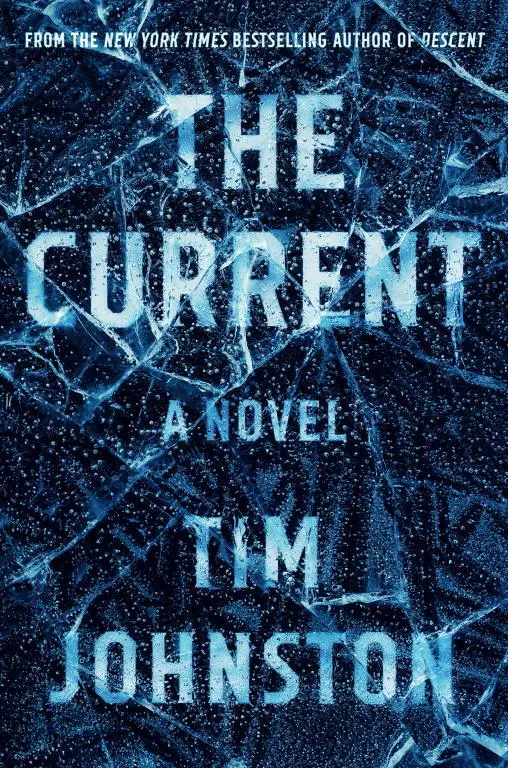
- Название:The Current
- Автор:
- Издательство:Algonquin Books of Chapel Hill
- Жанр:
- Год:2019
- Город:Chapel Hill
- ISBN:978-1-61620-889-9
- Рейтинг книги:4 / 5. Голосов: 1
-
Избранное:Добавить в избранное
- Отзывы:
-
Ваша оценка:
The Current: краткое содержание, описание и аннотация
Предлагаем к чтению аннотацию, описание, краткое содержание или предисловие (зависит от того, что написал сам автор книги «The Current»). Если вы не нашли необходимую информацию о книге — напишите в комментариях, мы постараемся отыскать её.
The Current — читать онлайн бесплатно полную книгу (весь текст) целиком
Ниже представлен текст книги, разбитый по страницам. Система сохранения места последней прочитанной страницы, позволяет с удобством читать онлайн бесплатно книгу «The Current», без необходимости каждый раз заново искать на чём Вы остановились. Поставьте закладку, и сможете в любой момент перейти на страницу, на которой закончили чтение.
Интервал:
Закладка:
“Caroline, don’t brake—”
“What?”
“Take your foot off—”
“Audrey, shit—”
They are briefly broadside to the road, and then they are backwards to it, looking back up the hill the way they’ve come—there’s their tiretracks carving a long black DNA helix in the sleet—one or both of them screaming as they come around again, and the steering wheel has come loose from the car, spins with meaningless ease in Caroline’s hands, and the whole world spins with it, the sleet angling crazily in the beams of the headlights—the snowy shoulder, the road, the trestle bridge all slurring by—until at last the car slips from the road and plows face-forward into the deep snow of the shoulder, the passenger-side wheels sinking into the ditch, and the car plows and plows through the snow, and it slows, and at last comes abruptly to rest, just short of the outermost ironworks of the bridge and on the very crest of the high riverbank. The two girls stiff-arming wheel and dash, looking out into empty space, their hearts banging. Sleet diving through the headlights on its way to a landing they cannot see, far below.
“Caroline,” Audrey says.
“What?”
“Put the car in park, please.”
Caroline puts the car in park. What they want is the lack of movement. What they want is stillness. It’s like that scene in the movies when the car totters on the cliff’s edge. Though the car is not tottering and it’s not a cliff, it’s a riverbank, but still.
The cab is an aquarium, green-hued from the gauges, encased in glass. A heavy, underwater world. Even the air smells of it—tastes of it: plant life, silt, fish. Their heartbeats pulse between them on the currents, send messages one to the other on the green and conductive air. Fine hairs lift from Audrey’s head and sway like black cilia. The girls find each other’s eyes and find something—perhaps their screams, still ringing in their ears, perhaps the giddy rolling of their guts as the car spun round and round—to laugh about, breathlessly.
“You fucking blinded me!” says Caroline, laughing. “Did you see that poor peckerwood?” And then she sees the headlights in the rearview mirror—two yellow lights descending the hill, unwavering, locked in, steady. As if this driver traveled some other kind of road, where the laws of physics still held.
“Damn, that was quick,” she says, and Audrey sees the headlights too in the side-view mirror.
“Caroline.”
“What?”
“That’s not the police.”
Caroline looks again. “How do you know?”
“They’re not throwing their lights.”
That’s right: Audrey’s daddy is a sheriff. Audrey has ridden shotgun through the Arctic hinterlands, has probably thrown the lights herself. Thrown the sirens. Let’s go get ’em, Deputy .
Where is that sheriff now? Where is that daddy?
Lying in his bed, dying of his cancer.
Audrey remembers the phone and lifts it to her ear. “Hello? Hello—? ”
Headlights descend and pour their light into the cab, and when Audrey looks over her shoulder her face is a kind of light itself, moon-bright, and nearly all the color driven from her eyes, the pupils like black pinholes. She lowers the phone and says as quietly as anything Caroline has ever heard from another person’s lips, “ Hold on, Caroline .”
The headlights grow so near they are blocked by the RAV4’s tailgate, and still they flood the cab with light, the driver pulling onto the shoulder too but not as far over, short of the deep snow. There’s the sound of tires in the snow, and then there’s the sound of tires failing to stop in the snow, of tires skidding in the snow. And then there’s the bump.
You couldn’t even call it an impact. A love tap, Caroline’s papaw would say—and the Mardi Gras beads click and sway, brilliant in the light. The tiny, multicolored rabbit’s foot. And it’s then, at the moment of the bump, the love tap, that the hawk and the squirrel come back to Audrey, flapping into her mind like something she once dreamed, a shrieking figment having nothing to do with real life, and she briefly thinks—briefly believes: This, too, this is not real!
A love tap, a miscalculation—an accident, surely. And over the edge they go.
How must this have looked to the driver who watched it happen: the RAV4 squatting in the deep shoulder snow one moment, solidly at rest, lit up in his headlights, the bags and suitcases of the cargo area, the heads of the two girls in the front seats—and then the bright oval of the passenger’s face as she turned to look back at him. Was it that bright sudden face that distracted him, that accounts for the failure to stop in time, the bump of machine on machine and the resulting, the unbelievable, visual of the back end of the RAV4 rising into the air as the front end dipped and the whole of it, machine and luggage and girls and all, slipped all at once out of view? Just—gone.
Did the girls scream? Was there time? Was the outcome too swift and too certain for screaming? The forward tires locked in park, did Caroline Price slam her powerful legs at the brake pedal anyway? What thoughts fired in their brains as the car dropped, gathering speed from its own weight, flying nose-first toward the black surface of the river—a darkness and coldness too incredible to imagine. The black, smooth ice full of its own burning lights, its own stars. Did the girls in that span of two, maybe three heartbeats, find each other’s hands? Like girls who have done so all their lives did they reach out in the dark? Like sisters did they find and grasp?
PART II
2
THE DAILY PAPER that once landed on his porch in the morning, rolled up and slapping the porchboards in the dark as if to announce the new day, as if no new day could begin without that sound, had been stopped years ago, and still the days came, and the day’s news too by and by, though the only news he took with his morning coffee these days was the national weather from the TV, and that just so he’d know what to expect out there, though it rarely changed his plans or even how he dressed, and so he didn’t learn about the accident, those two young women in the river, those college girls, until much later in the day, when he made his way at last to Eileen Lindeman’s house to see about the smell she said was coming from the downstairs bathroom.
The winter sun down by then, the end of a long day of small jobs, some in town, some out. Eileen Lindeman’s house was in town, on the east side of the river, and once upon a time he might’ve taken more care, might’ve parked the van a block away from the house, although it wouldn’t have stopped people from talking.
Another lifetime, all that business, and anyone who saw Gordon Burke’s van in Eileen Lindeman’s driveway these days would know that Gordon was there to fix something in the house and nothing more. His story had changed too much for any other interpretation.
The trouble was the seal—he told her that right off, showing her by rocking the toilet in his hands. The floor tiles had not been set level and so the porcelain base did not sit cleanly all the way around, and so the gasket never stood a chance. Just the slightest corruption to the wax and you had sewer gas leaking into your house.
Brad, she told him—her ex—had set the tiles himself in one of his fits of home improvement. “Looked it up online,” she said. “Said anybody who could read could do it.”
Twelve, thirteen years ago, that would’ve been. Brad Lindeman, the lawyer, had left her for a young woman lawyer up in Saint Paul, and of course Gordon’s wife had pulled pretty much the same stunt at about the same time—a banker , in her case—leaving him to raise a teenage daughter mostly on his own. Which, truth be told, was a relief at the time. Was a godsend to that house.
Читать дальшеИнтервал:
Закладка:
Похожие книги на «The Current»
Представляем Вашему вниманию похожие книги на «The Current» списком для выбора. Мы отобрали схожую по названию и смыслу литературу в надежде предоставить читателям больше вариантов отыскать новые, интересные, ещё непрочитанные произведения.






Обсуждение, отзывы о книге «The Current» и просто собственные мнения читателей. Оставьте ваши комментарии, напишите, что Вы думаете о произведении, его смысле или главных героях. Укажите что конкретно понравилось, а что нет, и почему Вы так считаете.