Timothy Johnston - The Current
Здесь есть возможность читать онлайн «Timothy Johnston - The Current» весь текст электронной книги совершенно бесплатно (целиком полную версию без сокращений). В некоторых случаях можно слушать аудио, скачать через торрент в формате fb2 и присутствует краткое содержание. Город: Chapel Hill, Год выпуска: 2019, ISBN: 2019, Издательство: Algonquin Books of Chapel Hill, Жанр: Триллер, на английском языке. Описание произведения, (предисловие) а так же отзывы посетителей доступны на портале библиотеки ЛибКат.
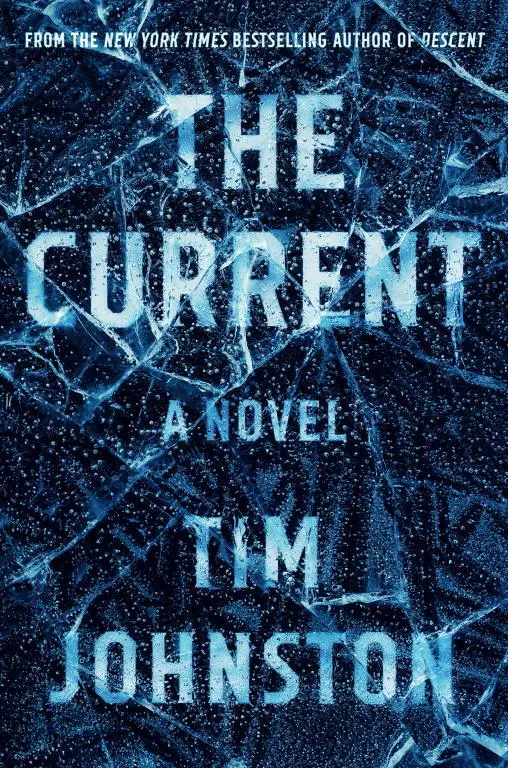
- Название:The Current
- Автор:
- Издательство:Algonquin Books of Chapel Hill
- Жанр:
- Год:2019
- Город:Chapel Hill
- ISBN:978-1-61620-889-9
- Рейтинг книги:4 / 5. Голосов: 1
-
Избранное:Добавить в избранное
- Отзывы:
-
Ваша оценка:
The Current: краткое содержание, описание и аннотация
Предлагаем к чтению аннотацию, описание, краткое содержание или предисловие (зависит от того, что написал сам автор книги «The Current»). Если вы не нашли необходимую информацию о книге — напишите в комментариях, мы постараемся отыскать её.
The Current — читать онлайн бесплатно полную книгу (весь текст) целиком
Ниже представлен текст книги, разбитый по страницам. Система сохранения места последней прочитанной страницы, позволяет с удобством читать онлайн бесплатно книгу «The Current», без необходимости каждый раз заново искать на чём Вы остановились. Поставьте закладку, и сможете в любой момент перейти на страницу, на которой закончили чтение.
Интервал:
Закладка:
“Tell him, ‘Talk to Phil,’” Caroline says. “Tell him, ‘Ask Phil how he liked it this a.m.’”
Audrey looks over. “Liked what?”
“Just type it.”
She types and sends the message, and Caroline tells her what happened with Phil, and Audrey sits holding the phone. Silent for a long while.
“What did it feel like?” she says at last, and Caroline gives her a look.
“What do you think it felt like?”
“I mean,” Audrey says, “in that context. The fact that it was Phil.”
Caroline sputters her lips and turns back to the road. “The usual, Audrey. Nothing to write home about.”
The sun is going down; the swaying beads catch its light and throw prisms on the girls’ legs. Music pulses in the speakers.
“Phil,” Audrey says after a while, as if to herself. “I hope you washed your hand.”
And Caroline laughs then, deeply and truly, and the laugh releases the Georgia in her chest like walking into her memaw’s house, like the drug-strong smell of hot pecan pie, and she says in the voice of home, “Oh, Audrey, sometimes I just love you.”
And Audrey—who loves this voice, who has always loved this voice—says, “I know. It’s the same with me.”
THEY DRIVE OUT of day into night, out of cotton country into wheat and then into corn, all such fields indistinguishable in the dead of winter, all brown and empty, increasingly drifted in dunes of snow. Off to their right somewhere the wide Mississippi slugs along through its turnings, back the way they’ve come, south as the girls drive north. The girls talking and talking until, in the midst of a lull, Audrey works her head into a pillow stuffed up against the passenger window and sleeps.
Caroline drives on, alone now and aware of the car around her—the road beneath it, the four small dashes of rubber that connect car to road—in a way she hadn’t been just a moment before, and soon enough she puts it together: that this awareness, this alertness, comes with the surrendering of the same thing in her passenger, and that this is an intimacy, this exchange, modern in its specifics and yet ancient to the species, old as blood: the deep, unthinking trust of children who slept in open caves, who sleep now in cars piloted by their parents flying down deadly highways; the fierce tenderness of responsibility that pounds in the chests of parents, the father or mother at the wheel… and following this current of thought Caroline doesn’t think of Troy for miles, and then she realizes she hasn’t thought of Troy for miles and it’s all over—he’s back. Those eyes. Those hands. The smell of that chest.
She would like to let Audrey sleep but they need gas, and ten miles later she takes the exit and pulls into the station, and Audrey raises her head, then pushes the black knit cap up from her eyes.
“Where are we?”
“We’re not in Kansas anymore.”
“We were never in Kansas.”
“I know, Audrey.”
They take turns in the ladies’ and then they look over the food: the wedges of old pizza, the paper baskets of breaded chicken parts, the fat corn dogs that crack them up just to think about putting them in their mouths, finally settling on a family-size bag of Cheetos and two milky coffee drinks in glass bottles. Audrey offers the last of her cash but Caroline waves her off. The big dude behind the counter looks from one girl to the other, boldly, as if to make some kind of point. Caroline catches and holds his eye: Is there a problem, bubba?
Outside the air is so cold, and there’s the smell of snow although they can see the deep glitter of outer space, and they stand awhile with their faces lifted, lips pursed, blowing pale breaths that rise and vanish in the stars.
Audrey drives now, and they talk, and Caroline learns that Audrey’s father has lung cancer—the cancer is back, actually—and there’s no hope. Her mother died when Audrey was just seven, a rare blood disease, and there are no brothers, no sisters—Caroline knows these facts from the dorm room days, from those early days when they were still trying—and she understands that in a few months, or however long it takes, Audrey will be an orphan at the age of nineteen.
The cold night rolls by, northern Iowa, flat and snowy, a few farmhouses lit up in the empty reaches. Caroline imagines Audrey out there—walking out there in her winter boots, her black knit cap, all alone. She reaches to touch the colorful beads, the white rabbit’s foot within, so soft. Everything strange from this vantage. A girl who is not her sitting in her seat, hands on her steering wheel. As if she’s been transformed. If she looks in the vanity mirror now what will she see? Her mind is playing tricks on her. She needs sleep.
She sips the cold coffee drink through a straw and says, “What will you do?”
“What do you mean?”
“I mean… after. Will you come back to school?”
Audrey doesn’t answer. Then she says, “I don’t know,” and sinks her hand into the Cheetos bag.
Caroline slips her own hand into her tote bag and steals a glance, but no new messages. That’s seven hours now.
Not that she’s counting.
Not that she’s thinking where is he where the fuck is he.
Not that she’s picturing certain big-eyed skanks swatting their eyelashes at him.
Audrey, at the helm, sails on. Steady as she goes. Taking her time catching up with and passing a semi, giving the old boy behind the wheel a nice long look down into the car. Caroline sitting there in her pajama bottoms with the shells and starfish so faded they could be anything, What’re you looking at, truck-driver man? Why don’t you watch where you’re driving?
When they are well past the semi and back in the right lane again Audrey says, “Want to hear what he told me, last time I saw him?”
“Who?”
“My dad. The sheriff. The ex-sheriff.”
“Sure.”
“He said there’s never a good American with a gun around when you need one.”
“What’s that supposed to mean?”
“That’s what I asked.”
“What did he say?”
“He said if it were just him and the doctors and the bills, it’d be over already. Says to me, ‘I’m not afraid of dying, but I got a certain reputation to uphold, don’t I? Folks sure would be disappointed.’”
“What did you say to that?”
“I said, ‘Daddy, if I ever hear you talk like that again I’ll shoot you myself.’”
“And what did he say?”
“He said, ‘Deputy, now that would really shake things up, wouldn’t it.’”
The girls smile at each other, eyes shining, and face forward again.
A swarm of bright insects dive into the headlights and burst their translucent guts on the glass. Not bugs, Caroline realizes—it’s some kind of weather, thick and whitish, but not snow. Sleet . The pavement, gray and salty-white for so many miles, begins to darken, to glisten.
Audrey eases up on the gas. “I don’t like the looks of this.”
“What do you mean?”
“I mean I don’t feel too great driving your car in this stuff.”
“Audrey, let me remind you: Caroline from Georgia, Audrey from Minnesota. Grandpa Sven probably had you driving the snowplow when you were just a wee lad.”
“I don’t have a Grandpa Sven.”
“Plus this car has four-wheel drive.”
“Is it on?”
“It’s supposed to be.”
“But it’s your car, Caroline. You have a feel for it.”
“Audrey, we’re like an hour away, aren’t we?”
This is true: they are an hour, in good conditions, from Audrey’s father’s house, where they will say hello to the man, brush their teeth and fall like dead women into Audrey’s bed. But after eleven hours on the road, the last hour will be the longest and cruelest, whatever the weather, and finally it’s the girls’ bladders that make the call—oh man, that coffee drink went straight through them—and they take the next exit, only to discover that the nearest gas station is two miles from the highway, but by now the idea of a bathroom has such a grip on them that they take the two miles anyway, a hilly and curvy two-laner that feeds them down into a valley and onto a narrow trestle bridge with a rusted and bullet-pocked sign that may have once named the river they can see below, wisps of snow moving snakelike across a black face of ice, or perhaps the sign issued a warning about the narrowness of the bridge or its tendency to freeze before the road. In any case, once across the bridge they rise out of the valley again, steeply, and travel another half mile through a gray, disheartening slush before they at last reach a remote station—a dubious, sickly lit shoebox of a building, blurry after so long on the road… Christ, is it even open?
Читать дальшеИнтервал:
Закладка:
Похожие книги на «The Current»
Представляем Вашему вниманию похожие книги на «The Current» списком для выбора. Мы отобрали схожую по названию и смыслу литературу в надежде предоставить читателям больше вариантов отыскать новые, интересные, ещё непрочитанные произведения.





Обсуждение, отзывы о книге «The Current» и просто собственные мнения читателей. Оставьте ваши комментарии, напишите, что Вы думаете о произведении, его смысле или главных героях. Укажите что конкретно понравилось, а что нет, и почему Вы так считаете.