Питер Геллер - The River
Здесь есть возможность читать онлайн «Питер Геллер - The River» весь текст электронной книги совершенно бесплатно (целиком полную версию без сокращений). В некоторых случаях можно слушать аудио, скачать через торрент в формате fb2 и присутствует краткое содержание. Город: New York, Год выпуска: 2019, ISBN: 2019, Издательство: Alfred A. Knopf, Жанр: Триллер, Путешествия и география, на английском языке. Описание произведения, (предисловие) а так же отзывы посетителей доступны на портале библиотеки ЛибКат.
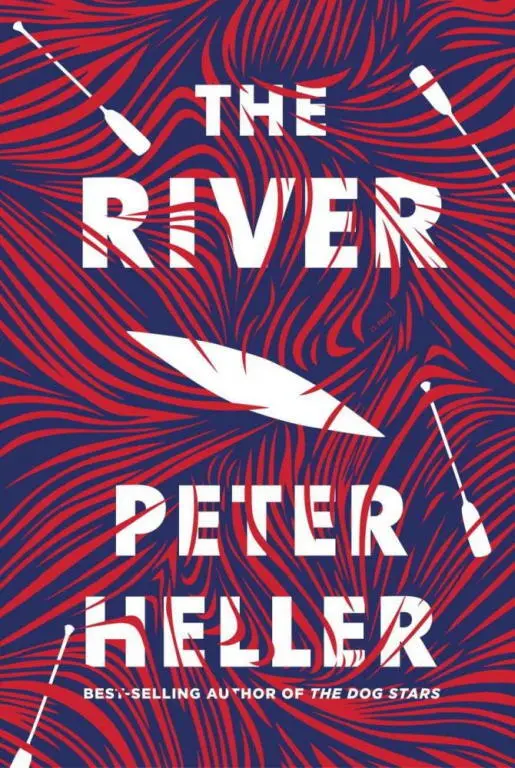
- Название:The River
- Автор:
- Издательство:Alfred A. Knopf
- Жанр:
- Год:2019
- Город:New York
- ISBN:978-0-5255-2187-7
- Рейтинг книги:4 / 5. Голосов: 1
-
Избранное:Добавить в избранное
- Отзывы:
-
Ваша оценка:
The River: краткое содержание, описание и аннотация
Предлагаем к чтению аннотацию, описание, краткое содержание или предисловие (зависит от того, что написал сам автор книги «The River»). Если вы не нашли необходимую информацию о книге — напишите в комментариях, мы постараемся отыскать её.
Wynn and Jack have been best friends since freshman orientation, bonded by their shared love of mountains, books, and fishing. Wynn is a gentle giant, a Vermont kid never happier than when his feet are in the water. Jack is more rugged, raised on a ranch in Colorado where sleeping under the stars and cooking on a fire came as naturally to him as breathing. When they decide to canoe the Maskwa River in northern Canada, they anticipate long days of leisurely paddling and picking blueberries, and nights of stargazing and reading paperback Westerns. But a wildfire making its way across the forest adds unexpected urgency to the journey. When they hear a man and woman arguing on the fog-shrouded riverbank and decide to warn them about the fire, their search for the pair turns up nothing and no one. But: The next day a man appears on the river, paddling alone. Is this the man they heard? And, if he is, where is the woman? From this charged beginning, master storyteller Peter Heller unspools a headlong, heart-pounding story of desperate wilderness survival.
The River — читать онлайн бесплатно полную книгу (весь текст) целиком
Ниже представлен текст книги, разбитый по страницам. Система сохранения места последней прочитанной страницы, позволяет с удобством читать онлайн бесплатно книгу «The River», без необходимости каждый раз заново искать на чём Вы остановились. Поставьте закладку, и сможете в любой момент перейти на страницу, на которой закончили чтение.
Интервал:
Закладка:
They went back through willows and alders for the small dry-bag packs, the lifejackets and fishing rods, the gun. It was a short enough walk around the falls, maybe four hundred yards in all. They’d haul the canoe out and leave it where it was until morning. The Kevlar boat was light and it was just as easy for one of them to flip it up on his shoulders and carry it. Easier for one. The center thwart was wide and yoked for carrying. They made a pile of the four barrels and a dry bag on the bluff overlooking the rapid. And then they sat against the bag and just enjoyed the sun soaking them from over the woods across the river. It’d be gone in a minute, more clouds were coming. They noticed how instantaneously the afternoon cooled in the shadow, but for now they could sit with nothing to do but close their eyes and let the sun warm their eyelids. Probably four or five more hours before it dropped over the trees. In a few minutes they’d make camp and then pick enough blueberries to make pie. Their version of one, made in a frying pan with Bisquick and brown sugar.
“You wanna fish?” Wynn said without opening his eyes. “There was a good-size creek right above where we took out.”
“Be good to have a pan fry tonight, huh? Brookies and blueberries.” As soon as Jack said it, it sounded corny. “How come something so good just sounded so lame?”
“Professor Paulson said alliteration was dangerous if you don’t know how to use it.”
“Seems to me you could say that about anything. A frying pan or a car jack.”
Wynn thought about it. “Paulson said there was a principle in aesthetics: the more you prettify something, the more you risk undermining its value. Its essential value.”
“I don’t know what that means.” Jack tossed a pebble over the edge of the bluff. “Sounds like something a professor likes to say. I guess he means like plants that put all their energy into brilliant flowers and not the roots.”
“I guess.”
“So what if the value is already there? A strong and beautiful woman puts on makeup. So what?”
“Maybe if she puts on too much she could look cheap.”
“But she’s not cheap, is she? She’s still who she is.”
Wynn looked at his buddy. Jack had this way of questioning platitudes, dogma, authority. Jack thought most of his professors were zombies.
They lay back on the bag in the sun and didn’t say anything. After a minute Jack said, “What’s the dude’s definition of danger anyway? When he said using alliteration can be dangerous.”
“Yeah, right?” Wynn, eyes closed, felt around him until his palm lay on a small bed of warm moss. “It’s like when they say this or that writer took a big risk,” he said. “What are the consequences? He might have to hit delete on his laptop?”
“Ugh,” Jack said. “Some of these dudes need to get out more.” He sat up, looked over the edge of the short cliff. “Running this drop is a risk. Or paddling through that frigging fire.” As soon as he said it, he wished he hadn’t. The leading edge of the cloudbank covered the sun as if in sympathy and Jack felt the goosebumps running over his arms.
“Let’s go get some dinner,” Wynn said.
They roused. They shook off their lethargy and found the rod cases in the pile. They each put on a light fleece sweater and dug out their fishing kits: small waist-belt packs with tippet, a couple of fly boxes—dries and nymphs—Gink floatant, soft-weight and split-shot. Nippers and forceps. That was it. They both carried clip knives out of habit, in the pockets of their pants. They had serrated rescue knives, too, slotted into plastic sheaths on their life vests, but the clip knives were with them everywhere, all the time, and they could thumb them open in a split second with one hand. They practiced it, like gunfighters drawing a gun, and they did it so often, around the fire, scouting a route, that most of the time they didn’t even know they were doing it. A good skill if somehow you got snagged and were being dragged by a rope behind a runaway horse or boat. Jack’s father had taught him to carry one when he was still a kid; he, Shane, had once saved his own life with a flip knife when he’d gotten bucked off a green-broke Arab and his foot went through the stirrup. He was getting dragged and beaten to death and he’d managed to double himself and reach his foot and haul himself up with one hand and cut the leather.
The reverberation of the whitewater was less menacing now that they’d lived with it for half an hour and knew they could easily portage around it, and they walked back through the brush to the beach.
They unshucked the four-piece rods from their PVC tubes and pulled free the ribbons that tied them and unrolled the soft cloth sheaths. They slid out the slender sections. Jack had a Sage (green cloth), Wynn a Winston (red cloth). Wynn rubbed the butt end of each tapered piece against the side of his nose to lubricate it just a little before he twisted it into its hole, a trick his mother had taught him that kept the sections from locking up when you pulled them apart. He and Jack snugged together the pieces of the rods and slipped the reels into their saddles and tightened the lock rings. They ran the lines through the guides and checked their leaders.
They left the tubes in the canoe, and Jack held the end of the leader against the cork handle and reeled up the slack until the line lay taut against the rod. He began walking up the shore. The creek flowed in at the top of the beach. Like the one that ran through the last camp, it was slow and tea-colored with peat and tannin. And as they stepped slowly to the open bank they saw shadows darting. Brookies. Good.
They began to fish. Jack tied on a dark elk-hair caddis—he didn’t think it would matter much what he threw—and crimped the barb with his forceps. Easier to lose a fish with no barb and they were fishing for dinner but he did it anyway. He moved upstream twenty yards to the beginning of the first big trees and into the sachet scent of the spruce. He began to cast into a slow pool. The pool was darkened by clumps of a fine dark grass that waved along the sandy bottom like hair. He made long casts into the deep shade of an undercut bank, and as soon as the fly touched water on the third cast he got a strike. The fish bent the tip of the rod hard and jerked it wildly and Jack laughed out loud because as he hauled it in he saw it was no bigger than the palm of his hand. Ounce for ounce a wicked fighter. He held it lightly in the shallow teawater at his feet and marveled at the intricate crinkled green patterns on the top of its head, and wondered again how natural selection could have scribed them. He slipped out the small hook easily. The trout wriggled wildly in his hand and darted free. “Go, go!” he whispered. He watched the little missile lose itself in the shadows of the grass. He almost always let the first one of the day go. It was respect.
Wynn waded into the shallows at the mouth. The river out of the lake already carried a load of silt from the banks and would be too murky to fly-fish, but the creek was clear and dark. If they were going to catch fish from now on, it would be in these side streams. He threw a tiny parachute Adams, a short cast into the middle of the barely moving brook, and instantly got a bump. He set the hook and threw the tiny brook trout airborne. It was not much bigger than a minnow. It landed in the water near his feet and he brought it in and cupped it gently and apologized and turned out the hook, and it shook itself as if waking from a bad dream and shot away.
They fished. They were both very good, but from a distance anyone could tell them apart. Not just that Wynn was bigger and heavier or stayed in the water wherever he could, but in their styles: Jack made his casts with an offhand grace, as if he were barely watching the line, he gathered it and stepped while taking in the wider circle of the banks, the woods, he cast with near indifference; the loop was always clean but sometimes low over the water and sidearm. If he false-cast he did it once to shake the water out of a dry fly, and the line lay straight and the fly landed lightly, always, as natural as a settling bug. If his wrist bent at the last moment to force the line upstream into a stiff wind, he didn’t care. He fished almost as unconsciously as he walked or breathed. Wynn was different. He was more studied and he thought about everything. He calculated drift and knew before he threw the rhythm of the mends, and he divided the stream into quadrants, and if he was prospecting he worked across the slices of current, and if he was nymphing he worked one depth across, then dropped the fly a foot deeper into the column and worked back. He had learned from both parents and he had read a ton of books. His mother, Hansie, was an especially good fisher and teacher. His rod was almost always high, the metronome of the tip moving eleven to one on the clockface, or ten to two, the classic cast. His roll cast was textbook, and he double-hauled into the stiffest wind with the perfect cadence of a treadle. Jack sometimes watched his buddy fish and thought it was funny that he himself was the engineer and not Wynn. They caught about the same amount of fish.
Читать дальшеИнтервал:
Закладка:
Похожие книги на «The River»
Представляем Вашему вниманию похожие книги на «The River» списком для выбора. Мы отобрали схожую по названию и смыслу литературу в надежде предоставить читателям больше вариантов отыскать новые, интересные, ещё непрочитанные произведения.

Обсуждение, отзывы о книге «The River» и просто собственные мнения читателей. Оставьте ваши комментарии, напишите, что Вы думаете о произведении, его смысле или главных героях. Укажите что конкретно понравилось, а что нет, и почему Вы так считаете.