Лиза Гарднер - Before She Disappeared
Здесь есть возможность читать онлайн «Лиза Гарднер - Before She Disappeared» весь текст электронной книги совершенно бесплатно (целиком полную версию без сокращений). В некоторых случаях можно слушать аудио, скачать через торрент в формате fb2 и присутствует краткое содержание. Год выпуска: 2021, Издательство: Penguin Publishing Group, Жанр: Триллер, на английском языке. Описание произведения, (предисловие) а так же отзывы посетителей доступны на портале библиотеки ЛибКат.
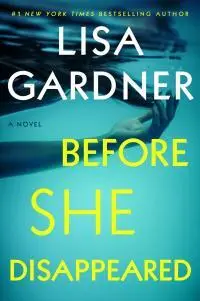
- Название:Before She Disappeared
- Автор:
- Издательство:Penguin Publishing Group
- Жанр:
- Год:2021
- ISBN:нет данных
- Рейтинг книги:4 / 5. Голосов: 1
-
Избранное:Добавить в избранное
- Отзывы:
-
Ваша оценка:
Before She Disappeared: краткое содержание, описание и аннотация
Предлагаем к чтению аннотацию, описание, краткое содержание или предисловие (зависит от того, что написал сам автор книги «Before She Disappeared»). Если вы не нашли необходимую информацию о книге — напишите в комментариях, мы постараемся отыскать её.
Frankie Elkin is an average middle-aged woman, a recovering alcoholic with more regrets than belongings. But she spends her life doing what no one else will--searching for missing people the world has stopped looking for. When the police have given up, when the public no longer remembers, when the media has never paid attention, Frankie starts looking.
A new case brings her to Mattapan, a Boston neighborhood with a rough reputation. She is searching for Angelique Badeau, a Haitian teenager who vanished from her high school months earlier. Resistance from the Boston PD and the victim's wary family tells Frankie she's on her own--and she soon learns she's asking questions someone doesn't want answered. But Frankie will stop at nothing to discover the truth,...
Before She Disappeared — читать онлайн бесплатно полную книгу (весь текст) целиком
Ниже представлен текст книги, разбитый по страницам. Система сохранения места последней прочитанной страницы, позволяет с удобством читать онлайн бесплатно книгу «Before She Disappeared», без необходимости каждый раз заново искать на чём Вы остановились. Поставьте закладку, и сможете в любой момент перейти на страницу, на которой закончили чтение.
Интервал:
Закладка:
Lotham picks up his notebook. Angelique’s username is a basic Gmail account, which makes sense. Her password, however, looks like a string of random numbers followed by an exclamation mark. Lotham shares it with me. I glance up at Emmanuel.
“You can remember this?” I ask him.
“It’s a code,” he murmurs. “The numbers stand for letters, from a cypher LiLi made up when we were younger. It reads Doc2Be! ”
“As in doctor-to-be?”
“Exactly.”
Lotham makes another note. “This her primary password? The one she uses most of the time?”
“I don’t know. I understand her cipher. We’d send each other coded notes using it. But we share this laptop, and I’ve watched her log in enough times. She knew I knew. What did it matter?”
“Can you see when she logged into the class?” Lotham asks. “Or how many times?”
Emmanuel takes the computer back. “Normally you would check browser history, but given she didn’t log in from this computer to complete the coursework . . .” He chews his lower lip, dark eyes narrowed in thought. “Ah. Here. When I first logged on last night, it told me the last time I’d accessed the course.” Emmanuel taps the screen, showing a record of date and time.
Lotham makes more notes while I peer closer. “Two weeks ago,” I say. “Three-oh-three p.m.” I glance at Emmanuel. “Does that mean anything to you? The date significant? The time of day? You said your sister likes codes.”
Emmanuel’s fingers fly over the keyboard, but then he shakes his head. “I don’t think so.”
“Walk me through how this works,” Lotham requests, attention back on us. “Angelique logs in to get assignments off the site, then what—completes them in some virtual classrooms, or uploads them from her own computer for her teacher to review?”
“Written essays she completes on her own, then uploads, yes. Tests are more complicated, with additional codes that must be entered by an adult, like my aunt, as protection against cheating.”
“So for this class to be completed, the final must’ve been some kind of written work?”
“Yes.”
“Which she had to upload from a computer,” Lotham muses, “which would give us an IP address. Now that’s something.”
He has his phone to his ear in the next instant, talking to someone about the website, user codes, and issuing a subpoena for additional records. Emmanuel nods along with the conversation, so apparently the technical mumble jumble makes sense to him.
I have a different question. “When Angelique disappeared, did you or your aunt contact this site, tell her teachers she had vanished?”
“My aunt gets e-mails from the site, keeping her notified of Angel’s progress. The courses cost money, so the school wants guardians to be informed. When assignments stopped being turned in, she would’ve been notified. But of all the things for my aunt to answer, worry about . . .”
“What did Angelique post?” Lotham is off the phone, looking at us again. “Can you pull up the essay?”
Emmanuel shakes his head. “The class is closed out. I can’t enter the course to look at past work.”
“Could you contact the course instructor?” I ask. “I mean, you have your sister’s e-mail and password. Can’t you just . . . be her and fire off an e-mail asking for a copy of the final assignment back? Your computer crashed right after sending, a virus ate your hard drive, something?”
Both Emmanuel and Lotham appear impressed, so apparently my basic internet skills have some merit.
Emmanuel works the keyboard again. “I can Instachat,” he declares after a moment. “The class professor is listed as being available. Hang on.”
I sip my coffee. It’s almost noon now. I wonder when Stoney is going to arrive and realize I’ve turned his bar into some kind of investigative headquarters. And what he might do or say about that. This may be the shortest job I’ve ever had.
Well, there was that place I was employed at for all of twenty minutes. Probably the fact I’d showed up totally loaded and crying hysterically hadn’t helped. Then that restaurant where I’d caught my hair on fire during the first shift . . .
Emmanuel frowns at the screen. “The teacher is Dr. Cappa. She says she thought she might hear from me.”
Lotham and I exchange glances.
“While the essay doesn’t reflect the quality of my previous work,” Emmanuel reads out loud, “there’s no need for a redo given my passing grade.”
“Get the damn assignment,” Lotham growls.
Emmanuel types more furiously. I have no idea what he’s saying to the teacher, if he’s still pretending to be Angelique or now explaining the situation, but minute rolls into minute, Lotham shifting restlessly beside me. Then:
“She sent it. I had to open the messenger system. Okay, here we go. The file was uploaded when Angelique last accessed the site. From . . . from an internet café.” Emmanuel pushes the laptop across the table to Lotham, who snaps a photo of the file’s information, and once again starts working his phone.
“You can tell all that from the upload?” I ask Emmanuel.
“Cybercafés have certain string codes,” he murmurs, already back to work. “Hang on. Here it is. The essay. Except it’s not a .doc file. It’s a PDF—a scanned image.”
The laptop screen fills with an image. It takes me a few moments to digest.
It appears to be a copy of torn pieces of yellow legal pad paper. It was scanned in color, revealing fold marks and smudges in the background. Western Expansion is written across the top in a small, neat script, followed by the body of the essay.
“Is that her?” I ask.
“It’s LiLi’s penmanship,” Emmanuel confirms, still scanning the screen. “But she would not handwrite school work.”
We all resume studying. I can’t tell what Detective Lotham thinks, but I’m confused. Everyone has described Angelique as a gifted student. This essay, on the other hand, not only looks clunky and awkward as it unspools down two sheets of paper, but reads that way as well.
Never has a moment been as important in American history as the westward movement.
Going forward was the only option for settlers in search of land and a new government that needed
To expand resources. President Andrew Jackson refused to
Give up plans to eject Indians from lands west of the Mississippi even when
You would’ve thought otherwise . . .
I don’t understand. Eleven months after disappearing, this is what Angelique cares about? Finding a way to crudely complete and post an essay for high school credit? Which assumed she had at least some access to the outside world. Yet hadn’t returned home?
I’ve encountered some strange behavior in my line of work, but this has me stumped.
“Did she sign up for additional courses?” I start to ask, just as Emmanuel bolts upright and slaps the table.
“It’s code! I knew it. She sent a code! My sister sent us a message!”
“What code?” Lotham is already pulling the laptop closer, trying to decipher the riddle.
“The capitalized words at the beginning of each line on the page. Look at them.” Emmanuel starts circling words on the screen with his finger. I follow along, reading out loud.
“Never. Going. To. Give. You.” I stop. Glance at Lotham. “Isn’t that a song—”
“‘Never Gonna Give You Up’ by Rick Astley, 1987, yes, yes,” Emmanuel says quickly. He’s grabbed the detective’s spiral notebook without asking and is already jotting down the first word of each line on the page. Lotham doesn’t stop him.
“Rickrolling,” Emmanuel informs us in answer to our unasked question, still writing furiously. “It was an internet meme prank years ago. People would embed the link to the music video in various websites or news clips. It was really funny.” He waves his hand. “I told you the eighties are big.”
Читать дальшеИнтервал:
Закладка:
Похожие книги на «Before She Disappeared»
Представляем Вашему вниманию похожие книги на «Before She Disappeared» списком для выбора. Мы отобрали схожую по названию и смыслу литературу в надежде предоставить читателям больше вариантов отыскать новые, интересные, ещё непрочитанные произведения.









Обсуждение, отзывы о книге «Before She Disappeared» и просто собственные мнения читателей. Оставьте ваши комментарии, напишите, что Вы думаете о произведении, его смысле или главных героях. Укажите что конкретно понравилось, а что нет, и почему Вы так считаете.