Stanley Johnson - Kompromat
Здесь есть возможность читать онлайн «Stanley Johnson - Kompromat» весь текст электронной книги совершенно бесплатно (целиком полную версию без сокращений). В некоторых случаях можно слушать аудио, скачать через торрент в формате fb2 и присутствует краткое содержание. Город: London, Год выпуска: 2017, ISBN: 2017, Издательство: Point Blank, Жанр: Триллер, Политический детектив, humor_satire, на английском языке. Описание произведения, (предисловие) а так же отзывы посетителей доступны на портале библиотеки ЛибКат.
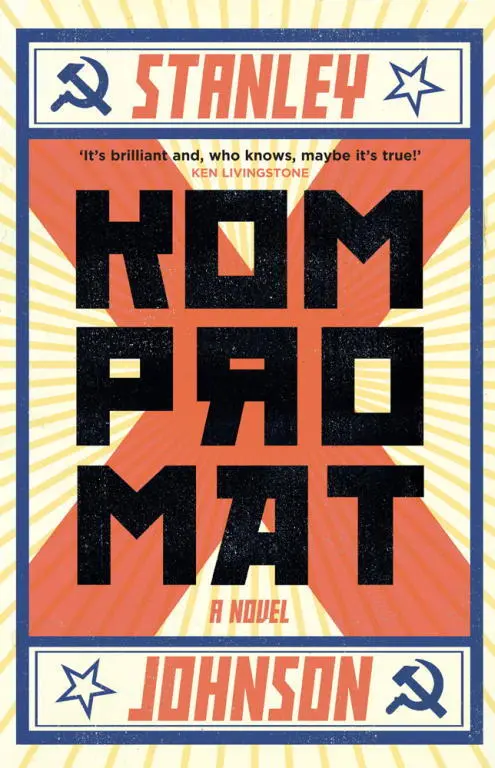
- Название:Kompromat
- Автор:
- Издательство:Point Blank
- Жанр:
- Год:2017
- Город:London
- ISBN:978-1-78607-246-7
- Рейтинг книги:5 / 5. Голосов: 1
-
Избранное:Добавить в избранное
- Отзывы:
-
Ваша оценка:
Kompromat: краткое содержание, описание и аннотация
Предлагаем к чтению аннотацию, описание, краткое содержание или предисловие (зависит от того, что написал сам автор книги «Kompromat»). Если вы не нашли необходимую информацию о книге — напишите в комментариях, мы постараемся отыскать её.
is a brilliant satirical thriller that tells the story of 2016’s seismic and unexpected political events on both sides of the Atlantic.
The UK referendum on Britain’s membership of the EU was a political showdown the British PM, Jeremy Hartley, thought he couldn’t lose. But the next morning both he and the whole of the rest of the country woke in a state of shock.
America meanwhile has its own unlikely Presidential candidate, the brash showman Ronald Craig, a man that nobody thought could possibly gain office. Throw into the mix the cunning Russian President Igor Popov, with his plans to destabilise the west, and you have a brilliant alternative account of the events that end with Britain’s new PM attempting to seek her own mandate to deal with the Brexit related crisis and America welcoming its own new leader.
Now in development for a major new TV series,
is a fast-paced thriller from a true political insider, and who knows, it just might all be true!
Kompromat — читать онлайн бесплатно полную книгу (весь текст) целиком
Ниже представлен текст книги, разбитый по страницам. Система сохранения места последней прочитанной страницы, позволяет с удобством читать онлайн бесплатно книгу «Kompromat», без необходимости каждый раз заново искать на чём Вы остановились. Поставьте закладку, и сможете в любой момент перейти на страницу, на которой закончили чтение.
Интервал:
Закладка:
They talked as they walked. As they approached the Stadhous , the City Hall, Yuri Yasonov said, ‘Our information is that the British government is throwing everything they have at this one. Jeremy Hartley, the prime minister, has really gone out on a limb. He’s convinced he’s brought back a winning package from Europe with the so-called “renegotiation”. And the chancellor, Tom Milbourne, is pushing Project Fear for all its worth.’
‘I don’t think it’s worth very much,’ Harriet countered. ‘Scare tactics by the Treasury. That’s how I see it.’
‘I’m afraid our people in the UK see things differently. Our ambassador sent in a report two days ago. He’s convinced the Leave campaign is going to lose. Frankly, Popov is rattled. I don’t often see him rattled but he is now. You’re one of us, otherwise I wouldn’t speak like this, but I’m telling you that as far as Popov’s key foreign policy objectives go, Brexit is top of the list.’
‘Ahead of Ronald Craig winning the US election?’ Harriet interjected.
‘I stand corrected. Let’s give both objectives equal billing.’
‘So what does Popov think we can do that we’re not already doing?’ Harriet was nettled. She’d been working her socks off.
Yasonov paused, picked up a pebble and tossed it into the water.
‘That was just a little splash,’ he said. ‘We’ve got a much bigger splash in prospect. President Popov is on his way to Berlin as I speak. Tomorrow he’s having informal meetings with the chancellor, then on Friday he is going to give a speech in the Bundestag at the invitation of the German government. I need hardly say that this is a great honour.’
‘And he’s going to make some key announcement in his speech, is that it?’ Harriet asked. ‘Something we can seize on, ammunition for our big guns as D-Day approaches?’
‘Helga Brun is the one who is going to make the big announcement, not Popov. After Popov’s speech to the Bundestag, Brun’s going to reply. Mark her words carefully. She’s going to give you the opening you need. A great wide-open goal. You’ll be able to drive a coach and horses through it.’
‘I’ve got to run,’ Yasonov said. ‘The plane to Berlin leaves in 90 minutes and I want to be on it. I’ve got to brief Popov at the Russian Embassy tonight.’
He tapped his nose with his finger. ‘We’re still working on Helga Brun’s speech!’
‘Don’t tell me anything I don’t need to know.’
‘Why would I do that?’ Yasonov smiled. He stepped off the pavement into the road to hail a passing cab.
CHAPTER TWENTY-TWO
German chancellor Helga Brun cradled the tiger cub in her arms. ‘She’s so sweet, isn’t she? I can’t believe she’s so beautiful.’
She lowered her head and nuzzled the young cub. ‘Thank you, Mr President. Germany thanks you from the heart.’
She handed the animal back to President Popov, before stepping up to the microphone.
‘Ladies and gentlemen,’ Brun began. ‘This is a wonderful moment for the Berlin Zoo, the most famous zoo in the world. Today, thanks to the generosity of President Popov and the Russian people, we are the proud possessors of our first Siberian tiger, truly one of the most beautiful animals in the world. A few weeks ago, I was in Moscow, at the World Tiger Summit organized by President Popov, and I learned then about the tremendous efforts which are being made worldwide to protect tigers. I learned in particular about the work which is being done to save the Siberian or Amur tiger. Am I right, Mr President, that there are around 450 such tigers in the wild?’
President Popov, still cuddling the little tiger, smiled. ‘Sometimes they cross over into China, but they quickly come back. They know it’s safer for them in Russia.’
Helga Brun laughed; the audience laughed. The TV cameras caught the moment and broadcast it to the world. The image of the Russian president standing next to the chancellor of the Federal Republic of Germany, with an extremely photogenic tiger cub in his arms, was one of the defining moments of President Popov’s visit that summer to Berlin, the capital of the Federal Republic of Germany. The Chinese government, back in the 1970s, had famously presented the Berlin Zoo with a baby panda, but Bao-Bao had recently died (of old age, nothing more sinister), leaving a gaping hole in an animal-loving nation’s hearts.
‘We must think of a name for our new guest,’ Helga Brun continued. ‘We should launch a nation-wide consultation. A referendum like our friends, the British, do.’
The audience laughed again. This was the Chancellor at her warmest, most human.
‘Perhaps they’ll decide to name her Helga!’ Popov quipped.
Berlin Zoo is situated at the western end of the Tiergarten, the great park which extends all the way to the Brandenburg Gate. On the north-eastern edge of the Tiergarten stands the Federal Chancellery building.
‘Let’s walk back across the park,’ Helga Brun suggested. ‘Some exercise will do us good.’
If Helga Brun had deliberately intended to throw her security detail into confusion, she certainly succeeded. The German chancellor and the Russian president set off on foot across the Tiergarten while a phalanx of special agents trotted along behind them at a respectful distance.
‘Such a brilliant idea, bringing us that little tiger cub, Igor,’ Helga Brun said. ‘Not taken from the wild, surely?’
‘No, born in Moscow Zoo. Her mother had a litter of five. Too many really. I’m sure she was glad to give one up in the interests of international diplomacy.’
‘Her loss is our gain,’ Helga said.
Popov took her arm. There was no way anyone could overhear them. ‘Quite like old times, isn’t it, Mina?’
He used her codename deliberately.
Growing up in East Germany, in the German Democratic Republic or GDR, at a time when East Germany was still part of the Soviet Empire, Helga Brun – from the KGB’s point of view – had obvious potential as a possible agent. She was young; she was pretty; she was phenomenally intelligent. She spoke Russian fluently. She had not only studied the language, she had visited Moscow twice on state-sponsored trips. She had come to Popov’s attention when he was head of the KGB office in Dresden and she was one of the youngest ever professors at Leipzig University, where she specialized in modern languages.
Of course, when the Berlin Wall fell at the end of 1989, the whole world changed. It certainly changed for the KGB in Dresden. Popov remembered that December evening so clearly. From a side-balcony of the KGB’s mansion on Angelikastrasse , he had watched the crowds ransacking the hated Stasi headquarters. Then a bunch of them had broken off to attack the KGB office itself. In what was probably one of the most defining moments of his career, Popov had confronted them unarmed.
‘This house is strictly guarded,’ he had said in fluent German. ‘My soldiers have weapons. And I have given them orders. If anyone enters the compound, they are to open fire.’
Later, of course, the story was much embellished. In some versions, guards were positioned with AK-47s at the windows of the building ready to shoot. Others claimed that Lieutenant-Colonel Popov, as he then was, had brandished a pistol when addressing the crowds. But the key point was through his prompt and successful intervention Popov gained vital time.
Next day, they had destroyed most of the files; communications, lists of contacts, agents’ networks etc. They all went up in smoke. But Popov and his colleagues managed to spirit some of them back to Moscow. One of those files was Mina’s.
Well, he had protected her back then, Popov thought. Thanks to him, KGB files from the Dresden office never fell into the hands of the government of the newly unified Germany in the way the Stasi files did. Had they done so, the government would certainly have learned about Mina and it would not have taken them long to discover Mina’s real identity. If they had, Helga Brun’s brilliant career might have taken a very different turn.
Читать дальшеИнтервал:
Закладка:
Похожие книги на «Kompromat»
Представляем Вашему вниманию похожие книги на «Kompromat» списком для выбора. Мы отобрали схожую по названию и смыслу литературу в надежде предоставить читателям больше вариантов отыскать новые, интересные, ещё непрочитанные произведения.





Обсуждение, отзывы о книге «Kompromat» и просто собственные мнения читателей. Оставьте ваши комментарии, напишите, что Вы думаете о произведении, его смысле или главных героях. Укажите что конкретно понравилось, а что нет, и почему Вы так считаете.