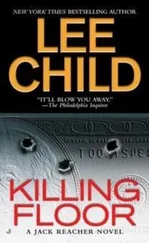
Lee Child - Killing Floor
Здесь есть возможность читать онлайн «Lee Child - Killing Floor» весь текст электронной книги совершенно бесплатно (целиком полную версию без сокращений). В некоторых случаях можно слушать аудио, скачать через торрент в формате fb2 и присутствует краткое содержание. Жанр: Триллер, Детектив, на английском языке. Описание произведения, (предисловие) а так же отзывы посетителей доступны на портале библиотеки ЛибКат.
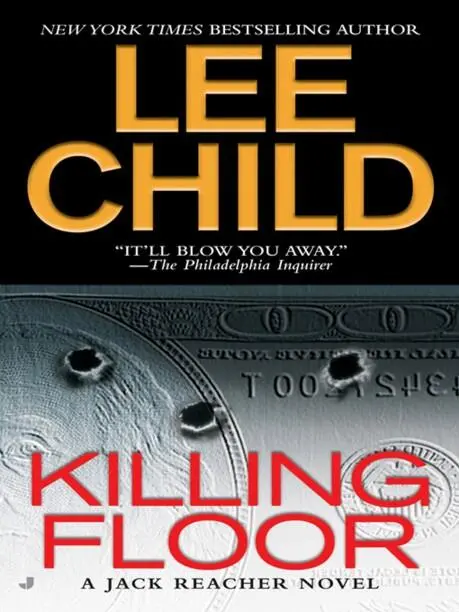
- Название:Killing Floor
- Автор:
- Жанр:
- Год:неизвестен
- ISBN:нет данных
- Рейтинг книги:4 / 5. Голосов: 1
-
Избранное:Добавить в избранное
- Отзывы:
-
Ваша оценка:
Killing Floor: краткое содержание, описание и аннотация
Предлагаем к чтению аннотацию, описание, краткое содержание или предисловие (зависит от того, что написал сам автор книги «Killing Floor»). Если вы не нашли необходимую информацию о книге — напишите в комментариях, мы постараемся отыскать её.
Killing Floor — читать онлайн бесплатно полную книгу (весь текст) целиком
Ниже представлен текст книги, разбитый по страницам. Система сохранения места последней прочитанной страницы, позволяет с удобством читать онлайн бесплатно книгу «Killing Floor», без необходимости каждый раз заново искать на чём Вы остановились. Поставьте закладку, и сможете в любой момент перейти на страницу, на которой закончили чтение.
Интервал:
Закладка:
I nodded.
“Out of one comes many,” I said. “I don’t get the significance.”
He shrugged. Started reading it through again. I watched him study it. Then there was a loud knock on the office door and Baker came in.
“Teale’s on his way out of the building,” he said. “Talking to Stevenson in the parking lot. You guys need anything?”
Finlay handed him the torn printout.
“Get me a Xerox of this, will you?” he said.
Baker stepped out to do it and Finlay drummed his fingers on the desk.
“Who are all those initials?” he said.
“We only know the dead ones,” I said. “Hubble and Molly Beth. Two are college numbers. Princeton and Columbia. Last one is a detective down in New Orleans.”
“What about Stoller’s garage?” he said. “You get a look at that?”
“Nothing,” I said. “Just a couple of empty air conditioner cartons from last year when he was hauling them to Florida and stealing them.”
Finlay grunted and Baker came back in. Handed me Joe’s paper with a copy of it. I kept the original and gave the copy to Finlay.
“Teale’s gone,” Baker said.
We hustled out of the office. Caught a glimpse of the white Cadillac easing out of the lot. Pushed open the file room door.
Margrave was a tiny town in the middle of nowhere but Gray had spent twenty-five years filling that file room with paper. There was more paper in there than I’d seen in a long time. All four walls had floor-to-ceiling cabinets with doors in crisp white enamel. We pulled open all the doors. Each cabinet was full of rows of files. There must have been a thousand letter-size boxes in there. Fiberboard boxes, labels on the spines, little plastic loops under the labels so you could pull the boxes out when you needed them. Left of the door, top shelf, was the A section. Right of the door, low down, the last Z. The K section was on the wall facing the door, left of center, eye level.
We found a box labeled “Kliner.” Right between three boxes labeled “Klan” and one labeled “Klipspringer v. State of Georgia.” I put my finger in the little loop. Pulled the box out. It was heavy. I handed it to Finlay. We ran back to the rosewood office. Laid the box on the rosewood desk. Opened it up. It was full of old yellowing paper.
But it was the wrong paper. It had nothing to do with Kliner. Nothing at all. It was a three-inch pile of ancient police department memos. Operational stuff. Stuff that should have been junked decades ago. A slice of history. Procedures to be followed if the Soviet Union aimed a missile at Atlanta. Procedures to be followed if a black man wanted to ride in the front of the bus. A mass of stuff. But none of the headings began with the letter K. Not one word concerned Kliner. I gazed at the three-inch pile and felt the pressure build up.
“Somebody beat us to it,” Roscoe said. “They took out the Kliner stuff and substituted this junk instead.”
Finlay nodded. But I shook my head.
“No,” I said. “Doesn’t make any sense. They’d have pulled the whole box and just thrown it in the trash. Gray did this himself. He needed to hide the stuff, but he couldn’t bring himself to spoil his sequence in the file room. So he took the contents out of the box and put in this old stuff instead. Kept everything neat and tidy. You said he was a meticulous guy, right?”
Roscoe shrugged.
“Gray hid it?” she said. “He could have done it. He hid his gun in my desk. He didn’t mind hiding things.”
I looked at her. Something she had said was ringing a warning bell.
“When did he give you the gun?” I asked her.
“After Christmas,” she said. “Not long before he died.”
“There’s something wrong with that,” I said. “The guy was a detective with twenty-five years in the job, right? A good detective. A senior, respected guy. Why would a guy like that feel his choice of off-duty weapon should have to be a secret? That wasn’t his problem. He gave you the box because it held something needed hiding.”
“He was hiding the gun,” Roscoe said. “I told you that.”
“No,” I said. “I don’t believe that. The gun was a decoy, to make sure you kept the box in a locked drawer. He didn’t need to hide the gun. Guy like that could have a nuclear warhead for an off-duty weapon if he wanted to. The gun wasn’t the big secret. The big secret was something else in the box.”
“But there isn’t anything else in the box,” Roscoe said. “Certainly no files, right?”
We stood still for a second. Then we ran for the doors. Crashed through and ran over to Roscoe’s Chevy in the lot. Pulled Gray’s file box out of the trunk. Opened it up. I handed the Desert Eagle to Finlay. Examined the box of bullets. Nothing there. There was nothing else in the file box. I shook it out. Examined the lid. Nothing there. I tore the box apart. Forced the glued seams and flattened the cardboard out. Nothing there. Then I tore the lid apart. Hidden under the corner flap there was a key. Taped to the inside face. Where it could never be seen. Where it had been carefully hidden by a dead man.
WE DIDN’T KNOW WHAT THE KEY FIT. WE DISCOUNTED ANYTHING in the station house. Discounted anything in Gray’s home. Felt those places were too obvious for a cautious man to choose. I stared at the key and felt the pressure building. Closed my eyes and built a picture of Gray easing back the corner of that lid and taping his key under it. Handing the box to his friend Roscoe. Watching her put it in her drawer. Watching the drawer roll shut. Watching her lock it. Relaxing. I built that picture into a movie and ran it in my head twice before it told me what the key fitted.
“Something in the barbershop,” I said.
I snatched the Desert Eagle back from Finlay and hustled him and Roscoe into the car. Roscoe drove. She fired it up and slewed out of the lot. Turned south toward town.
“Why?” she said.
“He used to go in there,” I said. “Three, four times a week. The old guy told me that. He was the only white guy ever went in there. It felt like safe territory. Away from Teale and Kliner and everybody else. And he didn’t need to go in there, did he? You said he had a big messy beard and no hair. He wasn’t going in there to get barbered. He was going in there because he liked the old guys. He turned to them. Gave them the stuff to hide.”
Roscoe jammed the Chevy to a stop on the street outside the barbershop and we jumped out and ran in. There were no customers in there. Just the two old guys sitting in their own chairs, doing nothing. I held up the key.
“We’ve come for Gray’s stuff,” I said.
The younger guy shook his head.
“Can’t give it to you, my friend,” he said.
He walked over and took the key from me. Stepped over and pressed it into Roscoe’s palm.
“Now we can,” he said. “Old Mr. Gray told us, give it up to nobody except his friend Miss Roscoe.”
He took the key back from her. Stepped back to the sink and stooped down to unlock a narrow mahogany drawer built in underneath. Pulled out three files. They were thick files, each in an old furred buff paper cover. He handed one to me, one to Finlay and one to Roscoe. Then he signaled his partner and they walked through to the back. Left us alone. Roscoe sat on the upholstered bench in the window. Finlay and I hitched ouselves into the barber chairs. Put our feet up on the chrome rests. Started reading.
MY FILE WAS A THICK STACK OF POLICE REPORTS. THEY HAD all been Xeroxed and faxed. Doubly blurred. But I could read them. They formed a dossier put together by Detective James Spirenza, Fifteenth Squad, New Orleans Police Department, Homicide Bureau. Spirenza had been assigned a homicide, eight years ago. Then he had been assigned seven more. He had ended up with a case involving eight homicides. He hadn’t cleared any of them. Not one. A total failure.
Читать дальшеИнтервал:
Закладка:
Похожие книги на «Killing Floor»
Представляем Вашему вниманию похожие книги на «Killing Floor» списком для выбора. Мы отобрали схожую по названию и смыслу литературу в надежде предоставить читателям больше вариантов отыскать новые, интересные, ещё непрочитанные произведения.



Обсуждение, отзывы о книге «Killing Floor» и просто собственные мнения читателей. Оставьте ваши комментарии, напишите, что Вы думаете о произведении, его смысле или главных героях. Укажите что конкретно понравилось, а что нет, и почему Вы так считаете.