John Katzenbach - The Analyst
Здесь есть возможность читать онлайн «John Katzenbach - The Analyst» весь текст электронной книги совершенно бесплатно (целиком полную версию без сокращений). В некоторых случаях можно слушать аудио, скачать через торрент в формате fb2 и присутствует краткое содержание. Жанр: Триллер, на английском языке. Описание произведения, (предисловие) а так же отзывы посетителей доступны на портале библиотеки ЛибКат.
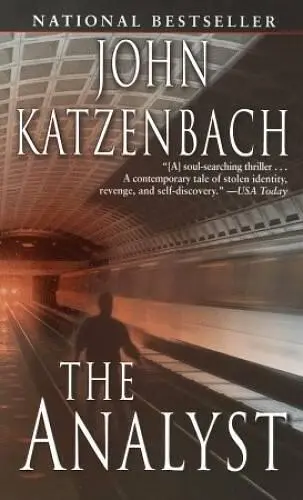
- Название:The Analyst
- Автор:
- Жанр:
- Год:неизвестен
- ISBN:нет данных
- Рейтинг книги:4.5 / 5. Голосов: 2
-
Избранное:Добавить в избранное
- Отзывы:
-
Ваша оценка:
The Analyst: краткое содержание, описание и аннотация
Предлагаем к чтению аннотацию, описание, краткое содержание или предисловие (зависит от того, что написал сам автор книги «The Analyst»). Если вы не нашли необходимую информацию о книге — напишите в комментариях, мы постараемся отыскать её.
The Analyst — читать онлайн бесплатно полную книгу (весь текст) целиком
Ниже представлен текст книги, разбитый по страницам. Система сохранения места последней прочитанной страницы, позволяет с удобством читать онлайн бесплатно книгу «The Analyst», без необходимости каждый раз заново искать на чём Вы остановились. Поставьте закладку, и сможете в любой момент перейти на страницу, на которой закончили чтение.
Интервал:
Закладка:
He made certain to lock his front door behind him, then took the elevator down to the basement. It had been months since he’d been in the building’s storage area and he wrinkled his nose at the musty, stale-smelling air in the space. It had a fetid, sickly quality to it, aged and filthy, charred by the daily cycle of heat. Just stepping out of the elevator gave him the asthmatic’s sensation of tightening in his chest. He wondered why building management never cleaned the area. There was a light switch on the wall, which he flicked, throwing a little brightness into the basement from a single uncovered overhead hundred-watt bulb. Whenever he moved, he carried shadows with him, streaking grotesquely through the dark and damp. Each of the building’s six apartments had a storage area, delineated by chicken wire nailed to cheap balsa wood frames, with the apartment number stenciled on the outside. It was a place of broken chairs and boxes of old papers, unused and rusty bicycles, skis and steamer trunks, and unneeded suitcases. Dust and cobwebs covered most everything, and most everything was in the category of something slightly too valuable to throw out, but not important enough to keep around every day. Things collected from time to time that just slipped into the category of better keep this because someday we might need it, but just barely.
Ricky hunched over slightly, although there was plenty of headroom. It was more the closed atmosphere that made him bend. He approached his own cubicle with the padlock key in hand.
But the lock was already open. It hung from the handle of the door like a forgotten Christmas tree ornament.
He looked closer and saw that it had been sliced open with bolt cutters.
Ricky stepped back a single stride, shocked, as if a rat had suddenly run in front of him.
His first instinct was to turn and run, his second to move forward. This is what he did, walking slowly to the chicken wire door and pulling it open. What he saw immediately was that exactly what he came down to the basement searching for, the box containing his wife’s computer, was missing. He moved deeper inside the storage area. The overhead light was partially blocked by his own body, so that only swordlike streaks of illumination carved through the area. He glanced about and saw that another box was absent. This was a large plastic file container that kept copies of his completed tax returns.
The rest of his near-trash seemed to be intact, for what it was worth.
Almost staggered by an overwhelming sense of defeat, Ricky turned and headed back to the elevator. It was not until he rose out of the basement, back into the midday light, clearer air, and away from the grime and dust of memories stored below that he allowed himself to think about the impact that the missing computer and tax returns might have.
What was stolen? he asked himself.
He shuddered suddenly. He answered his own question: Perhaps everything.
The missing tax returns made his stomach churn with an evil, acid sensation. No wonder the attorney Merlin knew so much about his assets. He probably knew everything about Ricky’s modest finances. A tax return is like a road map, from Social Security number to charitable donations. It displays all the well-traveled routes of one’s existence, without the history. Like a map, it shows someone how to get from here to there in another person’s life, where the turnpikes flow and where the back roads begin. All it lacks is color and description.
The missing computer frightened Ricky just as much. He had no idea what remained on the hard drive, but he knew it was something. He tried to recall the hours that his wife had spent on the machine before the disease robbed her even of the strength to type. How much of her pain, memories, insights, and electronic travels were there, he had no idea. He knew only that skilled computer technicians could recover all sorts of past journeys from computer memory chips. He assumed that Rumplestiltskin had the necessary ability to extract from the machine whatever was there that he decided he wanted.
Ricky slumped into his apartment. The sense of violation he felt was like being sliced with a heated razor blade. He looked about him, and understood that everything he thought was so safe and private about his life was vulnerable.
Nothing was secret.
If he were still a child, Ricky realized, he would have burst into tears at that very moment.
His dreams that night were filled with dark and violent images, of being cut by knives. In one dream, he saw himself trying to maneuver through a poorly lit room, knowing all the time that if he stumbled and fell he would fall through the blackness into some oblivion, but as he traversed the dreamscape, he was uncoordinated and clumsy, grasping at vaporous walls with drunken fingers, his journey seemingly helpless. He awakened into the pitch-darkness of his bedroom filled with that momentary panic as one staggers from unconscious to conscious, sweat staining his nightshirt, his breathing shallow and his throat hoarse, as if he’d been crying out for several hours in sustained despair. For a moment he was still unsure whether he’d left the nightmare behind, and it was not until he clicked on the bedside lamp and was able to look around the familiar space of his own room that his heart began to return to a normal pace. Ricky dropped his head back onto his pillow, desperate for rest, knowing none was readily available. He had no difficulty interpreting his dreams. They were as evil as his waking life was becoming.
The ad ran in the Times that morning on the front page, at the bottom, as specified by Rumplestiltskin. He read it over several times, then thought that at the least, it would give his tormentor something to think about. Ricky did not know how long it would take for the man to reply, but he expected some sort of answer rapidly, perhaps in the following morning’s paper. In the interim, he decided it would be best if he kept working on the puzzle.
He felt a momentary, illusory surge of success, with the ad running, as if encouraged that he had taken a step forward, and gained a temporary sense of determination. The overwhelming despair from the previous day’s discovery of the missing computer and stolen tax returns was, if not exactly forgotten, at least put aside. The ad gave Ricky the sensation that this day, at least, he wasn’t being a victim. He found himself focused, able to concentrate, his memory more acute and accurate. The day fled rapidly, as quickly as an ordinary day with patients would have, as Ricky plumbed his recollections and traveled steadily through his own interior landscape.
By the end of the morning, he’d created two separate working lists. Still confining himself to the ten-year period that started in 1975 and went to 1985, on the first list he identified some seventy-three people that he had seen in treatment. The courses of treatment had ranged from a high of seven years for one deeply troubled man, to a three-month burst for a woman experiencing marital difficulties. On average, most of his patients were in the three- to five-year range. A few less. The majority of his patients were traditional Freudian-based analyses, four to five times per week, utilizing the couch and all the various techniques of the profession. A few were not; they were face-to-face encounters, more simple talk sessions, where he had behaved less as an analyst and more as an ordinary therapist, complete with opinions, pronouncements, and advice, which are, for the most part, the things an analyst strives hardest to avoid. He realized that by the mid-1980s he had weaned most of this sort of patient out of his practice, and begun to confine himself solely to the in-depth experience of psychoanalysis.
There were also, he knew, a number of patients, perhaps two dozen over that ten-year period, who had started treatments and then interrupted them. The reasons for discontinuing therapies were complex: Some hadn’t the money or the necessary health insurance to cover his fees; others had been forced to relocate, because of job or school demands. A few had simply decided angrily that they weren’t being helped enough, or rapidly enough, or were too angry with the world and what it promised to deliver to them to continue. These people were rare, but existed.
Читать дальшеИнтервал:
Закладка:
Похожие книги на «The Analyst»
Представляем Вашему вниманию похожие книги на «The Analyst» списком для выбора. Мы отобрали схожую по названию и смыслу литературу в надежде предоставить читателям больше вариантов отыскать новые, интересные, ещё непрочитанные произведения.









Обсуждение, отзывы о книге «The Analyst» и просто собственные мнения читателей. Оставьте ваши комментарии, напишите, что Вы думаете о произведении, его смысле или главных героях. Укажите что конкретно понравилось, а что нет, и почему Вы так считаете.