William Lashner - Past Due
Здесь есть возможность читать онлайн «William Lashner - Past Due» весь текст электронной книги совершенно бесплатно (целиком полную версию без сокращений). В некоторых случаях можно слушать аудио, скачать через торрент в формате fb2 и присутствует краткое содержание. Жанр: Триллер, на английском языке. Описание произведения, (предисловие) а так же отзывы посетителей доступны на портале библиотеки ЛибКат.
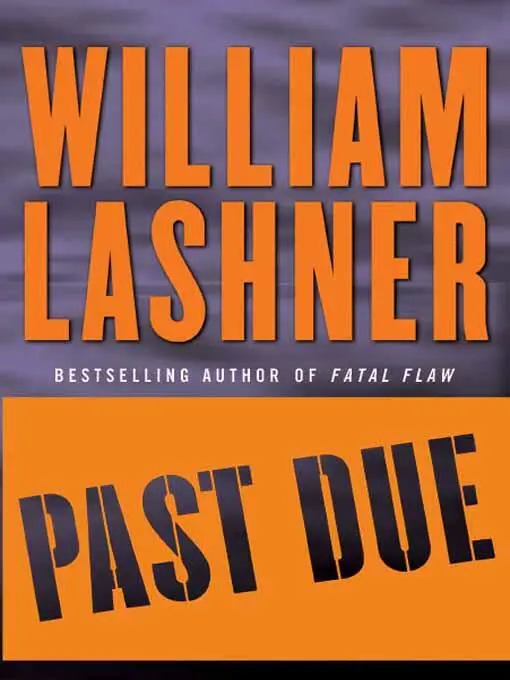
- Название:Past Due
- Автор:
- Жанр:
- Год:неизвестен
- ISBN:нет данных
- Рейтинг книги:5 / 5. Голосов: 1
-
Избранное:Добавить в избранное
- Отзывы:
-
Ваша оценка:
Past Due: краткое содержание, описание и аннотация
Предлагаем к чтению аннотацию, описание, краткое содержание или предисловие (зависит от того, что написал сам автор книги «Past Due»). Если вы не нашли необходимую информацию о книге — напишите в комментариях, мы постараемся отыскать её.
Past Due — читать онлайн бесплатно полную книгу (весь текст) целиком
Ниже представлен текст книги, разбитый по страницам. Система сохранения места последней прочитанной страницы, позволяет с удобством читать онлайн бесплатно книгу «Past Due», без необходимости каждый раз заново искать на чём Вы остановились. Поставьте закладку, и сможете в любой момент перейти на страницу, на которой закончили чтение.
Интервал:
Закладка:
I stood on the far side of the eighteenth green, just in front of the clubhouse, and watched the foursomes make their way up the fairway. I was looking for a man in a blue windbreaker, yanking his clubs along in a hand cart, most likely somewhere in the rough by the trees on the right side of the fairway. The way the old men on the practice green put it, Buck Greeley was so conservative he only played the right side of the course. I understood that to mean that Buck Greeley was such a stubborn old man that he refused to admit he had a slice.
I spotted him climbing up the right side, bent, without a hat, jerking the cart angrily behind him as he walked away from his playing partners and made his way toward the trees where his banana tee shot had landed. He grabbed an iron from his bag, looked up, glared at a couple of kids lugging their bags from the parking lot to the clubhouse, along a path that cut smack across the eighteenth fairway.
“Get the hell out of our way,” he called out.
The kids maintained their placid pace. “We see you,” one called back.
“You might see us but you’re still lallygagging like a bunch of Nancies.”
“You reach us, old man, and we’ll scatter.”
Greeley grunted, took a vicious swipe with his iron, watched as the ball emerged from the turf a low flash of white before smacking straight into the branches of a small maple and falling like a shot bird, forty yards short of the path.
The kids laughed and high fived.
Greeley replaced his iron, dragged his cart forward, until he was in position to take another angry swipe, and sent the ball smartly into a sand trap.
Two slashes later he was on the green. Two stabs with his putter left him three feet from the pin, a putt which he conceded to himself. A quadruple bogey, eight by my count, although who was counting, certainly not Greeley. I couldn’t hear the conversation off the green but I could imagine it.
“What did you get there, Buck?”
“Five.”
Men work their entire lives, salting away what they can in their IRAs, all the time dreaming of retirement so they can spend their sunset years on the links. They might as well just save up for dental surgery.
“Mr. Greeley? Do you have a minute?”
He was leaning over, lugging his cart behind him, his scalp, beneath his wispy white hair, red with exertion and sun. A surprisingly short man, heavy in the legs and chest. He lifted his face, a flat pug face, and took in my suit, my tie, my black shoes. “What do you want?” he barked.
“I’d like to talk.”
“About what?”
“About your son, Tommy.”
“Oh my God,” he said, the hostility suddenly melting into something else. “Did they find him?”
I stared into his now wide eyes and was taken aback by what I saw, the pain, the fear, the loss, the hope, the hope. Whatever wound the disappearance of his son had burned into him, it had not yet healed, not yet completely covered over with scab and scar. I felt, just then, like I had stepped inside a stranger’s house, pushed open the bedroom door, trespassed upon a scene of utter privacy.
“No, sir,” I said. “I’m sorry, no.”
His face closed again, just that quickly. “Then what the hell do you want?”
“I just want to talk. About your son. If you have the time.”
“Of course I have the time. What the hell else do I have but time? But I need to eat first. Eighteen holes, taking as many whacks as I do, burns everything I got these days.”
We took a table in the back corner of the clubhouse grill, a small dark room with white plastic chairs and green oilcloth covering the tables. The room was filled with old men, playing cards or staring at the Golf Channel on the television bracketed above the front door. The old men gave me the eye as I passed through, not many suits in the Dee Dubs clubhouse, I suppose. At the grill I bought two hot dogs and two Cokes.
“What do you like on your dog?” I asked him.
“Lobster,” he said, “and hold the wiener. But if they don’t have lobster, then onions and mustard.”
I put both hot dogs in front of him. He tore into one with his big false teeth, devoured it, took up the next. The whole time he was looking at me from under his brow without saying anything, sizing me up. Halfway through his second dog, he nodded. “Go ahead,” he said.
I told him I was a lawyer, which drew a wince, told him I had received information about the disappearance of his son from a client and was trying to figure out exactly what had happened. I said I had some leads and thought I had a chance to solve it once and for all.
“Why?” he said. “What’s it matter now?”
“If it mattered then,” I said, “it matters now.”
“I don’t know anything.”
“Just tell me about him. Who were his friends? What did you know of his life at Penn?”
“Nothing,” said Greeley.
I stared at him for a moment, during which he failed to elaborate, and then I said softly, “He was your son.”
“What does that matter?” he said. “We didn’t talk. All this talk about talk. Everything’s a talk show now. Look at that, on the Golf Channel even. Talk talk talk. Has any society talked more and said less. We didn’t talk, Tommy and me. The thing I respected most about him was he didn’t tell me anything. A man’s got to take care of his own damn business. A son shouldn’t have to listen to his father talk about old girlfriends, about struggling to make a living, how everything turns to shit because he’s white and Irish and didn’t go to Harvard and the liberals say he’s not deserving enough. A son shouldn’t be burdened with that. And a father shouldn’t be burdened with his son’s struggle to pass algebra or get between some girl’s legs or a prank gone bad. That’s nothing a father should know about. We kept our own damn business. We didn’t talk.”
“What was he like?”
“Tommy? Cocksure, arrogant. Like me when I was younger. He had his own things going on and sometimes they blew up in his face. But he was always one for slipping out of trouble. And in those days I was around to bail him out, wasn’t I? Though he was doing all right for himself in the end. Ivy League college and then a top-ten law school. Pretty damn all right. I thought things might be working out for him after everything.”
“Everything?”
“Nothing. What do you want from me?”
“Your wife said you went down to Philadelphia looking for him when he came up missing.”
“The police down there said there was nothing they could do. What the hell does that mean? A boy is missing and there is nothing they can do? They didn’t give a damn. But he was my son. So I went down, asked questions. Fat good that did me. What was there to see? Nothing. And the rest were lies, all lies.”
“What kind of lies?”
“About his business. Lies from people who were jealous that he was making money, making something of himself.”
“About the drugs.”
“Shut your yap.” He looked around, lowered his voice. “You don’t need to bring those lies up here.”
“Okay, you’re right. I’m sorry.”
“There’s nothing really to say, is there? He was here and then he wasn’t. Pfft. That’s the way it is with things. Money. Love. Youth. It’s here and then it’s gone. Look at me. But you don’t think it will be that way with a son.”
It was there again, that same thing I had glimpsed before, that private pain, which made me feel cheap as I spied it. What the hell was I doing, ripping open wounds I thought I was trying to salve?
“You never heard from him after the disappearance?”
“Course not. But that didn’t stop that queer little FBI Nancy from coming up here every other month or so asking his questions.”
Читать дальшеИнтервал:
Закладка:
Похожие книги на «Past Due»
Представляем Вашему вниманию похожие книги на «Past Due» списком для выбора. Мы отобрали схожую по названию и смыслу литературу в надежде предоставить читателям больше вариантов отыскать новые, интересные, ещё непрочитанные произведения.



Обсуждение, отзывы о книге «Past Due» и просто собственные мнения читателей. Оставьте ваши комментарии, напишите, что Вы думаете о произведении, его смысле или главных героях. Укажите что конкретно понравилось, а что нет, и почему Вы так считаете.