William Lashner - Past Due
Здесь есть возможность читать онлайн «William Lashner - Past Due» весь текст электронной книги совершенно бесплатно (целиком полную версию без сокращений). В некоторых случаях можно слушать аудио, скачать через торрент в формате fb2 и присутствует краткое содержание. Жанр: Триллер, на английском языке. Описание произведения, (предисловие) а так же отзывы посетителей доступны на портале библиотеки ЛибКат.
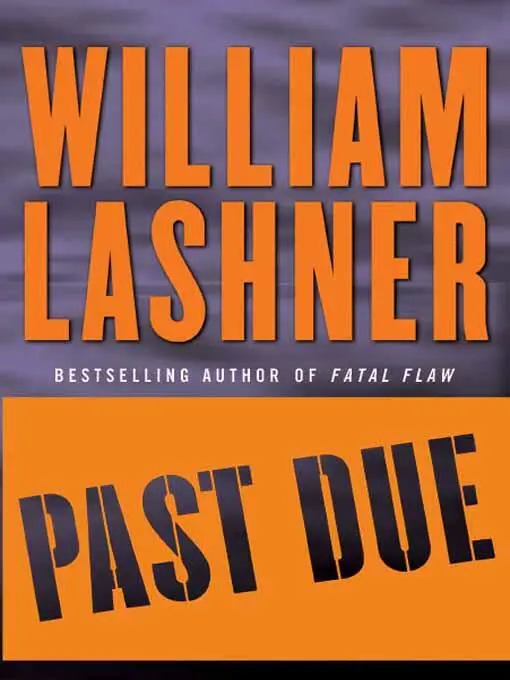
- Название:Past Due
- Автор:
- Жанр:
- Год:неизвестен
- ISBN:нет данных
- Рейтинг книги:5 / 5. Голосов: 1
-
Избранное:Добавить в избранное
- Отзывы:
-
Ваша оценка:
Past Due: краткое содержание, описание и аннотация
Предлагаем к чтению аннотацию, описание, краткое содержание или предисловие (зависит от того, что написал сам автор книги «Past Due»). Если вы не нашли необходимую информацию о книге — напишите в комментариях, мы постараемся отыскать её.
Past Due — читать онлайн бесплатно полную книгу (весь текст) целиком
Ниже представлен текст книги, разбитый по страницам. Система сохранения места последней прочитанной страницы, позволяет с удобством читать онлайн бесплатно книгу «Past Due», без необходимости каждый раз заново искать на чём Вы остановились. Поставьте закладку, и сможете в любой момент перейти на страницу, на которой закончили чтение.
Интервал:
Закладка:
It was all a swirl for me as I walked back down the hall toward the elevator. The squirrelly FBI special agent who brought down an empire, the money launderer who did a spectacularly bad job of laundering Tommy Greeley’s cash, the grand jury investigation, the sixty-million-dollar-a-year cocaine enterprise, the indictments, the dead informant, the dead informant who died in a strange swimming accident not two weeks before Joey Parma got his throat slashed. All of it swirled around me as I tried to make sense of it, but then a name popped out of the swirl, a name that Telushkin had made sure to tell me for reasons I could guess, oh yes.
Jackson Straczynski.
I knew the name, every lawyer in the city, in the country, knew the name. Jackson Straczynski, State Supreme Court Justice Jackson Straczynski, one of the most respected conservative legal scholars in the country and the first name on a very short list to fill the next open seat on the United States Supreme Court.
Whatever I had thought I had been getting myself into before, I had just fallen into the big leagues.
Chapter 20
“WHAT I HEARD,” said my private investigator Phil Skink, “is this Edward Dean, he made his money out on the Coast in some Internet con job what he sold afore the bubble burst. Or he was involved in some complicated investment scam the coppers are still trying to unravel. Or he invented the thingamajig what goes in the whatchubob what they stick into every computer comes off the line.”
“In other words,” I said, “you’ve learned nothing.”
“This is crucial data, it is, culled from the most respected sources nationwide.”
“Zilch.”
“Pretty much, yeah.”
It was approaching midnight in Rittenhouse Square, the residential heart of Philadelphia’s high society. The park was dark, deserted except for the occasional couple strolling home from the bars and clubs on the east side of the square, or the occasional cop strolling from bench to bench to roust the homeless. Beth and I had arrived at the park first. Skink came after, assuring us that we hadn’t been tailed by Dante’s boys. Now we three sat on a bench in the middle of the square, staring at an imposing town house just to the west of the Ethical Society, with a curving stone staircase and granite pediments and wrought-iron grates over its first-floor windows.
The town house, dark now except for a bright light falling from the third-floor window, was currently home to the various and sundry Jacopo businesses, along with their principal shareholder.
“You pick up any other useless information about him?” I asked.
“He’s a charitable sort, so long as his name’s prominent on the donor list. Gives to plastic surgeons what are curing hair lips in China. Gives to groups pushing literacy in the inner city. Gives to an organization committed to saving some old boat on the waterfront.”
“Excuse me,” I said.
“Some old oceangoing liner.”
“With the two huge red funnels?”
“That’s the one. The owner wants to scrap it. This group is trying to save it, turn it into something like a hotel, or a floating museum, anything to keep it intact.”
“That’s peculiar,” I said, remembering the sight of that same boat, looming not far from the pier where Joey Parma’s lifeless body was tossed. “So, is he inside?”
“The limo pulled around back at nine, most likely with this Dean inside. The hard-act what keeps watch and runs errands, name of Colfax, he showed up around nine-thirty. And then she showed up a little after ten.”
“Kimberly Blue.”
“That’s right, our Kimberly.”
“So you think…”
“I ain’t thinking nothing.”
“Why did we wait until so late?” said Beth.
“Knocking at a reasonable hour would be expected,” I said. “I’d rather shake him up a bit.”
“Are we treating him like a client or a suspect?” said Beth.
I thought on that one for a moment. We had, after all, taken Jacopo’s money and paid our bills with it and we were, after all, pursuing Jacopo’s claim against Derek Manley. And yet, there was something about that old rotting boat and its proximity to Joey’s corpse that convinced me.
“Suspect,” I said.
“Attaboy,” said Skink. “You sure you don’t want me inside with you?”
“The law firm of Derringer and Carl can handle this for now. No need to show Mr. Dean everything we have. I’m saving you for later. You’re sure about that Eldorado being at the club?”
“I ain’t seen it with my own eyes, but it’s somewheres there. You just might have to poke around a bit. When you getting it?”
“The sheriff is scheduled for day after tomorrow,” I said. “All right. You ready, Beth?”
“Ready,” she said.
“If we’re not out in half an hour,” I told Skink as I pushed myself off the bench, “send in the dancing girls. Not that I’m worried or anything, but I always like a good show.”
We walked together, Beth and I, south through the park and then west to the town house and our meeting with the mysterious Eddie Dean. Who was he? Where did he come from? Why had he magically appeared in Philadelphia? And why did an apparent high roller like Edward Dean have any interest in the death of a four-time loser like Joseph Parma? It was those very questions that impelled us up that curving stone staircase toward the ornate wooden door.
I pressed the buzzer and pressed it again.
After a long stretch of time, a voice came through the little black squawk box beside the door.
“Who the ’ell are you two and what are you after?” The voice was harsh, dismissive, and, surprise surprise, British, like a London cabbie on a wet morning with the traffic snarled and a poodle making puddles on the backseat.
I stepped away, scanned the wall left and right of the door, found the small camera staring at me, smiled and waved like a beauty queen.
“We’ve come to see Mr. Dean,” I said into the box.
“Bugger off.”
“We’re his lawyers. We have something to deliver that I think he’ll be anxious to see.”
“Do you know what ’our it is?”
“Late? My bad. Just tell Mr. Dean his lawyers are here and they’ve brought for his perusal the deposition of Derek Manley.”
We didn’t have to wait long before the door opened and the gate was unlocked. A man in sharp black pants, loafers without socks, and a gray V-neck sweater, all apparently quickly thrown on for our benefit, scowled before leading us into the house. He was medium height, medium build, nothing too threatening there, but his hair was razored close to his skull, his nose had been broken and reset badly, his eyes were cold and gray and frankly scary.
He led us through a central hallway and then left, into a large sitting room, with urns and red walls and stiff French furnishings. There were paintings of horses. There was a fireplace the size of a Yugo. There was a wall of old leather-bound books in matched sets. A huge grand piano, its cover raised jauntily, sat expectantly in the corner. It smelled of must and ashes and perfume, that room, it smelled of money stashed in boudoir drawers.
“Wait ’ere,” said the man. He slid a heavy wooden door closed behind him after he left the room.
A leather-topped table by the window caught my attention. Small, precisely carved pieces of wood were scattered across it, some painted, most not. I picked up a large conical piece, painted red and white and black. It looked like something, yes it did, and then I realized what. It was the stack on that decaying ship in the harbor. He was building a model of the old ocean liner, trying to put it all back together, but he hadn’t gotten far.
Beth strolled along the bookshelves and ran a finger across a row of spines, leaving a trail in the dust. “I suppose Mr. Dean is not much of a reader,” she said.
Читать дальшеИнтервал:
Закладка:
Похожие книги на «Past Due»
Представляем Вашему вниманию похожие книги на «Past Due» списком для выбора. Мы отобрали схожую по названию и смыслу литературу в надежде предоставить читателям больше вариантов отыскать новые, интересные, ещё непрочитанные произведения.




Обсуждение, отзывы о книге «Past Due» и просто собственные мнения читателей. Оставьте ваши комментарии, напишите, что Вы думаете о произведении, его смысле или главных героях. Укажите что конкретно понравилось, а что нет, и почему Вы так считаете.