William Lashner - Past Due
Здесь есть возможность читать онлайн «William Lashner - Past Due» весь текст электронной книги совершенно бесплатно (целиком полную версию без сокращений). В некоторых случаях можно слушать аудио, скачать через торрент в формате fb2 и присутствует краткое содержание. Жанр: Триллер, на английском языке. Описание произведения, (предисловие) а так же отзывы посетителей доступны на портале библиотеки ЛибКат.
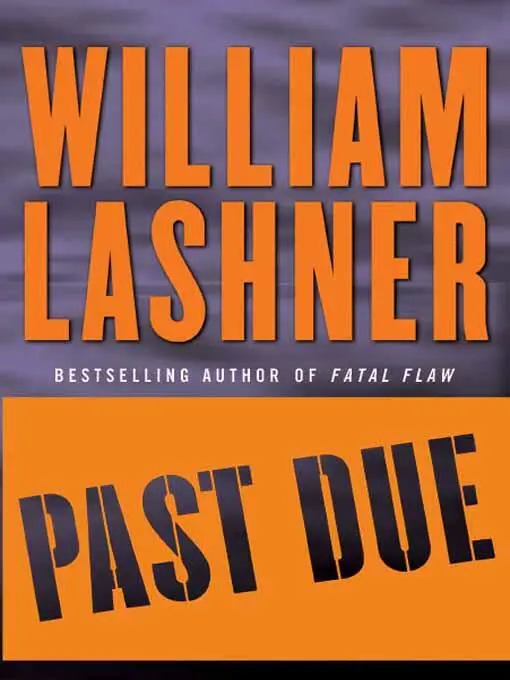
- Название:Past Due
- Автор:
- Жанр:
- Год:неизвестен
- ISBN:нет данных
- Рейтинг книги:5 / 5. Голосов: 1
-
Избранное:Добавить в избранное
- Отзывы:
-
Ваша оценка:
Past Due: краткое содержание, описание и аннотация
Предлагаем к чтению аннотацию, описание, краткое содержание или предисловие (зависит от того, что написал сам автор книги «Past Due»). Если вы не нашли необходимую информацию о книге — напишите в комментариях, мы постараемся отыскать её.
Past Due — читать онлайн бесплатно полную книгу (весь текст) целиком
Ниже представлен текст книги, разбитый по страницам. Система сохранения места последней прочитанной страницы, позволяет с удобством читать онлайн бесплатно книгу «Past Due», без необходимости каждый раз заново искать на чём Вы остановились. Поставьте закладку, и сможете в любой момент перейти на страницу, на которой закончили чтение.
Интервал:
Закладка:
“You look like crap,” I said.
“It’s not getting better,” said my father.
“What did the doctor say?”
“She’s going to try a different antibiotic.”
“I’m sure that will work.”
My father just grunted. He was sure it wouldn’t, his natural pessimism demanded nothing less than despair, and, as was often the case with my father, maybe it was warranted. His oxygen absorption level had dropped to ninety-one percent and his breaths were coming faster now, even with the plastic tube feeding oxygen into his nose.
“Hey,” I said. “I’m going out with that doctor.”
“It won’t go nowhere.”
“Why not?”
“She ain’t your type.”
“What the hell does that mean?”
“First, she’s a doctor, so she’s too damn good for you. Second, she’s from Ohio.”
“Nice,” I said, though, as usual, I worried that he was right.
“Did I tell you how I found her?” said my father.
“Who? The doctor?”
“The girl. The pleated skirt. Did I?”
“No, Dad,” I said, settling in, resigned to hearing more. “You didn’t.”
“It was the car,” he said. The long burgundy car. My father roams all over the city, looking for it. He has a motorcycle, my father, he had seen Marlon Brando in The Wild One and he liked the look, so out of the army he took what pay he had saved and bought a motorcycle. It was a used 1951 Indian Roadmaster Chief, I knew, because it had been a part of my childhood, the motorcycle, sitting amongst the weeds in the backyard, a rusting relic of a faded past collapsing in on itself. But then, in my father’s youth, it is bright blue and killer loud and perfect. Sitting on its wide black-leather seat, hands gripping the handlebars, he tears through the city, street by street, canvassing the possibilities, searching for a car.
He doesn’t spy it parked outside at the curb like any common family sedan, no. But he gets lucky one evening, sees it out and about, the long burgundy car with the high metal grill. A Bentley Mark VI, impeccably maintained. He follows it back to its lair on a small fashionable street not far from Rittenhouse Square, a spacious garage attached to a double-wide town house with a big red door.
“And once I knew where he lived, it wasn’t nothing to ask around.” The old man is well known in that part of the city, with his fancy Bentley and his colored chauffeur and his secretary. The old man’s money is inherited, his great interest is in collecting collectibles, little things with much value, stamps, coins, rare manuscripts, and, so they say with their snide smiles, pretty secretaries that are maybe more than secretaries.
“But I didn’t believe that none,” my father said. “I seen her eyes, her angel eyes.”
So he waits for her. He gets off work early, cleans himself up nice and sharp, Brylcreems his hair back, takes the bike down to that fancy street, parks smack in front of the house, and waits. And waits. He sees a curtain twitch, someone knows he’s there, good, he figures. And he waits, waits until darkness falls and the streetlights start to glowing and night covers the city like a blanket. It is midnight when he leaves, but the next evening he is back, parked in the same spot, waiting. Waiting.
“And then I saw her.”
The big red door opens, she steps out, closes the door carefully behind her. She is dressed again all in white, but there is none of the brash confidence in her face now. She is nervous, worried. She walks toward him, glancing back once and then again at the house. A curtain is pulled slightly aside. The old man is watching, my father knows, and my father doesn’t care.
You can’t be here, she tells him, her gaze down at her feet.
I came for you.
You have to go.
Come out with me.
I can’t. I have to go back.
Tomorrow night, then, he says.
No.
I won’t go until you agree.
She raises her face. Her eyes are red, and there is a darkness on the ridge of one cheek. A bruise? he wonders.
I can’t, she says.
Tomorrow night.
Not here, she says.
I’ll park around the corner. Tomorrow night.
She doesn’t say anything, she stares at him for a moment and then moves her head slightly, an almost imperceptible nod. Before he can respond, she turns back to the house, runs back across the street, up the steps, through the big red door. Gone.
But the next night, as he promised, he is waiting around the corner, waiting for her, and as she promised, she comes. She doesn’t say a word, she simply climbs onto the seat behind him, grabs him around the stomach, leans her chin on his shoulder. Together at last, they roar off into the night.
“And that’s how it started,” said my father, lying on his bed in the hospital, his eyes closed, either from the pain of his condition or the sweetness of his past.
“Did you see her a lot?” I said.
“It went fast. I knew places to dance, to drink. She liked to drink.”
“And when your dates were over?”
“I took her back.”
“To the house. To the old man?”
“Yes. Back. By ten. Every night.” And every night he shudders as he watches her walk along that same narrow street, up those same stone stairs, through the same red door, into the blackness of the old man’s house. Whenever he asks about the old man, she won’t answer. She is his secretary, is all she says. The bruise? She was clumsy. The reason she only would meet him around the corner? She likes to maintain her privacy. He begs her to quit, to get a new job, to do something else, someplace else, so they can be together alone, without her fear. She only shakes her head sadly, shakes her head and says it is time for him to take her back. Back to the house. By ten. Back to the darkness. The old man. Every night. Until one night.
“I did it on purpose,” said my father.
They are drinking, dancing. She is holding him close. He can feel her body pressed against his, her breasts, her knees. Her flesh and bone seem to melt, to mold into his so that nothing can fit in between. She leans her head on his shoulder. Her eyes are closed, her breath is warm on his neck. There is a clock on the wall. He knows it is time to leave, they have to leave now to make her curfew, but he doesn’t tell her. They continue dancing, song after song as the minute hand spins its way slowly on and the hour slips past ten.
When she notices, finally, he expects her to be scared, distraught, angry. But she simply blinks and swallows and asks for another drink. And it is that easy, like stepping over a line painted on the road, crossing the line and not looking back. That night he doesn’t take her to the old man’s house. He takes her to his apartment, a small walk-up hovel in a failing North Philadelphia neighborhood. The place is just off Broad Street, not six blocks from the very hospital where now he lay, fighting for his life.
He closed his eyes in the hospital bed and remembered, the feel of her skin, the taste of her mouth, the way her tongue brushes his, gently at first and then more roughly, more urgently. This he didn’t tell me, this he didn’t have to, its reality lived in the very pain scrawled across his face. She unbuttons her shirt, steps out of her white pleated skirt, unhooks her garter. Even as he lay there, struggling for breath, his emotions leaving him unable to speak, it was not so hard to see. The first time with a true love is different in every way from what my father had experienced in those brothels in Germany, or the quick blow jobs from local girls between the trash cans in North Philly alleys.
He let out a soft gasp. “Perfect” is all he said. “Perfect.”
And it was, it always is, in the remembering. And in the quiet after, as her head rests on his chest and she murmurs in her sleep, he knows this is what he wants, my father, the feel of his angel’s hair on his chest, the feel of her body leaning upon his, rising and falling with each delicate breath she takes, the taste of her tongue still intoxicating his brain. This is what he wants, all he wants, for the rest of his life, forever.
Читать дальшеИнтервал:
Закладка:
Похожие книги на «Past Due»
Представляем Вашему вниманию похожие книги на «Past Due» списком для выбора. Мы отобрали схожую по названию и смыслу литературу в надежде предоставить читателям больше вариантов отыскать новые, интересные, ещё непрочитанные произведения.




Обсуждение, отзывы о книге «Past Due» и просто собственные мнения читателей. Оставьте ваши комментарии, напишите, что Вы думаете о произведении, его смысле или главных героях. Укажите что конкретно понравилось, а что нет, и почему Вы так считаете.