John Nance - Headwind
Здесь есть возможность читать онлайн «John Nance - Headwind» весь текст электронной книги совершенно бесплатно (целиком полную версию без сокращений). В некоторых случаях можно слушать аудио, скачать через торрент в формате fb2 и присутствует краткое содержание. Жанр: Триллер, на английском языке. Описание произведения, (предисловие) а так же отзывы посетителей доступны на портале библиотеки ЛибКат.
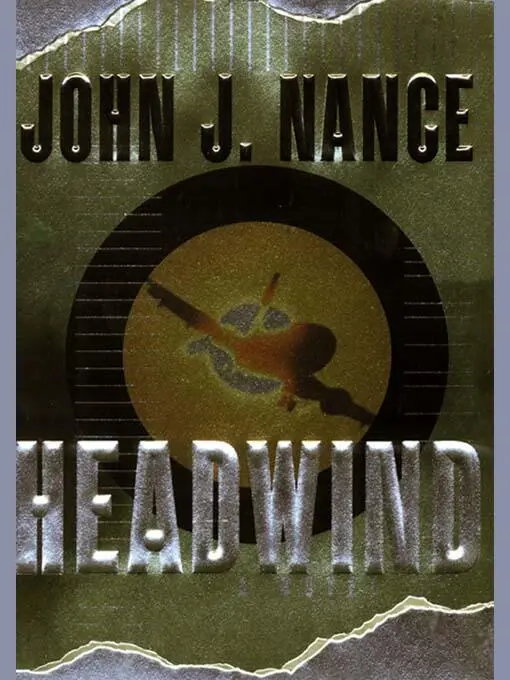
- Название:Headwind
- Автор:
- Жанр:
- Год:неизвестен
- ISBN:нет данных
- Рейтинг книги:4 / 5. Голосов: 1
-
Избранное:Добавить в избранное
- Отзывы:
-
Ваша оценка:
Headwind: краткое содержание, описание и аннотация
Предлагаем к чтению аннотацию, описание, краткое содержание или предисловие (зависит от того, что написал сам автор книги «Headwind»). Если вы не нашли необходимую информацию о книге — напишите в комментариях, мы постараемся отыскать её.
Headwind — читать онлайн бесплатно полную книгу (весь текст) целиком
Ниже представлен текст книги, разбитый по страницам. Система сохранения места последней прочитанной страницы, позволяет с удобством читать онлайн бесплатно книгу «Headwind», без необходимости каждый раз заново искать на чём Вы остановились. Поставьте закладку, и сможете в любой момент перейти на страницу, на которой закончили чтение.
Интервал:
Закладка:
Jay looked alarmed.
“I wouldn’t worry,” Garrity said quickly, climbing into the van.
The driver introduced himself and pointed toward a distant exit. “I’ll take you out to the ramp to wait for them.”
“Your company handles the private jets here?” Jay asked.
“Yes, if they’re not too big. We had to get permission to handle your flight, though, since it’s a 737.”
Jay pulled out his GSM phone and punched a series of numbers into the keypad.
He let the line ring until a woman’s voice gently intoned the obvious fact that the party wasn’t answering. He punched it off and sighed as Michael spoke.
“By the way, Jay, I rousted one of my secretaries out of bed and she’s found the hotel rooms, transportation, and a slightly irritated Immigration inspector who’ll meet the airplane.”
“Just Immigration?”
“They won’t need customs since your people are arriving from another European Union country.”
“Oh. Of course. I forgot about that, and I was so busy trying to get on my flight, I forgot to ask.”
They passed through several security gates wrapped in their own thoughts before Michael Garrity broke the silence. “You told me on the phone that you had an Irish grandmother, Jay. And you’ve never been to Ireland?”
“No, I’m sorry to say.”
“Well, we’ve got a bit of work to do tomorrow to get ready for this thing, and your adversary Stuart Campbell will bear close watching, but you must let me show you our fair city at some point.”
Jay smiled and shook his head. “I… doubt we’ll have time for that, Michael.”
“Oh, at least a few of the sights the tourists would normally see. You’ve heard of Molly Malone?”
“Who?”
He sang a few bars of the song, and Jay raised his hand with a laugh. “Oh, yeah. The pretty female fishmonger who died of a fever… or ‘favor,’ as we were taught the song in the States.”
“ ‘Favor’ ’tis a bastardized Irish pronunciation of fever,” Michael laughed.
“I figured.”
“We’ve a lovely statue of her in the town center. We call her ‘The Dish with the Fish.’ ”
“The Dish…”
“Also known as the ‘Tart with the Cart.’ The statue’s not too far from the Four Courts, our rather historic courthouse, where I toil away on most days, and where this matter will be fought.”
The van pulled onto the flight line and the driver moved to the edge of a taxiway to wait. Garrity pulled out his cell phone and dialed Dublin Air Traffic Control once again.
“Yes, it’s me, the pest. Has he now? Excellent. What time would that be?” Garrity nodded. “Fifteen minutes? Thank you.” He replaced the receiver and turned to Jay. “You heard, then?”
Jay smiled and exhaled. “Yeah. Fifteen minutes. That’s a relief.”
“Where did you gentlemen come in from?” the driver asked.
“London,” Jay replied absently, his mind already focused on the next step.
“Oh. You’re the second group. If you’re looking for the others, by the way, they just left.”
Jay looked at him more in irritation than curiosity. “What?”
“The Lear Thirty-five. It came in from London about thirty minutes ago and they mentioned they were expecting some others. I just thought… you know, you were part of the same group.”
“No,” Jay said, shaking his head. “I came in by commercial. From London, you say?”
“Yes, sir. The big fellow and the pilots left a few minutes ago with the people who came to meet them, and I thought they might have just left you behind or something. Sorry.”
A ripple of apprehension shot through Jay’s middle and caused him to shudder internally.
“Big fellow? Do you have his name?”
The clerk pawed through his shirt pocket for a business card. “I didn’t get the man’s name, but here’s the pilot’s information, if that helps. Jean-Paul somebody.”
He smiled and handed over the card. “I’ll need that back, you know. For our front counter.”
Jay looked at the card, his shoulders slumping.
“What is it, Jay?” Michael Garrity asked.
“How in hell…” Jay mumbled to himself.
“What?” Michael asked, moving to his side and trying to make out the name on the card.
“William Stuart Campbell,” Jay said. “He’s already here. The man’s either clairvoyant, or he’s a one-man CIA.”
Stuart Campbell felt the weight of his fatigue as the limo sped through the night from the Dublin Airport to his hotel in the heart of the city, but there was too much to be done to succumb to it, and, as leader, he had to set the pace – and the example – for the entire team.
He forced himself to keep a running conversation going with each of the three staff members who’d been waiting for him. With so much to do, their full attention would be vital through the night, and their loyalty would have to be rapidly earned.
Only his firm’s Dublin partner had ever met Stuart Campbell before, and Stuart was acutely aware of the halo over his own head, an aura of respect and assumed infallibility that made it difficult for subordinates to speak up and point out mistakes. He was used to building effective teams, though seldom under such time pressure. Establishing friendly, personal bonds with employees and adversaries alike was a practiced technique – one of the many superior habits that had made him consistently successful in negotiations.
Especially with his adversaries.
A familiar building passed the limo’s windows and Stuart diverted his attention outside for a few moments as he aligned his memory with a map of Dublin.
The advice of a long-dead mentor – one of the best-known barristers in England through the postwar years – rang through his mind again in a voice he periodically heard in his head, and missed in life.
“Stuart,” Sir Henry Delacorte had told him in the infancy of Stuart’s practice, “it’s hard to say no to a man you really like. Build a bridge to those you deal with, make them like you, and they’ll come to you on every discretionary issue in spite of themselves. But never make the mistake of crossing that bridge yourself!”
William Stuart Campbell, the senior lawyer, was unequaled in the art of calculated manipulation, knowing how to gain and use the advantage of an opponent’s trust while never letting himself be swayed by such affinities.
But William Stuart Campbell, the man, had always been in minor turmoil over the technique, and that was good, he thought – especially for a man who genuinely liked people. The quiet, internal discomfort never stayed him from the task of influencing someone to do his bidding, but his inner reservations provided a small saving grace – a continuously renewable personal penance for the cynical use of his fellow man. Maintaining that small level of discomfort with his own methods had become a lifeline tied to the anchor of his humanity.
“Are we ready to dive into this thing?” Campbell asked, when he and the three men and two women on his team had reached the opulent old hotel and pulled up chairs around the conference table in the Presidential Suite, informally known as the Princess Grace Room.
There were bobbing heads all around.
“Very well. First, where do we find a district judge?”
“Probably not possible tonight or tomorrow,” one of the women answered, explaining the traditional holiday disappearance of most jurists. “But we’ll also have to involve the Garda. In fact, they’ll have to formally present the Interpol warrant in court or to whatever judge we can find.”
“Do we have a list of all the judges?” Stuart asked. “With addresses and telephones and the like?”
Читать дальшеИнтервал:
Закладка:
Похожие книги на «Headwind»
Представляем Вашему вниманию похожие книги на «Headwind» списком для выбора. Мы отобрали схожую по названию и смыслу литературу в надежде предоставить читателям больше вариантов отыскать новые, интересные, ещё непрочитанные произведения.












Обсуждение, отзывы о книге «Headwind» и просто собственные мнения читателей. Оставьте ваши комментарии, напишите, что Вы думаете о произведении, его смысле или главных героях. Укажите что конкретно понравилось, а что нет, и почему Вы так считаете.