Michael Connelly - 9 Dragons
Здесь есть возможность читать онлайн «Michael Connelly - 9 Dragons» весь текст электронной книги совершенно бесплатно (целиком полную версию без сокращений). В некоторых случаях можно слушать аудио, скачать через торрент в формате fb2 и присутствует краткое содержание. Жанр: Триллер, на английском языке. Описание произведения, (предисловие) а так же отзывы посетителей доступны на портале библиотеки ЛибКат.
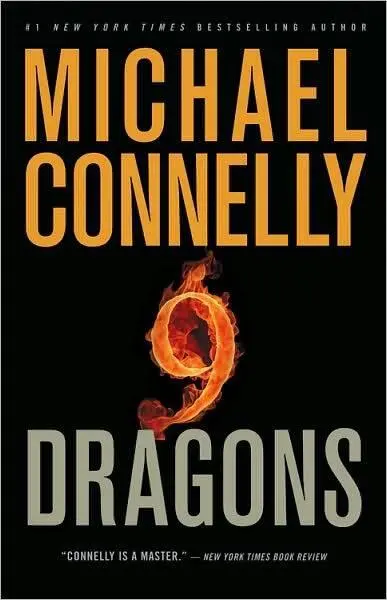
- Название:9 Dragons
- Автор:
- Жанр:
- Год:неизвестен
- ISBN:нет данных
- Рейтинг книги:4 / 5. Голосов: 1
-
Избранное:Добавить в избранное
- Отзывы:
-
Ваша оценка:
9 Dragons: краткое содержание, описание и аннотация
Предлагаем к чтению аннотацию, описание, краткое содержание или предисловие (зависит от того, что написал сам автор книги «9 Dragons»). Если вы не нашли необходимую информацию о книге — напишите в комментариях, мы постараемся отыскать её.
Joined by members of the department's Asian Crime Unit, Bosch relentlessly investigates the killing and soon identifies a suspect, a Los Angeles member of a Hong Kong triad. But before Harry can close in, he gets the word that his young daughter Maddie, who lives in Hong Kong with her mother, is missing.
Bosch drops everything to journey across the Pacific to find his daughter. Could her disappearance and the case be connected? With the stakes of the investigation so high and so personal, Bosch is up against the clock in a new city, where nothing is at it seems.
9 Dragons — читать онлайн бесплатно полную книгу (весь текст) целиком
Ниже представлен текст книги, разбитый по страницам. Система сохранения места последней прочитанной страницы, позволяет с удобством читать онлайн бесплатно книгу «9 Dragons», без необходимости каждый раз заново искать на чём Вы остановились. Поставьте закладку, и сможете в любой момент перейти на страницу, на которой закончили чтение.
Интервал:
Закладка:
“We’ll be able to see it in about fifteen minutes.”
Bosch took the binoculars back and started searching for the sign again.
“I feel like I’m wasting time.”
“Don’t worry. The sun’s coming up.”
Thwarted in his efforts, Bosch reluctantly lowered the binoculars and for the next ten minutes watched the light creep over the mountains and into the basin.
The dawn came up pink and gray. The harbor was already busy as workboats and ferries crisscrossed paths in what looked like some kind of natural choreography. Bosch saw a low-lying mist clinging to the towers in Central and Wan Chai and across the harbor in Kowloon. He smelled smoke.
“It smells like L.A. after the riots,” he said. “Like the city’s on fire.”
“It is in a way,” Eleanor said. “We’re halfway through Yue Laan.”
“Yeah, what’s that?”
“The Hungry Ghost festival. It began last week. It’s set to the Chinese calendar. It is said that on the fourteenth day of the seventh lunar month the gates of hell open and all the evil ghosts stalk the world. Believers burn offerings to appease their ancestors and ward off the evil spirits.”
“What kind of offerings?”
“Mostly paper money and papier-mâché facsimiles of things like plasma screens and houses and cars. Things the spirits supposedly need on the other side. Sometimes people burn the real things, too.”
She laughed and then continued.
“I once saw somebody burning an air conditioner. Sending an air conditioner to an ancestor in hell, I guess.”
Bosch remembered his daughter talking about this once. She said she had seen someone burning an entire car.
Bosch gazed down on the city and realized what he had taken as morning mist was actually smoke from the fires, hanging in the air like the ghosts themselves.
“Looks like there’s a lot of believers out there.”
“Yes, there are.”
Bosch raised his gaze to Kowloon and brought up the binoculars. Sunlight was finally hitting the buildings along the harborside. He panned back and forth, always keeping the goalposts on top of the Bank of China in his field of vision. Finally, he found the Canon sign Eleanor had mentioned. It sat atop a glass-and-aluminum-skinned building that was throwing sharp reflections of light in all directions.
“I see the sign,” he said, without looking away.
He estimated the building that the sign was on at twelve floors. The sign sat atop an iron framework that added at least another floor to its height. He moved the binoculars back and forth, hoping to see something else. But nothing grabbed at him.
“Let me see again,” Eleanor said.
Bosch handed over the binoculars and she quickly zeroed in on the Canon sign.
“Got it,” she said. “And I can see that the Peninsula Hotel is across the street and within two blocks of it. It’s one of the helicopter-pad locations.”
Bosch followed her line of sight across the harbor. It took him a moment to find the sign. It was now catching the sun full-on. He was beginning to feel the sluggishness of the long flight breaking off. Adrenaline was kicking in.
He saw a wide road cutting north into Kowloon next to the building with the sign on top.
“What road is that?” he asked.
Eleanor kept her eyes at the binoculars.
“It’s got to be Nathan Road,” she said. “It’s a major north-south channel. Goes from the harbor up into the New Territories.”
“The triads are there?”
“Absolutely.”
Bosch turned back to look out toward Nathan Road and Kowloon.
“Nine Dragons,” he whispered to himself.
“What?” Eleanor asked.
“I said, that’s where she is.”
25
Bosch and his daughter usually took the funicular tram up and back down from the Peak. It reminded Bosch of a sleek and greatly extended version of Angels Flight back in L.A., and at the bottom his daughter liked to visit a small park near the courthouse where she could hang a Tibetan prayer flag. Often the small, colorful flags were strung like laundry on clotheslines across the park. She had told Bosch that hanging a flag was better than lighting a candle in a church because the flag was outside and its good intentions would be carried far on the wind.
There was no time to hang flags now. They got back into Sun’s Mercedes and headed down the mountain toward Wan Chai. Along the way, Bosch realized that one route down would take them directly by the apartment building where Eleanor and his daughter lived.
Bosch leaned forward from the backseat.
“Eleanor, let’s go by your place first.”
“Why?”
“Something I forgot to tell you to bring. Madeline’s passport. Yours, too.”
“Why?”
“Because this won’t be over when we get her back. I want both of you away from here until it is.”
“And how long is that?”
She had turned to look back at him from the front seat. He could see the accusation in her eyes. He wanted to try to avoid all of that so that the rescue of his daughter was the complete focus.
“I don’t know how long. Let’s just get the passports. Just in case there is no time later.”
Eleanor turned to Sun and spoke sharply in Chinese. He immediately pulled to the side of the road and stopped. There was no traffic coming down the mountain behind them. It was too early for that. She turned fully around in her seat to face Bosch.
“We’ll stop for the passports,” she said evenly. “But if we need to disappear, don’t think for a minute we will be going with you.”
Bosch nodded. The concession that she would be willing to do it was enough for him.
“Then maybe you should pack a couple bags and put them in the trunk, too.”
She turned back around without responding. After a moment Sun looked over at her and spoke in Chinese. She responded with a nod and Sun started down the mountain again. Bosch knew that she was going to do what he’d asked.
Fifteen minutes later Sun stopped in front of the twin towers commonly known by locals as “The Chopsticks.” And Eleanor, having said not a single word in those fifteen minutes, extended an olive branch to the backseat.
“You want to come up? You can make a coffee while I pack the bags. You look like you could use it.”
“Coffee would be good but we don’t have-”
“It’s instant coffee.”
“Okay, then.”
Sun stayed with the car and they went up. The “chopsticks” were actually two interlinked and oval-shaped towers that rose seventy-three stories from the midslope of the mountain above Happy Valley. It was the tallest residential building in all of Hong Kong and as such stuck out at the edge of the skyline like two chopsticks protruding from a pile of rice. Eleanor and Madeline had moved into an apartment here shortly after arriving from Las Vegas six years earlier.
Bosch gripped the railing in the speed elevator as they went up. He didn’t like knowing that just below the floor was an open shaft that went straight down forty-four floors.
The door opened on a small foyer leading to the four apartments on the floor, and Eleanor used a key to go in the first door on the right.
“Coffee’s in the cabinet over the sink. I won’t take long.”
“Good. You want a cup?”
“No, I’m good. I had some at the airport.”
They entered the apartment and Eleanor split off to go to her bedroom while Bosch found the kitchen and went to work on the coffee. He found a mug that said World’s Best Mom on its side and used that. It had been hand-painted a long time before and the words had faded with each cycle the mug had gone through in the dishwasher.
He stepped out of the kitchen, sipping the hot mixture, and took in the panorama. The apartment faced west and afforded a stunning view of Hong Kong and its harbor. Bosch had only been in the apartment a few times and never tired of seeing this. Most times when he came to visit, he met his daughter in the lobby or at her school after classes.
Читать дальшеИнтервал:
Закладка:
Похожие книги на «9 Dragons»
Представляем Вашему вниманию похожие книги на «9 Dragons» списком для выбора. Мы отобрали схожую по названию и смыслу литературу в надежде предоставить читателям больше вариантов отыскать новые, интересные, ещё непрочитанные произведения.



Обсуждение, отзывы о книге «9 Dragons» и просто собственные мнения читателей. Оставьте ваши комментарии, напишите, что Вы думаете о произведении, его смысле или главных героях. Укажите что конкретно понравилось, а что нет, и почему Вы так считаете.