Patricia Cornwell - The Scarpetta Factor
Здесь есть возможность читать онлайн «Patricia Cornwell - The Scarpetta Factor» весь текст электронной книги совершенно бесплатно (целиком полную версию без сокращений). В некоторых случаях можно слушать аудио, скачать через торрент в формате fb2 и присутствует краткое содержание. Жанр: Триллер, на английском языке. Описание произведения, (предисловие) а так же отзывы посетителей доступны на портале библиотеки ЛибКат.
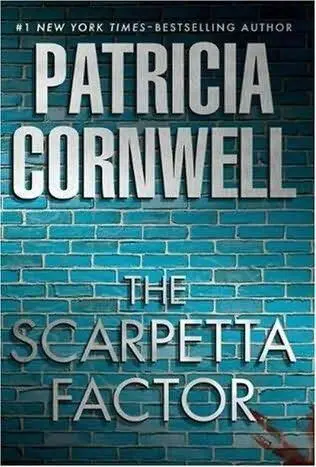
- Название:The Scarpetta Factor
- Автор:
- Жанр:
- Год:неизвестен
- ISBN:нет данных
- Рейтинг книги:4 / 5. Голосов: 1
-
Избранное:Добавить в избранное
- Отзывы:
-
Ваша оценка:
The Scarpetta Factor: краткое содержание, описание и аннотация
Предлагаем к чтению аннотацию, описание, краткое содержание или предисловие (зависит от того, что написал сам автор книги «The Scarpetta Factor»). Если вы не нашли необходимую информацию о книге — напишите в комментариях, мы постараемся отыскать её.
The Scarpetta Factor — читать онлайн бесплатно полную книгу (весь текст) целиком
Ниже представлен текст книги, разбитый по страницам. Система сохранения места последней прочитанной страницы, позволяет с удобством читать онлайн бесплатно книгу «The Scarpetta Factor», без необходимости каждый раз заново искать на чём Вы остановились. Поставьте закладку, и сможете в любой момент перейти на страницу, на которой закончили чтение.
Интервал:
Закладка:
“Okay, I do know who that is.” Carley was intrigued once she realized Lucy’s connections to Scarpetta, and especially to Benton Wesley, who was tall with chiseled granite good looks, “the model for that actor in The Silence of the Lambs,” in her words. “What’s his name, who played Crawford?”
“Pure horseshit. Benton wasn’t even at Quantico when it was filmed. Was off in the field somewhere working a case, and even he will tell you as much, arrogant prick that he is,” Agee said, more than just ire aroused. He was feeling other stirrings.
“Then you know them.” She was impressed.
“The whole gaggle. I know them, and at best they might know about me, might know of me. I’m not friends with them. Well, excluding Benton. He knows me rather intimately. Life and its dysfunctional interconnections. Benton fucks Kay. Kay loves Lucy. Benton gets Lucy an internship with the FBI. Warner gets fucked.”
“Why do you get fucked?”
“What is artificial intelligence?”
“A substitute for the real thing,” she’d said.
“You see, it can be difficult if you have these.” Touching his hearing aids.
“You seem to hear me well enough, so I have no idea what you mean.”
“Suffice it to say I might have been given some tasks, some opportunities, if a computer system hadn’t come along that could do them instead,” he’d said.
Perhaps it was the wine, a very fine Bordeaux, but he began to tell Carley about his ungratifying and unfair career and the toll it had taken, people and their problems, cops and their stresses and traumas, and the worst were the agents who weren’t allowed to have problems, weren’t allowed to be human, were FBI first and foremost and forced to unload on a Bureau-ordained psychologist or shrink. Babysitting, hand-holding, rarely being asked about criminal cases, never if they were sensational. He illustrated what he meant with a story set at the FBI Academy, Quantico, Virginia, in 1985, when an assistant director named Pruitt had told Agee that someone who was deaf couldn’t possibly go into a maximum-security prison and conduct interviews.
There were inherent risks in using a forensic psychiatrist who wore hearing aids and read lips, and to be blunt, the Bureau wasn’t going to use someone who might misinterpret what violent offenders were saying or had to continuously ask them to repeat themselves. Or what if they misinterpreted what Agee said to them? What if they misinterpreted what he was doing, a gesture, the way he crossed his legs or tilted his head? What if some paranoid schizophrenic who had just dismembered a woman and stabbed out her eyes didn’t like Agee staring at his lips?
That was when Agee had known who he was to the FBI, who he would always be to the FBI. Someone impaired. Someone imperfect. Someone who wasn’t commanding enough. It wasn’t about his ability to evaluate serial killers and assassins. It was about appearances, about the way he might represent the Almighty Bureau. It was about being an embarrassment. Agee had said he understood Pruitt’s position and would do anything the FBI needed, of course. It was either do it their way or no way, and Agee had always wanted to get close to the fire of the FBI ever since he’d been a frail little boy playing cops and robbers, playing army and Al Capone, shooting cap guns he could barely hear.
The Bureau could use him internally, he was told. Critical incidents, stress management, the Undercover Safeguard Unit, basically psychological services for law enforcement with an emphasis on agents coming up from deep cover. Included in the mix were the supervisory special agents, the profilers. Since the Behavioral Science Unit was still relatively new to training and development, the Bureau should be more than a little concerned about what the profilers were exposed to on a regular basis and whether it interfered with intelligence gathering and operational effectiveness. At this point in the somewhat one-sided dialogue, Agee asked Pruitt if the FBI had given much thought to paper assessments of the offenders themselves, because Agee could help with that. If he could have access to raw data such as interview transcripts, evaluations, scene and autopsy photographs, the entirety of case files, which he could assimilate and analyze, he could create a meaningful database and establish himself as the resource he ought to be.
It wasn’t the same thing as sitting down with a murderer, but it was better than being Florence Nightingale with a bedside manner, a support system while the real work, the satisfying work that was recognized and rewarded, went to inferiors who didn’t have nearly the training or intelligence or insight he did. Inferiors like Benton Wesley.
“Of course, you don’t need manual data analysis if you have artificial intelligence, if you have CAIN,” Agee told Carley as they’d looked at photographs in Rupe Starr’s library. “By the early nineties, statistical computations and different types of sorting and analysis were being done automatically, all of my efforts imported into Lucy’s nifty artificial-intelligence environment. For me to continue what I was doing would have been akin to cleaning cotton by hand after Eli Whitney invented the cotton gin. I was back to evaluating agents-that’s all I was good for in the eyes of the F-ing-BI.”
“Imagine how I feel knowing the president of the United States is getting credit for my ideas.” Carley, as usual, had made it about her.
Then he’d given her a tour of the mansion while the other guests partied several floors away, and in a guest room, he took her to bed, knowing full well that what had excited her wasn’t him. It was sex and violence, power and money, and the conversation about them, the entity of Benton and Scarpetta and Lucy and anyone else who fell under their spell. Afterward, Carley wanted nothing else and Agee wanted more, wanted to be with her, wanted to make love to her for the rest of his days, and when she’d finally told him that he must stop writing her e-mails and leaving her messages, it was too late. The damage was done. He couldn’t always be sure who overheard his conversations or how loud he was, and all it had taken was one lapse, one voicemail he was leaving on Carley’s phone while his wife happened to be outside his closed office door, about to come in with a sandwich and a cup of tea.
The marriage ended quickly, and he and Carley maintained infrequent long-distance contact; mostly he kept up with her in the news as she moved into a variety of media venues. Then almost a year ago he read a story about plans for a show, The Crispin Report, pegged as hard-biting journalism and cop shop talk with an emphasis on current cases and call-ins from viewers, and Agee decided to contact her with a proposal, maybe more than one. He was lonely. He hadn’t gotten over her. Frankly, he needed money. His legitimate consulting services were very rarely used anymore, his ties with the FBI having been severed not long after Benton’s were, in part inspired by the situation with him, which was viewed as sticky by some and as sabotage by others. For the past five years, Agee’s ventures had taken him elsewhere, a scavenger mostly paid pit tances in cash for services he rendered to industries and individuals and organizations that profited handsomely from their ability to manipulate customers, clients, patients, the police, he didn’t care who. Agee had done nothing but bend the knee to others who were inferior to him, traveling constantly, quite a lot in France, sinking deeper into invisibility and debt and despair, and then he met with Carley, whose prospects were equally perilous, neither of them young anymore.
What someone in her position needed most of all was access and information, he’d pitched to her, and the problem she was going to encounter was that the experts essential to her success wouldn’t be willing to appear on camera. The good people don’t talk. They can’t. Or, like Scarpetta, they have contracts and you don’t dare ask. But you could tell, Agee had said. That was the secret he taught Carley. Come onto the set already armed with what you need to know, and don’t ask-tell. He could hunt and gather behind the scenes, and supply her with transcripts so her breaking news could be backed up, validated, or at least not disproved.
Читать дальшеИнтервал:
Закладка:
Похожие книги на «The Scarpetta Factor»
Представляем Вашему вниманию похожие книги на «The Scarpetta Factor» списком для выбора. Мы отобрали схожую по названию и смыслу литературу в надежде предоставить читателям больше вариантов отыскать новые, интересные, ещё непрочитанные произведения.












Обсуждение, отзывы о книге «The Scarpetta Factor» и просто собственные мнения читателей. Оставьте ваши комментарии, напишите, что Вы думаете о произведении, его смысле или главных героях. Укажите что конкретно понравилось, а что нет, и почему Вы так считаете.