William Bernhardt - Death Row
Здесь есть возможность читать онлайн «William Bernhardt - Death Row» весь текст электронной книги совершенно бесплатно (целиком полную версию без сокращений). В некоторых случаях можно слушать аудио, скачать через торрент в формате fb2 и присутствует краткое содержание. Жанр: Триллер, на английском языке. Описание произведения, (предисловие) а так же отзывы посетителей доступны на портале библиотеки ЛибКат.
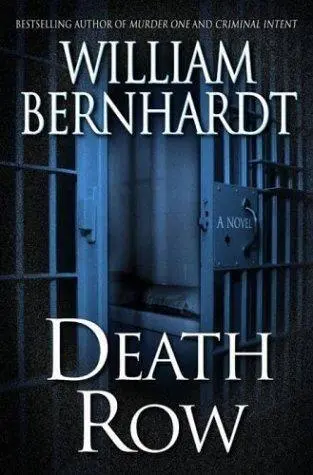
- Название:Death Row
- Автор:
- Жанр:
- Год:неизвестен
- ISBN:нет данных
- Рейтинг книги:3 / 5. Голосов: 1
-
Избранное:Добавить в избранное
- Отзывы:
-
Ваша оценка:
Death Row: краткое содержание, описание и аннотация
Предлагаем к чтению аннотацию, описание, краткое содержание или предисловие (зависит от того, что написал сам автор книги «Death Row»). Если вы не нашли необходимую информацию о книге — напишите в комментариях, мы постараемся отыскать её.
Death Row — читать онлайн бесплатно полную книгу (весь текст) целиком
Ниже представлен текст книги, разбитый по страницам. Система сохранения места последней прочитанной страницы, позволяет с удобством читать онлайн бесплатно книгу «Death Row», без необходимости каждый раз заново искать на чём Вы остановились. Поставьте закладку, и сможете в любой момент перейти на страницу, на которой закончили чтение.
Интервал:
Закладка:
Ben followed him through the door. The front lobby of the building was about as stark as it was possible to be without becoming a warehouse. No attempt whatsoever had been made to meliorate the trek from the door to the elevator bank. Only a single sign that read: prairie dog flavors, inc.
“Mind if we go upstairs?” Reynolds asked. “I’ve got some chairs in my lab. And there are a few others you should talk to.”
“People who knew Ray?”
“And Frank, yes. All those years ago. Not many employees have lasted that long, but a few.” They rode up three floors.
When they stepped out, they faced a heavy iron sealed door. “I’m afraid the security around here is in the same league as the Pentagon’s. Excuse me just a sec. Retinal scan.”
Ben grimaced. “Can I wait outside?”
“That was retinal , Mr. Kincaid. Re-tin-al.” Reynolds pushed a button, and a screened panel on the door flickered to life. Reynolds pressed his face against it. A red light flashed across his eyes. A moment later, Ben heard the door click open.
“Wow. That really works? I thought that was just on Star Trek .”
“This isn’t even new tech,” Reynolds replied. “We’ve had this for more than a decade. Nowadays they’re using voiceprints and DNA tests.”
“Is all this necessary?”
Reynolds nodded. “Our owners are very protective of our secrets.”
“Mind if I ask why?”
Reynolds gestured toward the interior. “Because the stuff we come up with in here is worth billions, that’s why.”
Ben stepped into what seemed to him a prototypical chemistry lab, not that he would really know. There were long tables covered with tubes and Bunsen burners and vials of brightly colored fluids held upright in wooden racks, some of them labeled with long Latinate names. It reminded Ben of his organic chemistry lab class back at OU. He only hoped he handled this case better than he had the class.
The one difference was the smell. Marvelous mouthwatering aromas assaulted his senses the moment he stepped inside. Part bakery, part steakhouse, part patisserie. No wonder Reynolds seemed so genial. If Ben worked in a place that smelled this nice, he’d probably be happy, too.
“What kind of work do you do here?” Ben asked. “What industries do you serve?”
“We specialize in the fast-food industry. Have since this lab was built.” He took a chair and offered Ben the one beside it. “We serve other businesses on occasion, but that’s our bread and butter.”
“I see. What do you do for the fast-food people?”
“Make their food taste good.” He winked. “And believe me, that’s no mean feat.”
“But-surely you don’t cook their food.”
Reynolds chuckled. “Cooking, Mr. Kincaid, has nothing to do with it. You have to realize that, in most fast-food restaurants, virtually everything has been processed and flash-frozen, then reheated for serving. If it weren’t for the chem lab, it wouldn’t taste like anything. Certainly nothing you’d ever want to put in your mouth.”
“What do you do?”
Reynolds’s eyes twinkled. “Magic.” He reached for a nearby vial containing a clear liquid. “See this? This is the secret of the double whammy burger in the Bob’s Burgers chain. And that one? Something we came up with last year. Made the chicken sandwich a top seller at Burger Bliss.”
“That stuff is in the food?”
“Just a touch. That’s all it takes.”
“Doesn’t sound very appetizing.”
“Don’t be fooled. Those burgers sell by the millions. You’ve eaten fast food before, haven’t you?”
Ben smiled wryly. “Once or twice.”
“And be honest-for the most part, it tastes pretty good, doesn’t it? May not be good for you, but the flavor is generally yummy. That’s why they sell so well. Up to ninety percent of a food’s taste can derive from its aroma. And we provide the aroma.”
“That’s amazing.”
“Yes, I suppose it is. It’s the dirty secret that has made the fast-food industry the gigantic economic success it is. May have made the whole nation obese in the process. But it’s made a lot of businessmen very rich. Last year, Americans spent more than one hundred and ten billion dollars on fast food-more than they spent on cars, computers, or college. Combined.”
“That much?”
“It’s a huge business. Hugely successful. For years, the taste and aroma business was dominated by a handful of chemical plants located just off the New Jersey Turnpike. International Flavors & Fragrances is the largest. They handle many of the large fast-food chains. They’re responsible for six of the country’s top ten perfumes. We were actually one of the first to make a success of it in the Southwest.”
“Based on your fast-food formulae?”
“It isn’t just that. We’ve devised flavors for potato chips, cereals, bread, crackers, ice cream, toothpaste, mouthwash. Even pet food.”
“I’m surprised all this chemistry doesn’t jack up those cut-rate fast-food prices.”
Reynolds flat out laughed. “Are you kidding? Fast food is cheap for a reason. You’re not exactly eating Grade-A meat, you know. Typically, the packaging costs the company more than the food itself. They can afford a chemical or two to make it scrummy.”
“Where do these flavors come from?”
“Most are a combination of several chemical compounds, but often the primary aroma comes from a single component. Let me show you.” He grabbed one of the vials of colored fluids, uncorked it, and held it under Ben’s nose. “Close your eyes and tell me what you think.”
Ben took a whiff. “Apple.”
“Yeah. Except actually, it’s ethyl-2-methyl butyrate.” He uncorked another vial. “Try this one.”
Ben inhaled. “Marshmallow.”
“You’d think. But in truth it’s pure ethyl-3-hydroxybutanoate. And methyl-2-peridylketone gives you popcorn. Benzaldehyde smells like almond. And 3-methyl butanoic acid gives you human body odor.”
“Wouldn’t that make a swell hamburger.”
“No, but a hint of it might make a splendid cologne.”
“How can you add these chemicals to food without telling people? Aren’t there FDA rules? Labeling laws?”
Reynolds smiled. “Ever read one of those labels?”
“Only when I’m trying to diet.”
“Next time you check one out, or read the ingredients on a fast-food product, look for the words natural flavor .”
“I thought we were talking about chemicals.”
“We are. But if they come from organic sources, they’re called natural flavors. Even if we’ve worked for months to create those natural flavors in the lab. If they come from inorganic sources, they’re called artificial flavors. Either way, it sounds pretty innocuous, don’t you agree?”
“And you don’t have to explain what they are?”
“Nope. The FDA doesn’t make us identify the ingredients of the flavor additives, as long as they’re GRAS-Generally Regarded As Safe. You wouldn’t believe some of them. Beef extracts are commonly added to chicken sandwiches. So-called natural smoke flavor is often added to grilled chicken breasts. Is that natural? You tell me. Whatever it is, we’re specifically protected from detailing the ingredients-because these formulae are considered trade secrets.”
“Nice loophole.”
“Believe me, it’s true. The fast-food corps are constantly spying on one another, trying to swipe the other guys’ formulae. They hire spies-they’re called kites in the biz-to ferret out their competitors’ secrets. Every aspect of this business is cutthroat. Did you hear about the Kraft Foods pizza case? Kraft sued Schwan’s, claiming they stole their frozen pizza plans. They asked for 1.75 billion in damages.”
Читать дальшеИнтервал:
Закладка:
Похожие книги на «Death Row»
Представляем Вашему вниманию похожие книги на «Death Row» списком для выбора. Мы отобрали схожую по названию и смыслу литературу в надежде предоставить читателям больше вариантов отыскать новые, интересные, ещё непрочитанные произведения.




Обсуждение, отзывы о книге «Death Row» и просто собственные мнения читателей. Оставьте ваши комментарии, напишите, что Вы думаете о произведении, его смысле или главных героях. Укажите что конкретно понравилось, а что нет, и почему Вы так считаете.