Peter Robinson - The Tribunal
Здесь есть возможность читать онлайн «Peter Robinson - The Tribunal» весь текст электронной книги совершенно бесплатно (целиком полную версию без сокращений). В некоторых случаях можно слушать аудио, скачать через торрент в формате fb2 и присутствует краткое содержание. Жанр: Триллер, на английском языке. Описание произведения, (предисловие) а так же отзывы посетителей доступны на портале библиотеки ЛибКат.
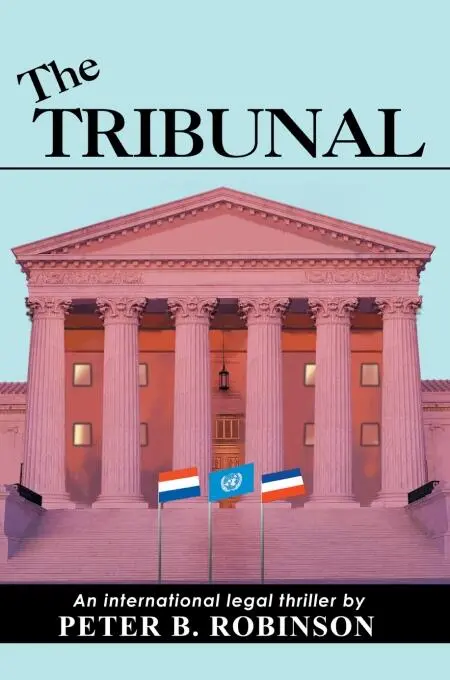
- Название:The Tribunal
- Автор:
- Жанр:
- Год:неизвестен
- ISBN:нет данных
- Рейтинг книги:4 / 5. Голосов: 1
-
Избранное:Добавить в избранное
- Отзывы:
-
Ваша оценка:
The Tribunal: краткое содержание, описание и аннотация
Предлагаем к чтению аннотацию, описание, краткое содержание или предисловие (зависит от того, что написал сам автор книги «The Tribunal»). Если вы не нашли необходимую информацию о книге — напишите в комментариях, мы постараемся отыскать её.
Kevin faces a suspicious client, a self-righteous prosecutor, and hostile judges. When his spunky 11 year-old daughter, Ellen, is kidnapped, Kevin is plunged into a battle to win his client's freedom, and to save his daughter's life.
As the trial progresses, Kevin fends off not only the prosecution, but the American CIA and forces of the Serbian government, all who have a stake in the outcome. From the bulletproof courtroom to the streets of Sarajevo, Kevin scrambles to find the truth and preserve his integrity.
While Kevin is fighting for his client; his daughter is fighting for her life. It all comes down to the verdict. Can Kevin obtain justice for his client -and for his daughter-at the Tribunal?
The Tribunal — читать онлайн бесплатно полную книгу (весь текст) целиком
Ниже представлен текст книги, разбитый по страницам. Система сохранения места последней прочитанной страницы, позволяет с удобством читать онлайн бесплатно книгу «The Tribunal», без необходимости каждый раз заново искать на чём Вы остановились. Поставьте закладку, и сможете в любой момент перейти на страницу, на которой закончили чтение.
Интервал:
Закладка:
Ellen raced to the door. Before Kevin and Diane were even out of their seats, she had thrown open the door.
Two black figures yelled out in Dutch and threw something into the house.
“They came!” Ellen shrieked. “They came!”
Kevin saw confetti and small round brown cookies strewn along their hallway. A brown burlap sack had been left by the door.
Ellen picked up a cookie and popped it into her mouth. “Yum, pepernoten !”
It was December 5 th, the day the Dutch celebrated the arrival of Sinterklaas , their version of Santa Claus. Instead of elves, his helpers were “Black Piets,” descendants of the ancient Moors who were said to have met up with Sinterklaas in Spain and helped him distribute gifts to children who had been good. In reality, the “Piets” were neighbors, who had been given gifts by several parents to be delivered to their children.
Ellen scooped up some confetti and threw it in the air. “This is great!” she exclaimed. “I wasn’t sure if Sinterklaas even came to American houses.”
Kevin reached down, picked up one of the pepernoten , and took a bite. It tasted like a spicy graham cracker. “Hey, these are good.”
Ellen spied the burlap sack by the door that had been left by the helpers. She looked inside and pulled out a large box. “Look, it has my name on it!” She tore at the wrapping paper, and then opened the box. “Ice skates!” She pulled out a pair of white leather ice skates. “The canals just have to freeze over this winter!”
The next morning, Kevin received a present of a different kind: a stack of witness interview reports from Nihudian. The reports were grim, and presented an unchanging pattern of brutality. The Black Dragons who first invaded a town acted with military professionalism and did not harass the civilians. They were men who were thought to be from Serbia and were unknown to the witnesses. Then, once in the camps, other men wearing Dragon uniforms – local Bosnian Serbs – appeared, and they routinely subjected the prisoners to beatings, rape and execution. The prisoners often knew these men. Kevin began to make a list of their names as he read the reports.
When he finished, Kevin called Nihudian and thanked him for his work.
“I don’t feel successful,” Nihudian replied. “I’m not sure I found anything helpful to you.”
“It helps to know what to expect. What are these witnesses like? Believable?”
“You ought to come and see for yourself, Kevin. Most of them would talk to you. Maybe you can get a better idea what to ask them in court if you meet them in person. There are quite a few witnesses in Sarajevo. Why don’t you come for a few days?”
“That’s not a bad idea. My client won’t tell me anything and if I don’t come up with some cross-examination material, I’m going to look like an idiot at the trial.”
A few days later, Kevin was on his way to Sarajevo. He anxiously looked out the window as the pilot announced over the intercom that they would soon be landing. He was looking forward to seeing Nihudian and meeting witnesses, but was unsure what to expect in Bosnia. Although the war had been over for five years, he knew that feelings still ran high among the Muslims, Croats, and Serbs.
Sarajevo had been awarded to the Muslims in the Peace Agreement, and Kevin wondered how safe he would be, although he had told Diane and Ellen there was nothing to worry about. But what if he was recognized from TV as Draga’s lawyer?
The skyscrapers of the city came into view in the distance. Sarajevo looked like a big city in a bowl, with tall office and apartment buildings, and the pointed towers of Muslim mosques jutting into the air from a valley surrounded by large hills. When the plane got closer, Kevin saw that some of the buildings were just shells, with no glass in the windows and burned out interiors. One skyscraper was partially collapsed; a twisted rubble of steel and cement rising about five stories in a grotesque heap.
Kevin was reminded of a movie called “Welcome to Sarajevo” that he had seen back in the United States. It portrayed a bloody, dangerous place where people ran between buildings to avoid the constant snipers.
He was glad to see Nihudian’s smiling face when he walked into the airport terminal after clearing Customs.
“Welcome to Sarajevo,” Nihudian said warmly, extending his hand.
As he offered his own hand, Kevin shuddered.
Nihudian led Kevin to his car, an old red Volkswagen Golf. “I want you to meet my family. Then, we will start working. I have arranged meetings with six witnesses.”
“Good work. Do you think we’ll have any – security problems?”
“Well, we might if you are recognized. But most people here are too busy rebuilding to watch much TV. So, we’ll just keep a low profile and you should be okay.”
Kevin felt only slightly reassured.
Nihudian drove north from the airport, along the Miljacka River, which ran along the east side of downtown Sarajevo. Kevin saw the bright yellow and red tower of the Holiday Inn, where he would be staying. The hotel had been relentlessly shelled and sniped at during the war, but now, with a fresh paint job, it stood looking like any Holiday Inn in a major city.
As they drove, Kevin saw 19 thcentury buildings that looked to be untouched by the war, such as an old post office, an opera building, and parts of Sarajevo University. The streets were filled with people hurrying about as in any American city.
“There’s the old National Library,” Nihudian said, pointing to a stately brown building with its windows blown out. “The Serbs shelled it during the war, and we lost many historical works. Then they claimed the Muslims did it themselves to look like victims.” Nihudian shook his head sadly.
He pointed out Old Town Sarajevo, a mixture of stone mosques and small shops resembling a Turkish bazaar. “This is from the Ottoman Empire,” Nihudian said. “It’s what makes Sarajevo unique, and why the Muslims fought so hard to keep it.”
Soon they parked in front of a large, gray apartment building. “This is home,” Nihudian said. “My wife and daughters are anxious to meet you.”
They walked up the stairs to the fourth floor. When they reached the apartment, Nihudian introduced Kevin to his wife and two young daughters, none of whom spoke English except, “Hello, Kevin,” which they said in unison and had obviously practiced. The table was set with shiny silverware and fancy porcelain plates and cups. When they sat down for lunch, Nihudian interpreted as Kevin asked the girls how old they were, if they liked their school, and what they did for fun.
“We like to play with our dolls,” the oldest said, “and ride our bikes.”
Kevin thought of how little difference there seemed to be between these Bosnian girls and his own all-American daughter. Many Bosnian children had lost their fathers or both parents during the war. Fortunately, Nihudian’s girls – bright, healthy and well-mannered – looked as if they had survived the violence with no outward signs of trauma.
After lunch, Nihudian and his family took Kevin for a walk around their neighborhood. They pointed out some buildings nearby that were riddled with holes from shells fired by the Serbs from a football stadium near the hills. Kevin watched as the girls played on the swings and climbed on monkey bars at a small neighborhood park.
“Your girls are wonderful,” Kevin told Nihudian. “I’m glad you and your family can live here safely now.”
“It is a shame that they cannot grow up like I did,” Nihudian said, “side by side with Serbs and Croats. The war deeply divided this country and too many bad things happened for people to be able to forgive and forget so soon.”
Читать дальшеИнтервал:
Закладка:
Похожие книги на «The Tribunal»
Представляем Вашему вниманию похожие книги на «The Tribunal» списком для выбора. Мы отобрали схожую по названию и смыслу литературу в надежде предоставить читателям больше вариантов отыскать новые, интересные, ещё непрочитанные произведения.
Обсуждение, отзывы о книге «The Tribunal» и просто собственные мнения читателей. Оставьте ваши комментарии, напишите, что Вы думаете о произведении, его смысле или главных героях. Укажите что конкретно понравилось, а что нет, и почему Вы так считаете.