Will Staeger - Public Enemy
Здесь есть возможность читать онлайн «Will Staeger - Public Enemy» весь текст электронной книги совершенно бесплатно (целиком полную версию без сокращений). В некоторых случаях можно слушать аудио, скачать через торрент в формате fb2 и присутствует краткое содержание. Жанр: Триллер, на английском языке. Описание произведения, (предисловие) а так же отзывы посетителей доступны на портале библиотеки ЛибКат.
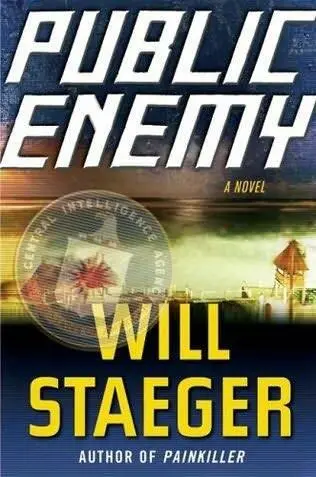
- Название:Public Enemy
- Автор:
- Жанр:
- Год:неизвестен
- ISBN:нет данных
- Рейтинг книги:3 / 5. Голосов: 1
-
Избранное:Добавить в избранное
- Отзывы:
-
Ваша оценка:
Public Enemy: краткое содержание, описание и аннотация
Предлагаем к чтению аннотацию, описание, краткое содержание или предисловие (зависит от того, что написал сам автор книги «Public Enemy»). Если вы не нашли необходимую информацию о книге — напишите в комментариях, мы постараемся отыскать её.
Public Enemy — читать онлайн бесплатно полную книгу (весь текст) целиком
Ниже представлен текст книги, разбитый по страницам. Система сохранения места последней прочитанной страницы, позволяет с удобством читать онлайн бесплатно книгу «Public Enemy», без необходимости каждый раз заново искать на чём Вы остановились. Поставьте закладку, и сможете в любой момент перейти на страницу, на которой закончили чтение.
Интервал:
Закладка:
Where I don’t wake up after a rare morning of sleeping in-only to learn I’m next up in the dead pool.
Maybe there’s a beach like the one I’m thinking of in Tahiti, or Fiji, or Malaysia. Maybe there’s a spot where I can find a different bungalow, make up a new name, and finally accomplish the fucking escape from insanity I tried to pull off nineteen years ago. Maybe I’ll even be able to find, in that place, a total absence of the memory, phone calls, and predicaments of Cap’n Roy, Po Keeler, the Coast Guard, this fucking twelve-inch golden idol on my shelf, that goddamn Polar Bear, the Polar Bear’s stateside fence and his king crabs-even an absence of the other guy with a made-up name, good old Benny Achar, who’d blown himself up, killed a hundred-plus Floridians, and annoyed a government agency or two in the process.
“Or maybe I wouldn’t find anything different at all,” he said, and shouted out for Ronnie to bring him another bottle of wine.
28
When he sold his third paperback, Wally Knowles bought the place in New Hampshire. A rambler with two bedrooms and one small bath, the size of the place topped out around six hundred square feet. Nineteen acres of forest had come with the house, though, and almost four hundred linear feet of the property nosedived straight into Sunapee Lake. Cost him $62,900, which price he paid some eight years prior to the time people started realizing the ski-resort town of Sunapee was as good a place to hang out in the summer as in winter-and began paying ten times what Knowles had paid for his whole property just to snatch up an empty half-acre building site.
His wife left him two weeks before he bought the lake house. Having come to agree with her view of his unimpressiveness, Knowles, who for his third novel got a $75,000 advance-his first of any kind-decided he’d better figure out how to live as cheaply as possible. He’d have to, if for no other reason than the measure he’d just undertaken to address his escalating midlife crisis: upon signing his divorce papers, Knowles promptly resigned from his $38,400-a-year job as public defender in the Bronx and went ahead with his plan of writing for a living. He put a chunk of his advance down on the house, wrangled a thirty-year fixed rate mortgage to cover the rest, and on the day of his closing found himself observing the view from a lakefront home, in which it would cost him $208.71 per month, escrow included, to write for just about as long as he damn well pleased.
Had she not been killed before a dose of positive karma struck her ex-husband, Mrs. Knowles might have come to regret saying, in the divorce, that “she didn’t want a red cent” and relinquishing the fifty percent interest she could have taken in her husband’s “pesky little books.” Book number five, it turned out, seized the second slot on the New York Times best-seller list its first week in print, and did not relinquish a place in the top five for nearly three years. Thirteen million copies sold. This led, among other things, to sales of just over six million copies of his first four titles.
Knowles did not regret for one instant having retreated from life as he’d known it. As the only African-American for miles, a man with a penchant for black suits, black Ray-Bans, black shirts and ties, a black ten-gallon hat, and no interest whatsoever in conversation, Knowles was known, simply, as “the black guy on the lake.” Although he’d heard the descriptions of him change, over time, to something like “the author,” the fact remained that despite his success, people still considered him an odd duck and a half.
And that suited Knowles just fine.
As “the black guy on the lake,” Knowles, by choice, had a lot of time to himself. He spoke to no one but his editor, but nonetheless spent most of his time assembling computer systems, database subscriptions, satellite and high-speed cable connections, and virtually any other gadget which, for most, normally assisted the process of communication. For Knowles this collection of toys and access served a different purpose: it allowed him to keep clear of everybody and anybody while still remaining abreast of everything. Knowles, for example, was the first individual not affiliated with a university to possess an Internet-2 connection, initially an exclusive, multiple-university-controlled next-generation high-speed Internet. Armed with the roster of research services and corporate intranets to which he belonged or had access, the novelist liked to think he could find out anything, or locate anybody, faster than any other civilian.
When his wife was killed, Knowles engaged in two main actions. First, suffering from a four-month case of writer’s block, he utilized his equipment to bury himself in research and news. He learned everything there was to learn about those who had wrought their fury on his ex-wife, those who had failed to protect her, and the government’s plans for retaliation. His blood pressure skyrocketing, fury his constant companion, Knowles sequestered himself in a single room in his lake house. Movies ran repeatedly in his mind’s eye-films depicting his ex-wife arriving in her office at eight-thirty as usual, going about her usual morning, maybe having a look out the window of her office with the kind of view of the city you only found from the 103rd floor of One World Trade Center. The films always ended in the same way, of course-white paper, floating everywhere. Gray clouds billowing to earth, roiling outward, then up again. Toward the end of the four months in that one room, Knowles devised the plot of the novel that would become his breakthrough hit, but above all, he realized he still did carry a torch for the woman who’d been his wife.
The other action Knowles took, he shared with a man named Dennis Cole.
Cole was a homicide detective for the NYPD, 23rd Precinct. Cole had once liked to keep his day to a little under eight hours, maximum, so he could spend as much time as possible with his new wife. Cole’s junior partner was hungry enough to pick up the slack without saying anything. It wasn’t long, though, before his partner didn’t have to pick up any slack at all-Cole started staying late, coming in nights when there wasn’t any work to do, finding just about any reason to avoid the fact that Cynthia Cole was staying out one hell of a lot later than her duties as a bond trader required. After two long years of made-up expensive dinners, gala events, and-though Cole chose not to face this-a great deal of fucking that did not include her husband, Mrs. Cole demanded a “trial separation.”
Unlike Knowles, who initially hadn’t minded particularly when his wife left him, Cole pined away for Cynthia like nobody’s business. It was after her separation from him that he started in on the bottle-though this was just the beginning. The fact that Cole was pining away for his wife meant, among other things, that when she failed to call in or make it home from work on that second Tuesday in September-that when she failed to show despite Cole’s descent into the hell that was downtown on that day, and when she failed to emerge, in full or part, following Cole’s statuesque, indefatigable presence irrepressibly visible over the course of three full weeks in the triage unit a block from ground zero-it meant that Cole had been able to convince himself that it might still have worked out.
If, that was, the 767 with its topped-off fuel tanks hadn’t pulled the plug on her supposed desire to reclaim his embrace.
Literally right after the funeral in Stamford, Cole got back to work-a morose ride on Metro North into Grand Central and he was back at it. Picking up the pieces from the three unsolved murder cases he and his partner had been served before twenty-eight hundred murders happened all at once a few blocks down the street. He broke all three cases with a vengeance, becoming one of the most deadly effective homicide investigators on the force. In the year that followed, he cracked his cases at the rate of one hundred percent-sixteen for sixteen.
Читать дальшеИнтервал:
Закладка:
Похожие книги на «Public Enemy»
Представляем Вашему вниманию похожие книги на «Public Enemy» списком для выбора. Мы отобрали схожую по названию и смыслу литературу в надежде предоставить читателям больше вариантов отыскать новые, интересные, ещё непрочитанные произведения.

![Томас Гарди - Джуд неудачник [Литрес, Public Domain]](/books/437392/tomas-gardi-dzhud-neudachnik-litres-public-domain-thumb.webp)







Обсуждение, отзывы о книге «Public Enemy» и просто собственные мнения читателей. Оставьте ваши комментарии, напишите, что Вы думаете о произведении, его смысле или главных героях. Укажите что конкретно понравилось, а что нет, и почему Вы так считаете.