Bob Fingerman - Pariah
Здесь есть возможность читать онлайн «Bob Fingerman - Pariah» весь текст электронной книги совершенно бесплатно (целиком полную версию без сокращений). В некоторых случаях можно слушать аудио, скачать через торрент в формате fb2 и присутствует краткое содержание. Жанр: Триллер, на английском языке. Описание произведения, (предисловие) а так же отзывы посетителей доступны на портале библиотеки ЛибКат.
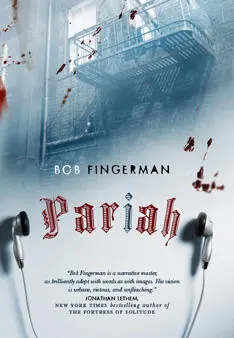
- Название:Pariah
- Автор:
- Жанр:
- Год:неизвестен
- ISBN:нет данных
- Рейтинг книги:5 / 5. Голосов: 1
-
Избранное:Добавить в избранное
- Отзывы:
-
Ваша оценка:
Pariah: краткое содержание, описание и аннотация
Предлагаем к чтению аннотацию, описание, краткое содержание или предисловие (зависит от того, что написал сам автор книги «Pariah»). Если вы не нашли необходимую информацию о книге — напишите в комментариях, мы постараемся отыскать её.
Pariah — читать онлайн бесплатно полную книгу (весь текст) целиком
Ниже представлен текст книги, разбитый по страницам. Система сохранения места последней прочитанной страницы, позволяет с удобством читать онлайн бесплатно книгу «Pariah», без необходимости каждый раз заново искать на чём Вы остановились. Поставьте закладку, и сможете в любой момент перейти на страницу, на которой закончили чтение.
Интервал:
Закладка:
“No, it’s interesting.”
It wasn’t really, but it passed the time. Ellen had never been much of a history buff, but Alan was smart and men liked to hear themselves talk, so why not indulge him? Alan plucked a thick volume off his bookshelf and gestured with it, the book a prop to lend credence to his thesis. Subconsciously, he’d pat the book after each sentence, punctuating his thoughts, drumming them in. He might have made a fine teacher, Ellen thought, but school had never been her favorite place.
“Is the test gonna be essay or multiple choice?” she said, smiling.
“I’m sorry, should I stop?”
“No, I’m just kidding.” Not.
“Nature’s been trying to wipe humans off the face of the Earth for centuries,” Alan continued. “The influenza pandemic at the end of World War I? Once it got going it knocked off about twenty-five to thirty million around the world. Maybe more. And quick, too. It came and went in a single year. Remember that SARS nonsense? All those little gauze masks people were running around with? Everyone looked like Michael Jackson for a couple of months? Same thing during the influenza epidemic. You could get fined for ignoring flu ordinances. So many folks were croaking there was a shortage of coffins, morticians, and gravediggers. Over time I think AIDS would have surpassed influenza, but it was all a rehearsal for this. This is the one that humanity doesn’t make a comeback from.”
Ellen just stared out the window. “No, I don’t suppose so. But maybe.”
Alan smiled and shook his head. That there was even the slightest room for optimism boggled his mind. He felt a small pang of envy. And then a larger pang of hunger. He stepped out of the room and into the kitchen, his departure unnoticed by Ellen, who seemed in a sort of trance. Maybe his little death diatribe was ill advised. Ellen didn’t come down for a dissertation. Whatever. What was done was done. Alan couldn’t unsay it. He opened a cabinet and took down a can of pork and beans and fished the can opener out of his cutlery drawer. After licking every atom of sustenance off the lid he scooped out two equal portions onto plates, then used the can opener again to remove the can’s bottom, which he also licked clean. He then got out his metal clippers and cut the can from top to bottom and carefully unfurled the cylinder, making sure not to cut himself. He tongued the exposed insides of the can, leaving them gleaming.
“Waste not, want not” went the old saw.
When he returned to the living room, which he used as his studio, Ellen was lying on the floor, eyes closed. At first Alan thought all that death talk finished her off, but he saw her rib cage rise with each soundless breath. Had she fainted?
“Ellen?”
“ Mmmm? ”
“Want something to eat?”
Ellen propped herself up and nodded, looking dreamy. Looking spaced out. She remained seated on the floor as she accepted the dish of beans and they ate in silence, slowly. No one wolfed down food but the zombies anymore. When they’d finished cleaning their plates, Alan took them back into the kitchen. Washing up was a thing of the past. He wiped the plates with the hem of his shorts. That was as good as it got, cleanliness-wise. Take that , Board of Health.
When he returned, Ellen was on his couch with her back to him, nude, her body arranged in an undernourished homage to the classic Ingres canvas, “Grande Odalisque.” She’d even wrapped a towel around her head and held a flyswatter where Ingres’s model held a feathered fan.
“Want to immortalize something alive?” she asked. “Barely, but still.”
Alan thought about the drawing of her he’d inadequately disposed of and his malignant arrangement with Eddie. If only he’d burned it. This wasn’t about the drawing, anyway. It was about protecting Ellen from Eddie’s vicious gossip. And was Ellen ready to see a truthful depiction of herself? That was the bigger issue. Alan had tossed away that drawing because he thought it would hurt her. How should he proceed? Whenever he’d done portraits of, let’s say, aesthetically challenged people he knew, he always embellished a little, flattered where possible while maintaining sufficient fealty to the model. He’d hand over the art and the subject always seemed pleased. But Ellen, damaged as she was, would likely see through such a chivalrous ruse. Better just to portray what was.
“Okay,” Alan said, picking a pad and terra-cotta Conté crayon off the floor.
“Don’t you want to paint me?” Ellen asked.
“Uh. A drawing would be quicker.”
“You have someplace else you need to be?”
“Good point.”
Alan opened his paint box, a sturdy wooden one that had belonged to his grandfather. He kept his brushes bristle up in a mason jar nearby and selected a hogs hair filbert and a hogs hair round to lay in the basic structure in thinned burnt sienna. He already had a primed canvas stapled to a lapboard. Proper stretchers were a sweet memory. The canvas, with its dry bluish-gray layer of wash, was on the smallish side but would have to do, like everything else in short supply. Alan never wanted to be a miniaturist, but so be it.
As Alan sketched Ellen’s basic form in small but confident strokes, he really studied her body. It was about 10:30 in the morning; the light in the room was somewhat diffuse as the sun was still at the east end of the apartment. By the time the sun hung over York, casting direct light into the room, he had the basic form blocked in. The light would be strong for a couple of hours. As the illumination grew stronger, so did the highlights on Ellen’s body, sweat glinting on each raised vertebra, each dorsal rib, her raised hipbone. Though emaciated, the essence of her former loveliness was still evident. Lighting made such a difference. Maybe this painting could be both flattering and honest.
“Can I have a glass of water?” Ellen asked, breaking what Alan realized had been several hours of total silence.
14
“ Ooh! Ooh! There, across the street. Something’s happening over there at the Food City! I saw somebody go into the market. Someone’s stealing our food. Well, not our food, but you know what I mean!”
“It was bound to happen,” Ruth said.
“What? A food thief? You bet your sweet bippy! I keep vigil, nothing gets past me!”
“No, no, no , not the alleged food thief.”
“Alleged? Then what? What? What was bound to happen?” Abe turned away from his post at the window and glared at his wife.
“Losing your marbles. Senility. Dementia. Whatever you want to call it. You spend all day staring out the window and you’re bound to start seeing things.”
“I’m not seeing things,” Abe sputtered.
“Exactly. You’re not seeing things because there’s nothing to see. Like the lights in the sky the other night.”
“Not the sky, the ground.”
“Uh-huh.”
“There was some kind of fracas.”
“Fracas,” Ruth repeated.
“A brouhaha.”
Ruth just stared, her mouth pursed. Abe dabbed his sweaty forehead, wiping a trickle of stinging saltiness from the corner of his eye. He blinked a few times and looked back out the window. Nothing was any different than usual. The host of rotting cabbages was muddling en masse in perfect, unbroken harmony.
“I just thought I saw… Ah, nuts.”
Abe looked again, his eye drifting to Food City.
“Aha!” he shouted. “Aha! There!” He pointed at the doors, the glass of one was broken. “There! The door’s busted. I heard that. I heard a crash. So there!”
“So?” Ruth said, unmoved. “They broke a window. Wonderful. In addition to eating us they’re vandals now. I’m thrilled. And now the supermarket’s full of them. I can see why you’re cheering.”
Читать дальшеИнтервал:
Закладка:
Похожие книги на «Pariah»
Представляем Вашему вниманию похожие книги на «Pariah» списком для выбора. Мы отобрали схожую по названию и смыслу литературу в надежде предоставить читателям больше вариантов отыскать новые, интересные, ещё непрочитанные произведения.






Обсуждение, отзывы о книге «Pariah» и просто собственные мнения читателей. Оставьте ваши комментарии, напишите, что Вы думаете о произведении, его смысле или главных героях. Укажите что конкретно понравилось, а что нет, и почему Вы так считаете.