Ranulph Fiennes - Killer Elite
Здесь есть возможность читать онлайн «Ranulph Fiennes - Killer Elite» весь текст электронной книги совершенно бесплатно (целиком полную версию без сокращений). В некоторых случаях можно слушать аудио, скачать через торрент в формате fb2 и присутствует краткое содержание. Жанр: Триллер, на английском языке. Описание произведения, (предисловие) а так же отзывы посетителей доступны на портале библиотеки ЛибКат.
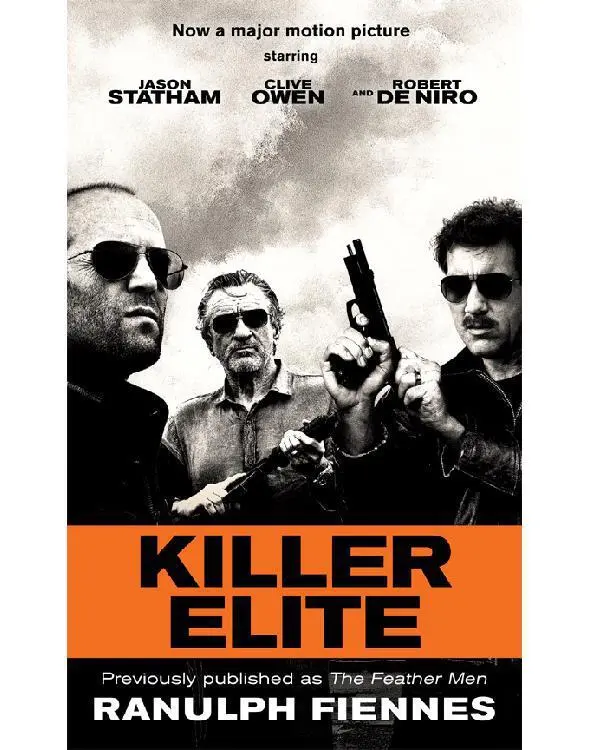
- Название:Killer Elite
- Автор:
- Жанр:
- Год:неизвестен
- ISBN:нет данных
- Рейтинг книги:3 / 5. Голосов: 1
-
Избранное:Добавить в избранное
- Отзывы:
-
Ваша оценка:
Killer Elite: краткое содержание, описание и аннотация
Предлагаем к чтению аннотацию, описание, краткое содержание или предисловие (зависит от того, что написал сам автор книги «Killer Elite»). Если вы не нашли необходимую информацию о книге — напишите в комментариях, мы постараемся отыскать её.
Killer Elite — читать онлайн бесплатно полную книгу (весь текст) целиком
Ниже представлен текст книги, разбитый по страницам. Система сохранения места последней прочитанной страницы, позволяет с удобством читать онлайн бесплатно книгу «Killer Elite», без необходимости каждый раз заново искать на чём Вы остановились. Поставьте закладку, и сможете в любой момент перейти на страницу, на которой закончили чтение.
Интервал:
Закладка:
But Meier was shaking. He switched the BMW back to Normal and shouted at Jake, “Stop, stop. We must be sure the job is done.” As Jake slowed, Meier released his pent-up emotions. “That was very, very bad. Never have I had such trouble in our practice in Boston and Kent. The bloody horse van… I am first from the side, then from the front, but all our practice was from behind.”
He wiped his damp forehead and removed his spectacles. “It would not go straight. Did you not see? I could not get the angle right. So, knowing all was lost if I continued to try
for the optimum angle, I slewed it ’round… My last chance… You see, I was too late to crash into Marman. My only sure chance was for Marman to crash into the BMW.”
“Never mind, you did good. It is finished. Forget the problems.”
Meier reached for the radio and tried de Villiers’s call sign. Silence, but then they had agreed on strict radio silence afterward.
They were five hundred yards past the scene of the crash. Already, closer to the scene, cars were stopped on both sides of the highway. Both men grabbed for their binoculars.
John Smythe was horrified. He had used the Ford Escort as a shield all the way from Steeple Langford, keeping well behind, for he was aware of Marman’s program and so was not worried about losing sight of the 2CV. He had begun to nurture suspicions about the driver of the Ford.
When the crash occurred, the Escort had gone past the accident site and out of Smythe’s view. He pulled to the side some three hundred yards short of the BMW’s resting place. The 2CV was out of sight, down the bank. Smythe was mystified. He was certain he had witnessed a planned murder but who and where was the guilty party?
He reached for his binoculars and scrutinized the occupants of the stationary vehicles as well as the small group of people gathering by the crashed cars. All seemed innocent. Back behind him the road was empty but for moving traffic. However, some two hundred yards away, on the far verge of the highway, he saw the Volvo, and refocusing his binoculars, felt his skin prickle at the back of his neck. He had studied the Sumail photos long and hard and he had an excellent memory. One of the two men in the Volvo was definitely the man in the floppy hat. The chin, the nose line and the general set of the lower features were identical.
Smythe had no alternative choice of action. When he found a telephone he would give Spike the sad news, but meanwhile he would gently check out what he fully realized might turn out to be merely an embarrassing coincidence. As he pondered his move, it came to him that both Volvo occupants had used binoculars. Birdwatchers or racegoers perhaps? Perhaps not. He decided to avoid any risk of losing them. Instead of turning around at the distant roundabout, he would cross the central divider. Finding a gap in the traffic, both ways, he did just that.
As Smythe’s Morris Marina TC Coupe jolted onto the eastbound lanes, Meier took alarm. This was his undoing, for it served to confirm Smythe’s suspicions. He gave open chase as the Volvo accelerated away. Jake took the Stonehenge fork, and at Tilshead, in the center of Salisbury Plain, veered east on to West Down. Smythe kept close but, on a minor dirt track, found himself confronted at a sharp bend by the halted Volvo and one of its passengers, pointing a gun at his windshield.
Too close to reverse, and unarmed, Smythe knew he stood a good chance of dealing with both men if only he could get within kicking range of the gun. He could kick more quickly than the gunman could squeeze his trigger. This was not conceit: it was standard knowledge to thousands of karate practitioners everywhere.
Smythe raised his hands and stepped out of the Marina. As Meier moved to frisk him, he made his move. The gun, a. 44 Magnum Blackhawk, flew to the ground but Meier eluded the follow-up blow and closed in a bear hug with Smythe.
Jake, having retrieved the revolver, moved behind Smythe and shot him through the back of the neck. This was an error, but Jake was a mechanic, not a gunman, and for a moment he could not comprehend why Meier and Smythe both fell to the ground and lay still. He felt a sharp pain in his wrist from the kick of the heavy revolver and his ears rang. Brain, blood, and bone splinters from Smythe added to the mess that was Meier’s face.
Jake crossed himself instinctively and dragged both bodies into the Volvo’s spacious rear compartment. He covered them with the sound baffle and drove to the agreed upon rendezvous with de Villiers in Andover.
De Villiers showed no visible distress at the news of Meier’s death and accepted without question Jake’s explanation of the accident. He phoned a Tadnams number and three hours later two men arrived in a Volkswagen Polo. Jake placed some tools and a brake-fluid container in two carrier bags and transferred them to the Polo. They did not see the Volvo again.
De Villiers had watched Sir Peter Horsley being taken off to the hospital with head lacerations but otherwise seemingly unhurt. The two wrecked cars were transported to a garage in nearby Amesbury, Panelcraft Motors, which de Villiers had studied carefully before coming to the rendezvous.
At 2 a.m. that night the two men broke into the garage without difficulty and leaving no signs of their visit. By flashlight they removed all the parasite components, reconnected the brake lines, bled the brakes and refilled the system with fluid. They were clear of the building by 4 a.m. but the police accident inspector did not arrive until after 11 a.m. and his necessarily rather limited check revealed nothing suspicious.
Three weeks later Sir Peter Horsley was warned that the police were considering a charge against him of causing death by reckless driving. Sir Peter hired a private investigator and, the following April, his name was completely cleared at an inquest in Salisbury. The key factor was evidence from witnesses, such as Mrs. Elspeth Allen, the horse-van driver, that Sir Peter’s car began to swerve when driving smoothly in the middle of the road and not, as the police had suggested, following tire contact with the curbside.
The coroner, Mr. John Elgar, recorded a verdict of misadventure and concluded, “Sir Peter’s vehicle was seen to snake along the A303 for some reason which we will never know, then crossed the central divider and came into violent collision with the other vehicle.”
In late November 1986 Davies showed a letter, addressed to him at one of the Tadnam’s postal addresses, to de Villiers. The water engineer whom Davies had met at the Anglo-Omani Society’s meeting the previous October had written to say how sorry he had been to read of Major Mike Marman’s death and that, incidentally, he had been wrong about the Zakhir action. Marman had not after all been in the armored cars on that occasion. The relevant officer had been Captain Simon Mirriam, one of Marman’s troop leaders in Dhofar.
Both surviving members of the Clinic agreed they would say nothing about this to the sheikh, since Marman remained, by wider definition, responsible for the action. They had acted in good faith and had already received his check in return for the film taken in Blandfield Road, newspaper evidence of the ensuing accident, and their file on Marman’s apparent responsibility for the death of Tama’an bin Amr.
PART 4
36
Epilepsy is common. Five hundred thousand people in Britain alone are epileptics. The disorder can attack anyone, at any time, sometimes developing in old age. Genetic factors are often responsible but, as in Mac’s case, an accident can cause structural abnormality to the brain and bring on “secondary” epilepsy. Anticonvulsant pills usually help epileptics lead a normal life but there are often side effects such as nausea, hair loss, coarsening of the features, drowsiness, double vision, and disturbing nightmares.
Читать дальшеИнтервал:
Закладка:
Похожие книги на «Killer Elite»
Представляем Вашему вниманию похожие книги на «Killer Elite» списком для выбора. Мы отобрали схожую по названию и смыслу литературу в надежде предоставить читателям больше вариантов отыскать новые, интересные, ещё непрочитанные произведения.










Обсуждение, отзывы о книге «Killer Elite» и просто собственные мнения читателей. Оставьте ваши комментарии, напишите, что Вы думаете о произведении, его смысле или главных героях. Укажите что конкретно понравилось, а что нет, и почему Вы так считаете.