Tom Smith - Child 44
Здесь есть возможность читать онлайн «Tom Smith - Child 44» весь текст электронной книги совершенно бесплатно (целиком полную версию без сокращений). В некоторых случаях можно слушать аудио, скачать через торрент в формате fb2 и присутствует краткое содержание. Год выпуска: 2008, ISBN: 2008, Издательство: Grand Central Pub, Жанр: Триллер, на английском языке. Описание произведения, (предисловие) а так же отзывы посетителей доступны на портале библиотеки ЛибКат.
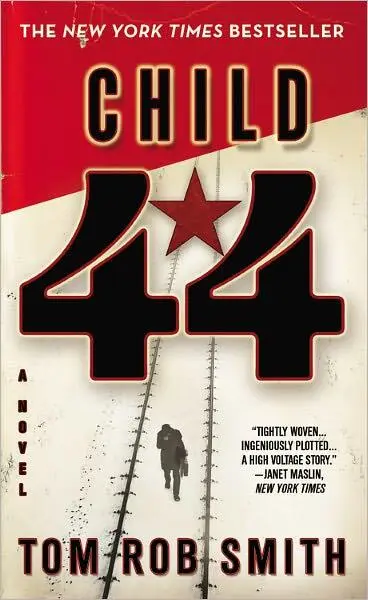
- Название:Child 44
- Автор:
- Издательство:Grand Central Pub
- Жанр:
- Год:2008
- ISBN:9780446402385
- Рейтинг книги:3 / 5. Голосов: 1
-
Избранное:Добавить в избранное
- Отзывы:
-
Ваша оценка:
Child 44: краткое содержание, описание и аннотация
Предлагаем к чтению аннотацию, описание, краткое содержание или предисловие (зависит от того, что написал сам автор книги «Child 44»). Если вы не нашли необходимую информацию о книге — напишите в комментариях, мы постараемся отыскать её.
The novel is based on real Russian serial killer Andrei Chikatilo, also known as the Rostov Ripper, who was responsible for 52 murders in communist Russia. In addition to highlighting the problem of Soviet-era criminality in a state where "there is no crime," the novel also explores the paranoia of the age, the education system, the secret police apparatus, orphanages, Homosexuality in the USSR and mental hospitals.
The book is the first part of a trilogy. The second part is called The Secret Speech and also features the character of Leo Demidov and his wife, Raisa.
Child 44 was longlisted for the Man Booker Prize in 2008 and won the Waverton Good Read Award in 2009.
Child 44 — читать онлайн бесплатно полную книгу (весь текст) целиком
Ниже представлен текст книги, разбитый по страницам. Система сохранения места последней прочитанной страницы, позволяет с удобством читать онлайн бесплатно книгу «Child 44», без необходимости каждый раз заново искать на чём Вы остановились. Поставьте закладку, и сможете в любой момент перейти на страницу, на которой закончили чтение.
Интервал:
Закладка:
I say once again, both I and your mother love you very much, and neither of us have any regrets.
Leo—
Leo stopped reading, turning his head away. Yes, he remembered what had happened. He knew what the letter would go on to say. And yes, he’d spent his whole life trying to forget. He folded the letter before carefully ripping it into small pieces. He stood up, opening the small window, throwing the fragments out. Caught in the wind, the uneven squares of paper rose up into the air and disappeared out of view.
South-Eastern Roston Oblast Sixteen Kilometres North of Rostov-on-Don
Same Day
Nesterov had spent his last day in the oblast visiting the town of Gukovo. He was now on the elektrichka , travelling back towards Rostov. Though the newspapers made no mention of these crimes, the incidents of murdered children had entered the public domain in the form of whispers and rumour. So far the militia in their closed localities had refused to see each murder as anything other than an isolated occurrence. But people outside of the militia, unburdened by any theory regarding the nature of crime, had begun to thread together these deaths. Unofficial explanations had begun to circulate. Nesterov had heard it stated that there was a wild beast murdering children in the forests around Shakhty. Different places had conjured different beasts, and supernatural explanations of one kind or another were being repeated all across the oblast. He’d heard a fearful mother claim the beast was part man part animal, a child brought up by bears who now hated all normal children, making them its food source. One village had been sure it was a vengeful forest spirit, the inhabitants performing elaborate ceremonies in an attempt to mollify this demon.
The people living in the Rostov oblast had no idea that there were similar crimes hundreds of kilometres away. They believed this was their blight, an evil that plagued them. In a way Nesterov agreed with them. There was no doubt in his mind that he was in the heartland of these crimes. The concentration of murders was far higher here than anywhere else. While he had no inclination to believe the supernatural explanations, he was in part seduced by the most persuasive and widespread of the theories, the notion that Nazi soldiers had been left behind as Hitler’s final act of revenge: soldiers whose last orders were to murder Russia’s children. These Nazi soldiers had been trained in the Russian way of life, blending in, while systematically murdering children according to a predetermined ritual. It would explain the scale of the murders, the geographical scope, the savagery but also the absence of any sexual interference. There wasn’t one killer but many, perhaps as many as ten or twelve, each acting independently, travelling to towns and killing indiscriminately. This theory had developed such momentum that some local militia, who’d paradoxically claimed to have solved all the crimes, began questioning any man who could speak German.
Nesterov stood up, stretching his legs. He’d been on the elektrichka for three hours. It was slow and uncomfortable and he wasn’t used to sitting still for so long. He walked the length of the carriage, opening the window, watching the lights of the city approach. Having heard about the murder of a boy named Petya living on a collective farm near Gukovo he’d travelled there this morning. Without too much difficulty he’d found the parents of the boy concerned. Though he’d given a false name he’d truthfully explained that he was working on an investigation involving the similar murders of a number of children. The boy’s parents had been staunch advocates of the Nazi-soldier theory, explaining that the Germans might even have been helped by traitorous Ukrainians, assisting them to integrate into society before murdering at random. The boy’s father had shown Nesterov Petya’s book of stamps, which the couple kept in its wooden box under their bed, a shrine to their dead son. Neither of them could look at the stamps without crying. Both parents had been refused access to their boy’s body. But they’d heard what had been done to him. He’d been savaged as if by an animal, dirt thrust in his mouth as if to spite them further. The father, who’d fought in the Great Patriotic War, knew that the Nazi soldiers were given drugs to ensure they were vicious, amoral and merciless. He was sure that these killers were the products of some such Nazi-created drug. Maybe they’d been made addicted to children’s blood, without which they’d die. How else could these men commit such crimes? Nesterov had no words of consolation except a promise that the culprit would be caught.
The elektrichka arrived at Rostov. Nesterov disembarked, confident only that he’d found the centre of these crimes. Having once been a member of the militia in Rostov before being transferred to Voualsk four years ago he’d had little difficulty gathering information. According to his most recent count fifty-seven children had been killed in what he considered to be comparable circumstances. A high portion of those murders had taken place in this oblast. Was it possible that across the entire western half of the country Nazi infiltrators had been left behind? An enormous stretch of land had been occupied by the Wehrmacht. He himself had fought in the Ukraine and encountered first-hand the rape and murder by the retreating army. Deciding not to commit himself to one theory or another, he pushed these explanations to one side. Leo’s mission in Moscow would be crucial to bring some kind of professionalism to the speculation of the killer’s identity. Nesterov had been tasked with the accumulation of facts regarding the killer’s location.
During their vacation his family had been staying in his mother’s apartment in the New Settlement, built during one of the postwar accommodation programmes with all the usual characteristics: constructed to fulfil a quota rather than to be lived in. They were already in a state of decay: they’d been in a state of decay before they were even finished. With no running water or central plumbing, they were similar to his home back in Voualsk. He and Inessa had agreed to lie to his mother, assuring her that they were now living in a new apartment. His mother had been comforted by the lie as though she herself was now living in that new apartment too. Approaching his mother’s house Nesterov checked his watch. He’d left at six this morning and it was now coming up to nine in the evening. Fifteen hours had been spent for the gain of no real information. His time was up. Tomorrow they were returning home.
He entered the courtyard. Washing hung from side to side. He could see his own clothes amongst them. He touched them. They were dry. Moving through the washing he approached the door of his mother’s apartment, entering the kitchen.
Inessa was seated on a wooden stool, her face bloody, her hands tied. Behind her stood a man he didn’t recognize. Without trying to figure out what had happened or who this man was Nesterov strode forward, overwhelmed with anger. He didn’t care that the man was wearing a uniform: he’d kill him all the same, whoever he was. He raised his fist. Before he could get close pain engulfed his hand. Looking to the side he saw a woman, perhaps forty years old. She was holding a black truncheon. He’d seen her face before. He remembered now — on the beach, two days ago. In her other hand she held a gun, casually, enjoying her position of power. She gestured to her officer. He stepped forward, throwing a selection of papers onto the floor. Falling around their feet was every document he’d accumulated over the past two months, photos, descriptions, maps — the case file of the murdered children.
— General Nesterov, you’re under arrest.
Читать дальшеИнтервал:
Закладка:
Похожие книги на «Child 44»
Представляем Вашему вниманию похожие книги на «Child 44» списком для выбора. Мы отобрали схожую по названию и смыслу литературу в надежде предоставить читателям больше вариантов отыскать новые, интересные, ещё непрочитанные произведения.






Обсуждение, отзывы о книге «Child 44» и просто собственные мнения читателей. Оставьте ваши комментарии, напишите, что Вы думаете о произведении, его смысле или главных героях. Укажите что конкретно понравилось, а что нет, и почему Вы так считаете.