Tom Smith - Child 44
Здесь есть возможность читать онлайн «Tom Smith - Child 44» весь текст электронной книги совершенно бесплатно (целиком полную версию без сокращений). В некоторых случаях можно слушать аудио, скачать через торрент в формате fb2 и присутствует краткое содержание. Год выпуска: 2008, ISBN: 2008, Издательство: Grand Central Pub, Жанр: Триллер, на английском языке. Описание произведения, (предисловие) а так же отзывы посетителей доступны на портале библиотеки ЛибКат.
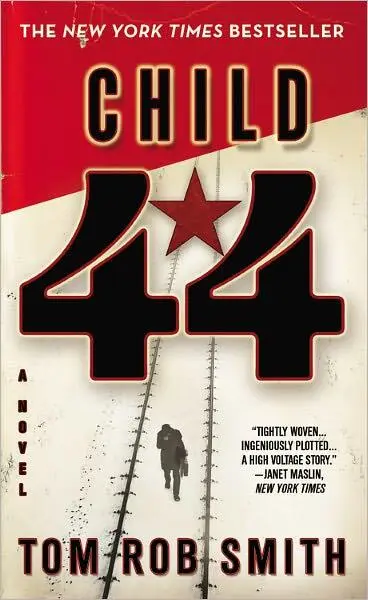
- Название:Child 44
- Автор:
- Издательство:Grand Central Pub
- Жанр:
- Год:2008
- ISBN:9780446402385
- Рейтинг книги:3 / 5. Голосов: 1
-
Избранное:Добавить в избранное
- Отзывы:
-
Ваша оценка:
Child 44: краткое содержание, описание и аннотация
Предлагаем к чтению аннотацию, описание, краткое содержание или предисловие (зависит от того, что написал сам автор книги «Child 44»). Если вы не нашли необходимую информацию о книге — напишите в комментариях, мы постараемся отыскать её.
The novel is based on real Russian serial killer Andrei Chikatilo, also known as the Rostov Ripper, who was responsible for 52 murders in communist Russia. In addition to highlighting the problem of Soviet-era criminality in a state where "there is no crime," the novel also explores the paranoia of the age, the education system, the secret police apparatus, orphanages, Homosexuality in the USSR and mental hospitals.
The book is the first part of a trilogy. The second part is called The Secret Speech and also features the character of Leo Demidov and his wife, Raisa.
Child 44 was longlisted for the Man Booker Prize in 2008 and won the Waverton Good Read Award in 2009.
Child 44 — читать онлайн бесплатно полную книгу (весь текст) целиком
Ниже представлен текст книги, разбитый по страницам. Система сохранения места последней прочитанной страницы, позволяет с удобством читать онлайн бесплатно книгу «Child 44», без необходимости каждый раз заново искать на чём Вы остановились. Поставьте закладку, и сможете в любой момент перейти на страницу, на которой закончили чтение.
Интервал:
Закладка:
Ivan’s fingers were frantically clasping at the cord. Raisa shook her head, prising her fingers under the cord, relieving the pressure on his neck.
— Leo, let him go, let him prove himself.
— Haven’t all your friends been arrested, every one, except for him? That woman Zoya, where do you think the MGB got her name from? They didn’t arrest on her on the basis of her prayers. That was just their excuse.
Unable to get free, Ivan’s legs began slipping across the floor, forcing Leo to take his full weight. Leo couldn’t hold him for much longer.
— Raisa, you never spoke to me about your friends. You never trusted me. Who did you confide in? Think!
Raisa stared at Leo then at Ivan. It was true: all her friends were dead or arrested, all except him. She shook her head, refusing to believe it — it was the paranoia of today, the paranoia created by the State that any allegation no matter how far-fetched was enough to kill a man. She caught sight of Ivan’s hand reaching for the cabinet drawer. She let go of the cord.
— Leo, wait!
— We don’t have time!
— Wait!
She opened the drawer, riffling through. Inside was a letter-opener, sharp — the item Ivan was reaching for to defend himself. She could hardly blame him for that. Behind that was a book, his copy of For Whom the Bell Tolls . Why was it not hidden? She picked it up. A sheet of paper was inside it. On it was written a list of names: people the book had been loaned to. Some of the names were scored through. Her name had been scored through. On the other side of the page was a list of people he intended to loan the book to.
She turned to Ivan, raising the sheet of paper to his face, her hand shaking. Was there an innocent explanation? No, she already knew there wasn’t. No dissident would be foolish enough to write down a list of names. He loaned the book to incriminate.
Leo was struggling to hold Ivan.
— Raisa, turn away.
She obeyed, walking to the other side of the room, the book still in her hand, listening as Ivan’s legs kicked the furniture.
Same Day
Since he was a State Security operative, Ivan’s death would immediately be catagorized as murder, an outrage that must have been committed by someone opposed to the system, an anti-Soviet element. The culprit was an outsider, a non-believer, so legitimizing the launch of a comprehensive investigation. There was no need to cover it up. Fortunately for Leo and Raisa, Ivan must have had many enemies. He was a man who’d lived his life betraying intrigued citizens, attracting them with the promise of censored material as a predator might attract its prey with alluring bait. The censored material had been provided to him by the State.
Before leaving the apartment, Raisa had taken the list of names, crumpling the paper into her pocket. Leo had hurriedly gathered together the case file. They had no idea how long it would take the State Security to respond to Ivan’s call. They’d opened the front door, running down the stairs before approximating calmness as they walked away. As they’d reached the end of the street they’d glanced back. Agents were entering the building.
No one in Moscow had any reason to believe Leo and Raisa had returned. They wouldn’t be immediate suspects. The officers in charge of the investigation, if the connection even occurred to him, would check with the MGB in Voualsk and discover that they were on a walking holiday. That excuse might hold unless a witness identified a man and a woman entering the apartment building. If that happened then their alibi would come under closer scrutiny. But Leo knew all of these facts were of only the slightest importance. Even if there was no evidence, even if they really had been on a walking holiday, this murder could be used as a pretext to arrest them. The weight of evidence was totally irrelevant.
In their current predicament trying to see his parents was an act of sheer brazenness. But there was no train back to Voualsk until five in the morning and more to the point Leo understood this would be his last chance to speak to them. Although he’d been refused contact with them since leaving Moscow and been given no details of their whereabouts, he had acquired the address several weeks ago. Knowing that the State departments tended to operate in autonomy, he’d felt there was a chance that an enquiry to the Department of Housing about Stepan and Anna wouldn’t be automatically flagged up and passed on to the MGB. As a precaution he’d given a false name and tried to make his request seem as though it was official business, asking for a selection of names, including Galina Shaporina. Although all the other names had drawn a blank he’d managed to locate his parents. Vasili might have been expecting such an attempt; indeed, he might even have given orders for the address to be released. He knew Leo’s weakness in exile would be his parents. If he wanted to catch him violating orders then his parents were the perfect trap. But it seemed unlikely that his parents would be under permanent surveillance for as long as four months. More probable was that the family they were forced to share with were also doubling as informers. He had to reach his parents without the other family seeing or hearing or knowing. His parents’ safety depended upon this secrecy as much as their own. If they were caught, they’d be tied to Ivan’s murder and Leo’s entire family would die, perhaps even before the night was over. Leo was prepared to take the risk. He had to say goodbye.
They’d arrived on Ulitsa Vorontsovskaya. The house in question was an old building, pre-Revolutionary — the kind that had been sliced into a hundred tiny apartments, partitioned by nothing more than dirty sheets hanging off lengths of rope. There would be no amenities, no running water and no indoor toilets. Leo could see pipes jutting out of the windows to release the smoke from the wood stoves, the cheapest and dirtiest form of heating available. Surveying the property from a safe distance, they waited. Mosquitoes landed on their necks forcing them to continually slap their skin until their hands were spotted with their own blood. Leo knew no matter how long he stood here there was no way he could ascertain if this was a trap. He’d have to go in. He turned to Raisa. Before he could speak, she said:
— I’ll wait here.
Raisa felt ashamed. She’d trusted Ivan; her opinion of him had been based solely on the trappings of his books and papers, his musings on Western culture, his alleged plans to help key dissident writers smuggle their works out to the West. Lies: all of it — how many writers and opponents of the regime had he snared? How many manuscripts had he burnt so that they were lost to the world? How many artists and free-thinkers had he directed the Chekists to arrest? She’d fallen for him because of his obvious differences to Leo. The difference had been a disguise. The dissident had been the policeman and the policeman had become the counter-revolutionary. The dissident had betrayed her, the policeman saved her. She could hardly say goodbye to Leo’s parents, side by side with her husband, as though she’d been a loyal, loving wife. Leo took her hand.
— I’d like you to come with me.
The communal door was unlocked. The air inside was hot, stale and they immediately began to sweat: their clothes clung to their backs. Upstairs, apartment 27, the door was locked. Leo had broken into many properties. The older locks were normally more difficult to pick than the modern ones. Using the tip of a flick knife, he unscrewed the plate, revealing the lock mechanism. He inserted the blade but the lock refused to open. He wiped the sweat from his face, stopping for a moment, breathing deeply, closing his eyes. He dried his hands on his trousers, ignoring the mosquitoes — let them have their fill. He opened his eyes. Concentrate . The lock clicked open.
Читать дальшеИнтервал:
Закладка:
Похожие книги на «Child 44»
Представляем Вашему вниманию похожие книги на «Child 44» списком для выбора. Мы отобрали схожую по названию и смыслу литературу в надежде предоставить читателям больше вариантов отыскать новые, интересные, ещё непрочитанные произведения.









Обсуждение, отзывы о книге «Child 44» и просто собственные мнения читателей. Оставьте ваши комментарии, напишите, что Вы думаете о произведении, его смысле или главных героях. Укажите что конкретно понравилось, а что нет, и почему Вы так считаете.