Tom Smith - Child 44
Здесь есть возможность читать онлайн «Tom Smith - Child 44» весь текст электронной книги совершенно бесплатно (целиком полную версию без сокращений). В некоторых случаях можно слушать аудио, скачать через торрент в формате fb2 и присутствует краткое содержание. Год выпуска: 2008, ISBN: 2008, Издательство: Grand Central Pub, Жанр: Триллер, на английском языке. Описание произведения, (предисловие) а так же отзывы посетителей доступны на портале библиотеки ЛибКат.
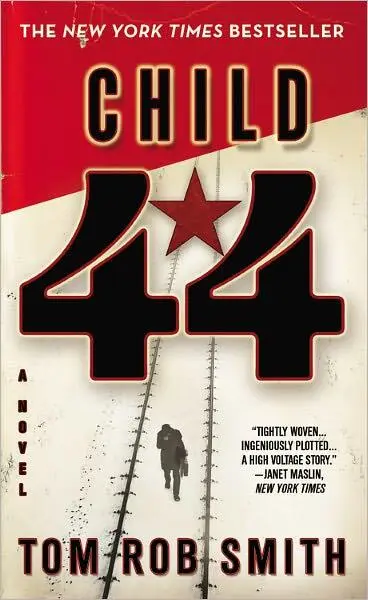
- Название:Child 44
- Автор:
- Издательство:Grand Central Pub
- Жанр:
- Год:2008
- ISBN:9780446402385
- Рейтинг книги:3 / 5. Голосов: 1
-
Избранное:Добавить в избранное
- Отзывы:
-
Ваша оценка:
Child 44: краткое содержание, описание и аннотация
Предлагаем к чтению аннотацию, описание, краткое содержание или предисловие (зависит от того, что написал сам автор книги «Child 44»). Если вы не нашли необходимую информацию о книге — напишите в комментариях, мы постараемся отыскать её.
The novel is based on real Russian serial killer Andrei Chikatilo, also known as the Rostov Ripper, who was responsible for 52 murders in communist Russia. In addition to highlighting the problem of Soviet-era criminality in a state where "there is no crime," the novel also explores the paranoia of the age, the education system, the secret police apparatus, orphanages, Homosexuality in the USSR and mental hospitals.
The book is the first part of a trilogy. The second part is called The Secret Speech and also features the character of Leo Demidov and his wife, Raisa.
Child 44 was longlisted for the Man Booker Prize in 2008 and won the Waverton Good Read Award in 2009.
Child 44 — читать онлайн бесплатно полную книгу (весь текст) целиком
Ниже представлен текст книги, разбитый по страницам. Система сохранения места последней прочитанной страницы, позволяет с удобством читать онлайн бесплатно книгу «Child 44», без необходимости каждый раз заново искать на чём Вы остановились. Поставьте закладку, и сможете в любой момент перейти на страницу, на которой закончили чтение.
Интервал:
Закладка:
This was Leo’s first experience of a State orphanage. He stepped closer, surveying the room. It was difficult to guess how many children there were — two hundred, three hundred, aged from four to fourteen. None of the children paid Leo any attention: they were too busy eating or watching their neighbours, waiting for a spoon. No one spoke. All that could be heard was the scraping of bowls and slurping. Leo turned to the elderly man.
— Are you the director of this institution?
The director’s office was on the first floor, looking out over a factory floor covered with children as though they were being mass-produced. In the office were several teenage boys, older than the children downstairs. They were playing cards on the director’s desk. The director clapped his hands.
— Continue this in your room, please.
The boys stared at Leo and Moiseyev. Leo could only suppose that their irritation came from being told what to do. They had intelligent eyes, experience beyond their years. Without a word they moved together, like a pack of wild dogs, collecting up their cards, their matches — used as chips — and filed out.
Once they’d left, the director poured himself a drink and gestured for Leo and Moiseyev to take a seat. Moiseyev sat down. Leo remained standing, studying the room. There was a single metal filing cabinet. The bottom drawer had been dented by a kick. The top drawer was partially open and crumpled documents jutted out at all angles.
— There was a young boy murdered in the forest. You’ve heard about this?
— Some other officers were here showing me photos of the boy, asking if I knew who he was. I’m afraid I don’t.
— But you couldn’t say for sure if you were missing any children?
The director scratched his ear.
— There are four of us looking after three hundred or so children. The children come and go. New ones arrive all the time. You must forgive our failings regarding the paperwork.
— Do any of the children in this facility resort to prostitution?
— The older ones do whatever they want. I can’t keep tabs on them. Do they get drunk? Yes. Do they prostitute themselves? Quite possibly, although I don’t sanction it, I’m not involved in it and I certainly don’t profit from it. My job is to make sure they have something to eat and somewhere to sleep. And considering my resources I do that very well. Not that I expect any praise.
The director showed them upstairs towards the sleeping areas. As they passed a shower room he commented:
— You think that I’m indifferent to the children’s welfare? I’m not, I do my best. I make sure they wash once a week, I make sure they’re shaved and deloused once a month. I boil all their clothes. I will not have lice in my orphanage. You go to any other orphanage and the children’s hair will be alive with them, their eyebrows thick with them. It’s disgusting. Not here. Not that they thank me for it.
— Would it be possible to speak to the children on our own? They might be intimidated by your presence.
The director smiled.
— They won’t be intimidated by me. But by all means…
He gestured to the flight of stairs.
— The older ones live on the top floor. It’s very much their fiefdom up there.
The upstairs bedrooms, tucked under the roof, contained no bed frames, just the occasional thin mattress on the floor. The older children evidently took their lunch at a time which suited them; no doubt they’d already eaten and taken the best of the food.
Leo stepped into the first room on the landing. He caught sight of a girl hiding behind the door and saw a glint of metal. She was armed with a knife. Seeing his uniform she slipped the knife away, the blade disappearing into the folds of her dress.
— We thought you were the boys. They’re not allowed in here.
Some twenty girls, at a guess aged between fourteen and sixteen, stared at Leo with hardened faces. Leo’s mind was thrown back to his promise to Anatoly Brodsky that the two daughters were safe in the care of a Moscow orphanage. It had been an empty, ignorant assurance. Leo understood that now. Brodsky had been right. Those two girls would’ve been better on their own, looking after each other.
— Where do the boys sleep?
The older boys, some of whom had been in the director’s office, were huddled at the back of their room, waiting, expecting them. Leo entered the room and knelt down, placing an album of photographs on the floor in front of them.
— I’d like you to look through these photos, tell me if any of these men have ever approached you, offered you money in return for sexual favours.
None of the boys moved or gave any indication that his supposition was correct.
— You haven’t done anything wrong. We need your help.
Leo opened the album, slowly turning the pages of photographs. He reached the end. The audience of teenagers had stared at the photos but given no reaction. He turned back through the pages. There was still no reaction from the boys. He was about to shut the album when a boy from the back of the group reached out and touched one of the photos.
— This man propositioned you?
— Pay me.
— He paid you?
— No, you pay me and I’ll tell you.
Leo and Moiseyev clubbed together, offering the boy three roubles. The boy flicked through the album, stopping at a page and pointing to one of the photos.
— The man looked like that man.
— So it wasn’t this man?
— No, but similar.
— Do you know his name?
— No.
— Can you tell us anything about him?
— Pay me.
Moiseyev shook his head, refusing to pay any more.
— We could arrest you for profiteering.
Cutting the threat short, Leo took out the last of his money, giving it to the boy.
— That’s all I have.
— He works at the hospital.
Same Day
Leo drew his gun. They were on the top floor of Apartment Building 7: apartment 14 was at the end of the corridor. They’d been given the address by staff at the hospital. The suspect was off sick and had been for the past week, a length of time which would have meant, if all the MGB officers hadn’t been busy with their interrogations, that he would’ve almost certainly been questioned. It turned out that the beginning of his sickness corresponded with the first wave of arrests against the town’s homosexual population.
Leo knocked on the door. There was no response. He called out, stating their name and rank. There was no reply. Moiseyev lifted his boot, ready to kick at the lock. The door opened.
Seeing the guns pointed at him, Dr Tyapkin raised his hands and stepped back. Leo barely recognized him. This was the same man who’d helped him with the examination of the girl’s body, the prestigious doctor transferred from Moscow. His hair and eyes were wild. He’d lost weight. His clothes were rumpled. Leo had seen men broken by worry; he’d seen how their muscles lost shape and strength, as if they’d been eaten up by fear.
Leo pushed the door open with his foot, surveying the apartment.
— Are you alone?
— My youngest son’s here. But he’s asleep.
— How old is he?
— Four months.
Moiseyev stepped in, smashing the metal butt of his gun against Tyapkin’s nose. Tyapkin dropped to his knees, blood running into his cupped hands. Moiseyev ordered Leo.
— Search him.
Moiseyev began searching the apartment. Leo crouched down, helping Tyapkin to his feet, bringing him into the kitchen, where he sat him down on a chair.
Читать дальшеИнтервал:
Закладка:
Похожие книги на «Child 44»
Представляем Вашему вниманию похожие книги на «Child 44» списком для выбора. Мы отобрали схожую по названию и смыслу литературу в надежде предоставить читателям больше вариантов отыскать новые, интересные, ещё непрочитанные произведения.











Обсуждение, отзывы о книге «Child 44» и просто собственные мнения читателей. Оставьте ваши комментарии, напишите, что Вы думаете о произведении, его смысле или главных героях. Укажите что конкретно понравилось, а что нет, и почему Вы так считаете.