Tom Smith - Child 44
Здесь есть возможность читать онлайн «Tom Smith - Child 44» весь текст электронной книги совершенно бесплатно (целиком полную версию без сокращений). В некоторых случаях можно слушать аудио, скачать через торрент в формате fb2 и присутствует краткое содержание. Год выпуска: 2008, ISBN: 2008, Издательство: Grand Central Pub, Жанр: Триллер, на английском языке. Описание произведения, (предисловие) а так же отзывы посетителей доступны на портале библиотеки ЛибКат.
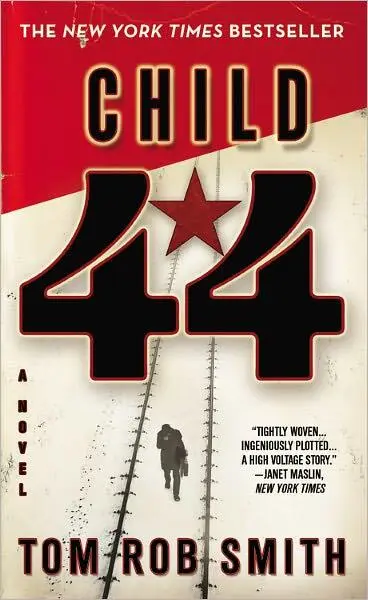
- Название:Child 44
- Автор:
- Издательство:Grand Central Pub
- Жанр:
- Год:2008
- ISBN:9780446402385
- Рейтинг книги:3 / 5. Голосов: 1
-
Избранное:Добавить в избранное
- Отзывы:
-
Ваша оценка:
Child 44: краткое содержание, описание и аннотация
Предлагаем к чтению аннотацию, описание, краткое содержание или предисловие (зависит от того, что написал сам автор книги «Child 44»). Если вы не нашли необходимую информацию о книге — напишите в комментариях, мы постараемся отыскать её.
The novel is based on real Russian serial killer Andrei Chikatilo, also known as the Rostov Ripper, who was responsible for 52 murders in communist Russia. In addition to highlighting the problem of Soviet-era criminality in a state where "there is no crime," the novel also explores the paranoia of the age, the education system, the secret police apparatus, orphanages, Homosexuality in the USSR and mental hospitals.
The book is the first part of a trilogy. The second part is called The Secret Speech and also features the character of Leo Demidov and his wife, Raisa.
Child 44 was longlisted for the Man Booker Prize in 2008 and won the Waverton Good Read Award in 2009.
Child 44 — читать онлайн бесплатно полную книгу (весь текст) целиком
Ниже представлен текст книги, разбитый по страницам. Система сохранения места последней прочитанной страницы, позволяет с удобством читать онлайн бесплатно книгу «Child 44», без необходимости каждый раз заново искать на чём Вы остановились. Поставьте закладку, и сможете в любой момент перейти на страницу, на которой закончили чтение.
Интервал:
Закладка:
Aleksandr’s list had been trawled through name by name. On producing the list he’d explained that he could create it not because he’d been promiscuous, at least not to the extent of having sexual encounters with a hundred or so men. In fact, many of the names on the list were people he’d never even met. His information came from conversations with the ten or so that he’d had sex with. Each man recounted liaisons with different men so that, added together, it was possible to draw a sexual constellation with each man knowing his place in relation to each other. Leo had listened to this explanation, a hidden world opening up, a hermetically sealed existence constructed within society at large. The integrity of the seals was critical. Aleksandr had described how men on the list met by chance in routine situations, standing in a food line buying bread, eating at the same table in a factory canteen. In these everyday surroundings casual conversation was forbidden, a glance was the most that was allowed and even that needed to be disguised. These were rules that had come about not by agreement or decree, no one needed to be told them, they arose out of self-preservation.
As soon as the first wave of arrests had begun, news of a purge must have spread throughout their ranks. The secret meeting places — no longer a secret — were abandoned. But this desperate counter-measure had been to no avail. There was the list. The seals around the world had broken. Nesterov didn’t need to catch anyone in a sexually compromising act. Seeing their names in print, one after the after, and realizing that their ranks had been broken, most of the men succumbed to the pressure of this betrayal. Like U-boats which had for so long remained unseen under the water’s surface, suddenly they found all their positions had been given away. As they were forced to the surface they were presented with a choice, not much of a choice but a choice all the same: they could reject the charges of sodomy and face public prosecution, certain conviction, imprisonment, etc. Or they could identify the homosexual among them responsible for this terrible crime, the murder of a young boy.
As far as Leo could ascertain, Nesterov seemed to believe that all these men suffered from a sickness of some kind. While some were sick in the mildest sense, plagued by feelings for other men as a normal person might be racked by persistent headaches, others were dangerously ill, symptoms which expressed themselves in the need for young boys. This was homosexuality in its most extreme form. The murderer was one such man.
When Leo had shown photos of the crime scene, photos of the young boy with his guts cut open, all the suspects had reacted in exactly the same way — they were horrified — or at least they appeared to be. Who could’ve done such a thing? It wasn’t one of them, it wasn’t anyone they knew. None of them had any interest in boys. Many of them had children of their own and so on the answers had gone. Every man was resolute: they knew of no killer amongst them and they wouldn’t protect him if they did. Nesterov had expected a prime suspect within a week. After a week they had nothing to show for their work except a longer list. More names were added, some merely out of spite. The list had become a brutally effective weapon. Members of the militia were adding the names of their enemies onto it, claiming the person had been mentioned in confession. Once a name was on the list it was impossible to claim innocence. So the number in custody had grown from a hundred to nearly one hundred and fifty men.
Frustrated with the lack of progress, the local MGB had suggested they take over the interrogations, shorthand for the use of torture. To Leo’s dismay Nesterov had agreed. Despite floors flecked with blood there’d been no breakthrough. Nesterov had been left with little choice but to initiate prosecutions against all one hundred and fifty men, hoping this would make one of them speak. It wasn’t enough that they were humiliated and disgraced and tortured: they needed to understand that they would lose their lives. They would, if the judge was so instructed, receive twenty-five years for political subversion rather than a mere five years for sodomy. Their sexuality was considered a crime against the very fabric of the nation. Faced with this prospect three men had cracked and begun pointing the finger. However, none of them had picked the same person. Refusing to accept that his line of investigation was flawed, Nesterov considered himself up against a kind of perverse, criminal solidarity — honour amongst deviants.
Exasperated, Leo had approached his superior officer.
— These men are innocent.
Nesterov had stared at him, puzzled.
— All these men are guilty. The question is which one is also guilty of murder.
Raisa watched as Leo kicked the heels of his boots together. Dirty chunks of snow fell to the floor. He stared down, unaware that she was in the room. She found his disappointment impossible to bear. He’d believed, sincerely believed, that his investigation stood a chance. He’d pinned his hopes on a fanciful dream of redemption: a final act of justice. It was an idea she’d mocked that night in the forest. But it had been mocked far more cruelly by the turn of events. In the pursuit of justice he’d unleashed terror. In the pursuit of a killer, one hundred and fifty men would lose their lives, if not literally, then on every other level — they’d lose their families, their homes. And she realized, seeing her husband’s hunched shoulders and drawn face, that he never did anything without believing in it. There was nothing cynical or calculating about him. If this was true then he must also have believed in their marriage: he must have believed it was built on love. Steadily all the fantasies he’d created — about the State, about their relationship — had been shattered. Raisa was envious of him. Even now, even after everything that had happened, he was still able to hope. He still wanted to believe in something. She stepped forward, sitting beside him on the bed. Tentatively, she took his hand. Surprised, he looked at her but said nothing, accepting the gesture. And together they watched as the snow began to melt.
30 March
Orphanage 80 was a five-storey brick building with faded white lettering painted on the side: WORK HARD LIVE LONG. On the roof there was a long line of chimney stacks. The orphanage had once been a small factory. Dirty rags hung across the barred windows, making it impossible to see inside. Leo knocked on the door. No response; he tried the handle. It was locked. Moving to the windows he tapped on the glass. The rags were jerked back. The face of a young girl appeared for little more than a second, an apparition of filth, before the rags fell back into place. Leo was accompanied by Moiseyev, a militia officer who Leo had pegged as little more than a uniformed thug. After a long wait the main door opened. An elderly man with a fist full of brass keys stared at the two officers. Seeing their uniforms his expression changed from irritation to deference. He dropped his head slightly.
— What can I do for you?
— We’re here about the murdered boy.
The main hall of the orphanage had once been the factory floor. All the machinery had been cleared and it had been converted into a dining room, not by the addition of tables and chairs, for there were none, but by the fact that the entire floor was covered with children sitting cross-legged, pressed up against each other and trying to eat. Every child clutched a wooden bowl filled with what appeared to be a watery cabbage soup. However, it seemed only the eldest children had spoons. The rest either sat waiting for a spoon or drank straight from the bowl. Once a child had finished, they licked the spoon from top to bottom before passing it onto the next child.
Читать дальшеИнтервал:
Закладка:
Похожие книги на «Child 44»
Представляем Вашему вниманию похожие книги на «Child 44» списком для выбора. Мы отобрали схожую по названию и смыслу литературу в надежде предоставить читателям больше вариантов отыскать новые, интересные, ещё непрочитанные произведения.










Обсуждение, отзывы о книге «Child 44» и просто собственные мнения читателей. Оставьте ваши комментарии, напишите, что Вы думаете о произведении, его смысле или главных героях. Укажите что конкретно понравилось, а что нет, и почему Вы так считаете.