Elizabeth Hand - Generation Loss
Здесь есть возможность читать онлайн «Elizabeth Hand - Generation Loss» весь текст электронной книги совершенно бесплатно (целиком полную версию без сокращений). В некоторых случаях можно слушать аудио, скачать через торрент в формате fb2 и присутствует краткое содержание. Город: Northampton, MA, Год выпуска: 2007, ISBN: 2007, Издательство: Small Beer Press, Жанр: Триллер, Ужасы и Мистика, на английском языке. Описание произведения, (предисловие) а так же отзывы посетителей доступны на портале библиотеки ЛибКат.
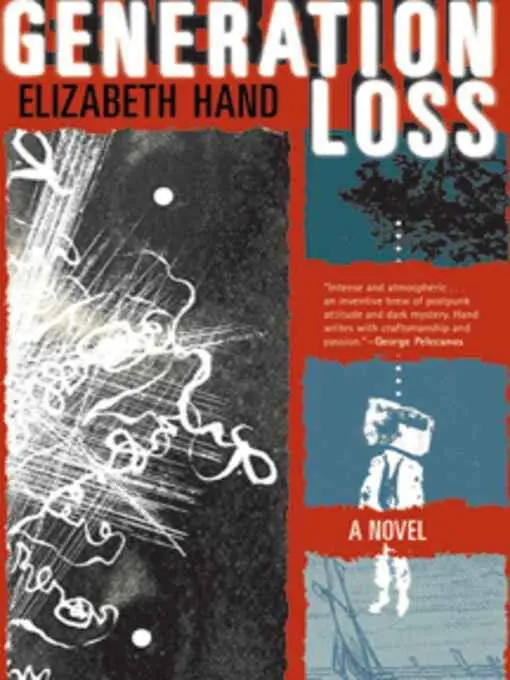
- Название:Generation Loss
- Автор:
- Издательство:Small Beer Press
- Жанр:
- Год:2007
- Город:Northampton, MA
- ISBN:978-1-931520-21-8
- Рейтинг книги:3 / 5. Голосов: 1
-
Избранное:Добавить в избранное
- Отзывы:
-
Ваша оценка:
Generation Loss: краткое содержание, описание и аннотация
Предлагаем к чтению аннотацию, описание, краткое содержание или предисловие (зависит от того, что написал сам автор книги «Generation Loss»). Если вы не нашли необходимую информацию о книге — напишите в комментариях, мы постараемся отыскать её.
Thirty years later she is adrift, on her way down, and almost out when an old acquaintance sends her on a mercy gig to interview a famously reclusive photographer who lives on an island in Maine. When she arrives Down East, Cass stumbles across a decades-old mystery that is still claiming victims, and she finds one final shot at redemption.
Patricia Highsmith meets Patti Smith in this mesmerizing literary thriller.
Praise for Elizabeth Hand’s previous novels: Amazon.com Review
“Inhabits a world between reason and insanity—it’s a delightful waking dream.”
—
“One of the most sheerly impressive, not to mention overwhelmingly beautiful books I have read in a long time.”
—Peter Straub
Generation Loss — читать онлайн бесплатно полную книгу (весь текст) целиком
Ниже представлен текст книги, разбитый по страницам. Система сохранения места последней прочитанной страницы, позволяет с удобством читать онлайн бесплатно книгу «Generation Loss», без необходимости каждый раз заново искать на чём Вы остановились. Поставьте закладку, и сможете в любой момент перейти на страницу, на которой закончили чтение.
Интервал:
Закладка:
He looked out to where the deerhounds ran along the rocky beach. “Did they bark?”
“No.” As quickly as he’d blushed, Gryffin paled. “Excuse me, I’m not feeling well. I—”
He bolted from the room. John Stone drew a long breath then looked at me. “Boy, I really hate this. Now I have to do the same with you.”
He put a new sheet onto his clipboard. “Can you spell your name, please.”
A flicker of panic went through me. But as the minutes passed I felt more confident. The Adderall kicked in with its laboratory glow of invincibility, and I had to remind myself that this was police procedure and not a job interview. The dogs chased a seagull on the beach. John Stone’s radio crackled. He checked it, turned to me again.
“So, why’d you come here?” He sounded genuinely curious.
“To interview Aphrodite Kamestos. For a magazine.”
“That’s right, she was supposed to be famous at some point, wasn’t she. I never knew her.” He frowned. “You knew her, then?”
“No. Not personally, not before I came here yesterday. Someone set it up—an editor. At the magazine.”
“What about Gryffin? You know him? He a friend?”
“No. I never met him. Not before yesterday.”
“What about Mrs. Kamestos? She seem sick to you? Anything out of the ordinary?”
“I never met her before yesterday. She seemed fine, I guess. She seemed … drunk.”
“So I gather. They’ll do a toxicology report, we’ll see what that says.” He made another mark on his clipboard and put down his pen. “I guess that’ll do it. Unless you can think of anything else?”
I shook my head.
“Don’t you go far, now,” Stone went on. “I still have to question you about this other thing. That girl from the motel you stayed at the other night. But I got to finish this matter here first.”
A shadow fell across the table. I looked up to see Gryffin. His hair was wet, he’d shaved and changed into a white oxford-cloth shirt and corduroys, a brown jacket.
“You finished?” He slid into the chair next to mine.
“Just about,” said John Stone. There was another crackle from his radio. He picked it up, spoke briefly before turning back to us. “That was the dispatcher. Marine Patrol just left Burnt Harbor, they should be here in a few minutes.”
Gryffin toyed with his coffee mug. “Then what?”
“He’ll ask you some more questions and take a look around. They’ll arrange for someone to bring the deceased over to the funeral home, and the State Medical Examiner will take over.”
“Christ.” Gryffin closed his eyes.
Stone glanced over his notes. “Well. What I need to do now is take a look at the deceased.”
They went upstairs. I poured the rest of the coffee and drank it, slung on my jacket and went outside. The dogs ran over to me then raced off into the pine grove.
“Nice display of grief,” I said, and threw a stick after them.
The sky was gray and unsettled, not a brooding dark but a bright pewter haze that stung my eyes. I shut them and bright phantom bolts moved behind the lids, shapes that became a face tangled in dendrinal knots, branches, blood vessels, Kenzie Libby running along the road.
I opened my eyes. Wind hissed through dead leaves, a sound like sleet. A few tiny white flakes blew past my face.
Who could live here? I wondered.
I thought of Kenzie, of Aphrodite dead, and the flyers I’d seen everywhere. Dead cats. Missing kids. A new one now.
HAVE YOU SEEN KENZIE LIBBY?
I shivered. Maybe this was one of those places where people weren’t meant to live, like Love Canal or Spirit Lake.
Yet it was beautiful. Not just the trees and water and sky, all those things you expect to be beautiful, but the rest of it—stoved-in clapboards and flyspecked modular homes, beer bottles in the harbor, houses cobbled from stuff that everyone else threw away, a light that seemed to leak from another world.
I could live here , I realized. It wasn’t exactly a comforting thought.
There probably isn’t a bigger way of blowing a story than what I’d just done. Like, if you were to take a photograph of Paswegas at that moment and ask, What’s wrong with this picture? the answer would be pretty clear. There was no way I could stay.
I thought of the film I’d hidden in the turtle shell and the stolen picture in my copy of Aphrodite’s book. I thought of Aphrodite herself, and how it wouldn’t take a crack team of investigators to dust for fingerprints under the bed and find mine.
I assumed John Stone wouldn’t bother. Aphrodite had been lit up like Las Vegas when I’d last seen her alive; the toxicology report would prove that. End of story, unless I tried to write something up for Mojo .
But I kept thinking of Kenzie Libby, making jewelry out of broken glass and beer cans; a kid in the middle of nowhere who knew the words to “Marquee Moon.” What must it have been like to hear those guitars for the first time, here on a rock in the middle of the winter, everything around you black and white and that music like a message in a bottle tossed to you from a city five hundred miles away?
What was it like to be so desperate to escape your life that someone like me looked like a way out instead of a way down?
I hunched against the cold and swore, and wished I had another bottle of Jack Daniel’s. I wasn’t crazy about the idea of hitching a ride back to the mainland with a cop. Or a corpse. I’d wait till everyone left then head down to the harbor and see if I could find Toby. I already owed him money for the ride over. I’d make it a round trip and call it even and get the hell out of Dodge.
I glanced back through the window to see if Gryffin and John Stone had come downstairs. The kitchen was still empty. I jammed my hands into my pockets. My feet in the cowboy boots were already freezing. I headed toward the pine grove, hoping to warm myself by moving.
That was another bad idea. The wind blasted me, and the trees offered little in the way of shelter as a flurry of snow whirled up. My ears throbbed from the inside, like someone had jabbed a pencil in there. I swore again.
Above me, something growled. I looked up.
An animal crouched in a pine tree—cat sized, with blackish brown fur and glittering eyes and a small red mouth, a sleek furry tail. It glared at me, teeth bared in a hiss. I stared back, too stunned to run away. I’d seen foxes and coyotes in the woods back when I was a kid, and once even a bobcat, but nothing like this, all rage and teeth. It looked like the Tasmanian Devil in the old cartoons. It crept to the edge of the branch, its back reared like a cat’s about to spring. For a moment it was silent. Then it snarled.
I’ve never heard anything like that noise. It didn’t even sound like an animal. It sounded like a human, like a person growling in pure rage. The snarl grew louder, the fur around the animal’s face fanned out in a brown-gold halo. It moved forward, gaining better purchase on the tree limb. It was going to jump.
I took a stumbling step backward, heard a flurry of barks, and turned.
Aphrodite’s deerhounds ran along the top of the hill. Behind them strode a tall figure in a police parka. Sighting me, one of the dogs broke away and raced down the hillside. I looked back at the pine tree, but the animal was gone.
The man walked toward me. “These your dogs?” He sounded pissed off.
“No. They belong to them.” I pointed at the house.
The dogs rushed past us, sniffed hopefully then loped toward the beach.
“You part of the family?”
“They’re inside.”
The man nodded. He was broad shouldered, with a square face and blue eyes, close-cropped blond hair and a nick on his chin from shaving. Tom’s of Maine meets Tom’s of Finland. His name tag read Jeff Hakkala.
Читать дальшеИнтервал:
Закладка:
Похожие книги на «Generation Loss»
Представляем Вашему вниманию похожие книги на «Generation Loss» списком для выбора. Мы отобрали схожую по названию и смыслу литературу в надежде предоставить читателям больше вариантов отыскать новые, интересные, ещё непрочитанные произведения.





Обсуждение, отзывы о книге «Generation Loss» и просто собственные мнения читателей. Оставьте ваши комментарии, напишите, что Вы думаете о произведении, его смысле или главных героях. Укажите что конкретно понравилось, а что нет, и почему Вы так считаете.