Elizabeth Hand - Generation Loss
Здесь есть возможность читать онлайн «Elizabeth Hand - Generation Loss» весь текст электронной книги совершенно бесплатно (целиком полную версию без сокращений). В некоторых случаях можно слушать аудио, скачать через торрент в формате fb2 и присутствует краткое содержание. Город: Northampton, MA, Год выпуска: 2007, ISBN: 2007, Издательство: Small Beer Press, Жанр: Триллер, Ужасы и Мистика, на английском языке. Описание произведения, (предисловие) а так же отзывы посетителей доступны на портале библиотеки ЛибКат.
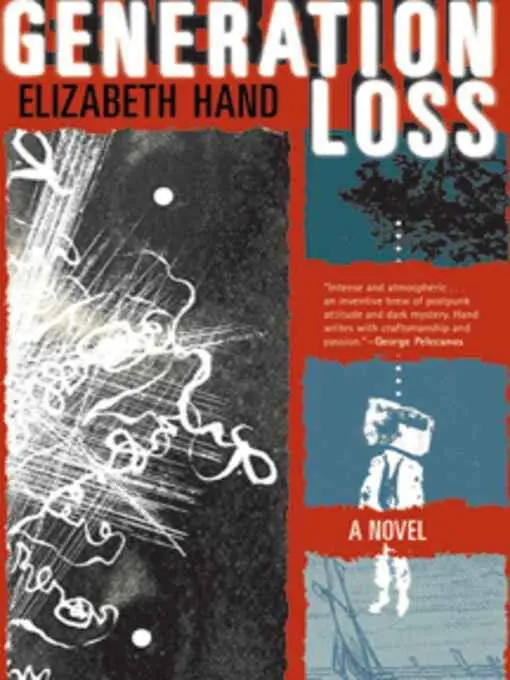
- Название:Generation Loss
- Автор:
- Издательство:Small Beer Press
- Жанр:
- Год:2007
- Город:Northampton, MA
- ISBN:978-1-931520-21-8
- Рейтинг книги:3 / 5. Голосов: 1
-
Избранное:Добавить в избранное
- Отзывы:
-
Ваша оценка:
Generation Loss: краткое содержание, описание и аннотация
Предлагаем к чтению аннотацию, описание, краткое содержание или предисловие (зависит от того, что написал сам автор книги «Generation Loss»). Если вы не нашли необходимую информацию о книге — напишите в комментариях, мы постараемся отыскать её.
Thirty years later she is adrift, on her way down, and almost out when an old acquaintance sends her on a mercy gig to interview a famously reclusive photographer who lives on an island in Maine. When she arrives Down East, Cass stumbles across a decades-old mystery that is still claiming victims, and she finds one final shot at redemption.
Patricia Highsmith meets Patti Smith in this mesmerizing literary thriller.
Praise for Elizabeth Hand’s previous novels: Amazon.com Review
“Inhabits a world between reason and insanity—it’s a delightful waking dream.”
—
“One of the most sheerly impressive, not to mention overwhelmingly beautiful books I have read in a long time.”
—Peter Straub
Generation Loss — читать онлайн бесплатно полную книгу (весь текст) целиком
Ниже представлен текст книги, разбитый по страницам. Система сохранения места последней прочитанной страницы, позволяет с удобством читать онлайн бесплатно книгу «Generation Loss», без необходимости каждый раз заново искать на чём Вы остановились. Поставьте закладку, и сможете в любой момент перейти на страницу, на которой закончили чтение.
Интервал:
Закладка:
What mattered was what was in front of me at that moment: the matte bulk of the woodstove, ash on the floor; the macabre doll with her head twisted. She was beautiful, it was all beautiful, her spill of silver hair and the play of blood beneath her skin.
I got a series of close-ups. At one point I worried that her breath might fog my lens. But by then she hardly seemed to be breathing at all.
I don’t know at what point she actually died. But gradually the flush on her cheeks took on a violet tinge. A strand of hair fell across her face, obscuring one eye. I moved it aside, shot two more frames before checking the camera.
I only had four shots left. I stopped, suddenly aware of my body clammy with sweat. I looked at the bedroom door then scrambled to my feet.
On Aphrodite’s bed, the dogs slept. A body lay on the floor, and a leather portfolio.
Otherwise nothing was out of place. It looked like an accidental death. To me, anyway. Even kind of a natural death, all things considered. I tugged at my T-shirt so it covered my hand, grabbed the copy of Dead Girls and stuck it on a bookshelf, lining it up so it looked as inconspicuous as possible. Then I got the portfolio, did my best to clean it with my T-shirt, and shoved it back under the bed.
Would that be enough? My fingerprints were probably all over it, and the other two as well. But I couldn’t waste time trying to clean up. I’d have to hope no one would bother with it. I glanced around the room for any hint I’d been there.
All seemed as untidy and forlorn as when I’d entered. I used my T-shirt to polish the doorknobs, swiped the fabric across the doorjamb for good measure. I felt surprisingly calm, as though I were cleaning up from a party.
Had I touched anything else?
Nada .
I was safe. Maybe.
16
Phil used to say my motto should be Born to Lose . At that moment, Nothing to Lose seemed just as good. I gave one last look at Aphrodite’s room. Would she have left the door ajar? The light on?
I decided yeah, sure, if she didn’t know she was going to be dead. I headed for Gryffin’s bedroom.
His door was shut. I stood and tried to get my nerve up.
I was wasted, but I wasn’t stupid. I wasn’t sure exactly what had happened back there in Aphrodite’s room—did she fall or was she pushed?—but I knew it didn’t look good.
I needed to cover my ass. Getting rid of the film in my camera would be a start, but I didn’t want to do that. Those pictures … maybe no one else could ever see them, but I wanted to see them. I needed to see them, to prove that I wasn’t like her, not yet. To prove that I hadn’t lost it.
The hall was black. But gradually my eyes adjusted. There’s always a gray scale, even in what seems like total darkness. I went into Gryffin’s room and closed the door behind me.
The bedroom was warm. I could hear him breathing deeply. Not snoring, which was good. I don’t sleep well with other people in the room.
Not that I could sleep yet. I crossed to the far wall. There was enough light that I could see Gryffin lying on his back. One arm rested on his forehead. His head was tilted. The sleeve of his T-shirt had hitched up so that I could see the hollow beneath his arm.
He looked beautiful. Otherworldly, I would say, except that what was so lovely about him was his very ordinariness, the fact that he could be in the same room with me, breathe the same air; and know nothing of me at all. As though I were a ghost; as though Aphrodite had been right, and I was truly nothing.
But for as long as I stood there, for as long as he didn’t wake, our worlds occupied the same space, the way a photograph can create a secondary world that exists within the real one. I felt as though I had stepped inside a photo—not one of my own pictures but someplace calm, someplace suspended between waking and sleep, the real and the ideal. A place my work would never belong, any more than I would.
Gryffin belonged there. Dark as it was in that room, I could imagine he slept somewhere else, sunlit. A beach, a green woodland. Sun, a man smiling; always out of reach. I would never be able to touch him.
Grief hit me then, the image of Aphrodite’s sad small body sprawled beside the woodstove, and horror at the darkness around me. I turned and groped around the room until I found Gryffin’s desk, the brass candlestick and box of wooden matches. I struck one, not caring if he woke, lit the candle then extinguished the match.
The flame seemed blinding, but he didn’t stir. I stood at his bedside, candle in my hand, and gazed down at him: his mouth parted slightly, as though he were on the verge of speaking to someone in his dream. His eyes moved behind his eyelids. His breath was warm and smelled of toothpaste and alcohol. He was beautiful.
Everything is random. That’s what I used to believe. Nothing happens for a reason, nothing happens because we will it. I never believed in gods. I believe in Furies. I think there are beings, people, impelled by the power to do harm. Sometimes the impulse is momentary. Maybe in some instances it’s eternal. And maybe that’s the one thing in the universe that isn’t random.
When I was raped, I ran into one of those Furies. Over the years, I became one myself.
But if there is an opposite to whatever I am, it—he—was lying there in front of me. As I stared at him I realized that what I had first sensed outside the motel room, that black roil of damage … it had nothing to do with Gryffin Haselton, nothing at all. He’d looked at me, and I’d seen a glimpse of myself in his eyes. My own rage and fear had come back at me like bullets bouncing from a wall.
Nothing else.
I shot the last four frames. I steadied the camera on the edge of the desk so that my shaking hands wouldn’t ruin the exposure. Even so, I knew the images would be blurred. Like when you’re outside shooting the moon without a tripod—no matter how hard you try to remain still, you move, and the moon moves, and the earth moves. And the camera captures everything.
Now, in Gryffin’s room, very little seemed to be moving: but I knew the photos would show differently. They would show how everything changes, a fraction of a second at a time. Death is the eidos of that Photograph , Roland Barthes wrote, but not even death is static like a picture is. If you look at a corpse long enough, you see things move beneath the skin, as real and liquid as the blood in your own veins.
Now I saw a sleeping man, motionless. Four frames. When I was done, I rewound the film inside the camera then removed the roll. I needed to hide it.
Gryffin might find it in a drawer, or under the mattress. I saw the turtle shell on the windowsill and remembered what I’d found in the room above the Island Store. I picked up the shell, pressed my finger against the bit of carapace that formed a trap door where the turtle’s head had once retracted. It moved to reveal an opening big enough for the roll of film.
I slid it inside then shook the shell. The film didn’t move; it was wedged tight. I put the shell back on the windowsill, turned and watched Gryffin sleep.
Our gaze changes all that it falls upon …
I never wanted my gaze to change him.
But, of course, it already had. I blew out the candle, removed my boots and leather jacket, wrapped my camera in the jacket and set it on the floor.
Then I pulled the blanket back and slipped beneath the covers. Gryffin made a small questioning sound and shifted onto his side.
“It’s me,” I whispered. “I’m cold.”
“What?” He mumbled and turned toward me. “Huh?”
“Cass. There’s no heat in my room. I’m freezing.”
I could see him frown. Then he shut his eyes.
Читать дальшеИнтервал:
Закладка:
Похожие книги на «Generation Loss»
Представляем Вашему вниманию похожие книги на «Generation Loss» списком для выбора. Мы отобрали схожую по названию и смыслу литературу в надежде предоставить читателям больше вариантов отыскать новые, интересные, ещё непрочитанные произведения.






Обсуждение, отзывы о книге «Generation Loss» и просто собственные мнения читателей. Оставьте ваши комментарии, напишите, что Вы думаете о произведении, его смысле или главных героях. Укажите что конкретно понравилось, а что нет, и почему Вы так считаете.