Elizabeth Hand - Generation Loss
Здесь есть возможность читать онлайн «Elizabeth Hand - Generation Loss» весь текст электронной книги совершенно бесплатно (целиком полную версию без сокращений). В некоторых случаях можно слушать аудио, скачать через торрент в формате fb2 и присутствует краткое содержание. Город: Northampton, MA, Год выпуска: 2007, ISBN: 2007, Издательство: Small Beer Press, Жанр: Триллер, Ужасы и Мистика, на английском языке. Описание произведения, (предисловие) а так же отзывы посетителей доступны на портале библиотеки ЛибКат.
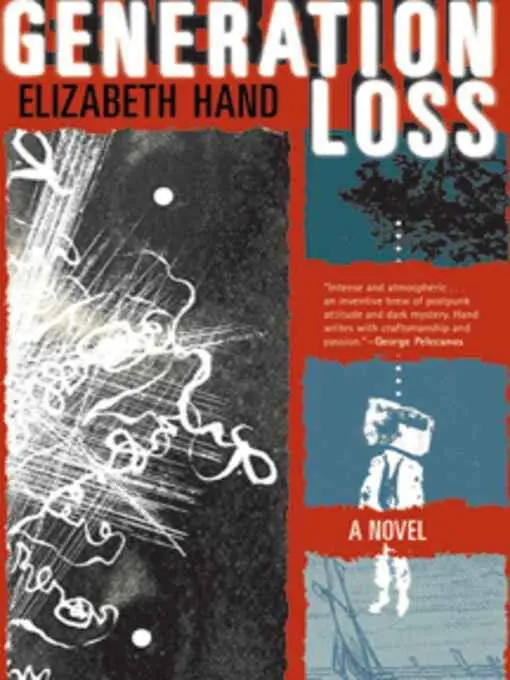
- Название:Generation Loss
- Автор:
- Издательство:Small Beer Press
- Жанр:
- Год:2007
- Город:Northampton, MA
- ISBN:978-1-931520-21-8
- Рейтинг книги:3 / 5. Голосов: 1
-
Избранное:Добавить в избранное
- Отзывы:
-
Ваша оценка:
Generation Loss: краткое содержание, описание и аннотация
Предлагаем к чтению аннотацию, описание, краткое содержание или предисловие (зависит от того, что написал сам автор книги «Generation Loss»). Если вы не нашли необходимую информацию о книге — напишите в комментариях, мы постараемся отыскать её.
Thirty years later she is adrift, on her way down, and almost out when an old acquaintance sends her on a mercy gig to interview a famously reclusive photographer who lives on an island in Maine. When she arrives Down East, Cass stumbles across a decades-old mystery that is still claiming victims, and she finds one final shot at redemption.
Patricia Highsmith meets Patti Smith in this mesmerizing literary thriller.
Praise for Elizabeth Hand’s previous novels: Amazon.com Review
“Inhabits a world between reason and insanity—it’s a delightful waking dream.”
—
“One of the most sheerly impressive, not to mention overwhelmingly beautiful books I have read in a long time.”
—Peter Straub
Generation Loss — читать онлайн бесплатно полную книгу (весь текст) целиком
Ниже представлен текст книги, разбитый по страницам. Система сохранения места последней прочитанной страницы, позволяет с удобством читать онлайн бесплатно книгу «Generation Loss», без необходимости каждый раз заново искать на чём Вы остановились. Поставьте закладку, и сможете в любой момент перейти на страницу, на которой закончили чтение.
Интервал:
Закладка:
“I sold a first edition to a guy out in L.A. That’s what took me so long. Suze has a better internet connection at the store, so I was working from there. I’ve been waiting till the market was right. I paid ten pounds for it—about fifteen bucks—at a shop in Suffolk a few years ago.”
“Nice turnaround. What is it?”
“ Northern Lights. The original title for The Golden Compass. ”
“What’s The Golden Compass ?”
“I thought you worked at the Strand?”
“Not in the stacks. Stock room.”
“It’s a children’s book—that’s where the big money is. The English edition predates the American, so…”
“Is it a good book?”
“You think I have time to read these things? You didn’t answer me—you want to help me celebrate?”
“How? Where do you spend fifteen grand around here?”
He started down the hall. “I’m going to dinner again at Ray’s. I told him last night, if I came back I might bring another guest—I figured if you were still around you’d need to get away from this place. He’s a good cook. He has a decent wine closet. But I’m leaving now, so—”
I followed him downstairs into the kitchen.
“So either you come with me or you’re on your own, dinner-wise,” he finished.
He went into the mudroom, pulled on his coat and picked up a big flashlight, dashed into the kitchen and returned with a small book that he stuck into his pocket.
“For Ray,” he explained. “You coming?”
“Yeah, what the hell.” I glanced down at my T-shirt and leather jacket. “I’m not dressed for dinner.”
“For Paswegas, you’re overdressed.”
“How far is it?”
“Not that far. Come on.”
He walked outside, heading for the water then turned to where a line of white birches glowed ghostly in the early dark. “Less than a mile. There’s a path through here, just watch your step.”
He switched on the flashlight. The birches flared as though they’d been ignited, and Gryffin disappeared into a thicket.
“Is Ray another book collector?” I said, hurrying to catch up.
“Not really. He’s just … a collector. All kinds of things. Books, junk, stuff he finds at the dump. Folk art—he’s big into folk art. Primitive art.”
“Like Cohen Finster?”
“Not that classy. Ray likes his art down and dirty. Not pornographic—well, not necessarily pornographic—but he likes an artist with dirt under his fingernails. You know, guys who build a model of the Sistine Chapel out of old carburetor parts. Lifesized cows carved out of soap. That kind of stuff. But you’ll like his place—Toby helped him build it. Ray’s one of the original cliffdwellers.”
After about ten minutes the path began to climb more steeply. I grabbed at trees for balance. The wind raged up from the water, bitter cold, and sent dead leaves whirling around us. Finally we reached the top.
“This is it.” Gryffin stopped. He pointed the flashlight to where the ground abruptly disappeared. “See that? Don’t go that way”
The boom of waves echoed up to us, the relentless wind. He waved the flashlight, and its beam disappeared into the darkness. I turned and saw lights showing through the mist.
“What the hell is that?” I said.
“That’s Ray’s place.”
It was made entirely of salvage. Clapboards, barn siding; car hoods and bumpers; washing machine doors and a satellite dish, as well as cinder blocks, corrugated metal, blue sheets of insulation. There were dozens of windows, no two alike. Solar panels covered the roof. A row of propane tanks was lined up alongside one wall, and a Rube Goldberg contraption that looked like it might have something to do with water.
Weirdest of all was that it had all been fashioned to look like a castle, complete with a shallow moat filled with dead leaves, a footbridge made of two-by-fours, and a turret. Sheets of plastic flapped from the walls, as though it were a snake shedding its skin.
“Boy, Sauron’s really fallen on hard times,” I said.
“He built it all himself, and it didn’t cost a thing,” said Gryffin. He strode across the footbridge to a door which had once belonged to a walk-in freezer. “Hey, Ray! Company—”
The steel door swung open, revealing a teenage boy, maybe seventeen or eighteen. Tall and heavyset, with sandy hair and beautiful, almond-shaped blue eyes in a pockmarked face. He gave Gryffin a perfunctory smile, but when he saw me the smile faded.
“Gryffin, hey.” The boy lifted his chin in greeting and stepped away from the door. Around his neck he wore a necklace like the one Kenzie had made, of seaglass and aluminum tabs. “S’up?”
I followed Gryffin inside. The boy gave me a hostile stare. His mouth parted so that I could see a black stud like a boil on the tip of his tongue.
“Nice,” I said. “You oughta have that looked at.”
We walked into a large room filled with freestanding bookshelves. Faded banners hung from the ceiling like flypaper, emblazoned with mottoes in the same lurid colors as the old school bus.
VENCEREMOS!
THE MILK OF HUMAN KINDNESS HAS NO EXPIRATION DATE
TEMPIS FUCKIT
The books leaned heavily toward the Beats, mangled paperbacks of On The Road and Junkie and The Dharma Bums, but also some that were valuable. And there was artwork, if you could call it that: a couple of Paint-by-Number pictures in homemade frames; a series of paintings of fanciful dirigibles on small oval canvases; a poem composed of words and phrases cut from newspapers then glued on a sheet of cardboard and signed by Brion Gysin and William Burroughs. That would be worth what the whole house cost to construct, plus a small retainer for Lurch back by the front door.
There were framed photos, too, on the wall beside the kitchen, where Gryffin had disappeared. I heard a whoop, and Gryffin stepped out.
“Well, glad you’re pleased,” he said. “I told you I might bring someone? Here she is. Cass, this is Ray—”
A figure came bustling toward me. A stocky man in green drawstring pants and voluminous purple T-shirt, his white hair long and wild, eyes glinting behind purple-framed glasses repaired with duct tape. His face looked as though it had been dropped then reassembled by someone who’d never done it before. The hand he thrust at me was missing the middle finger.
“Hello, hello!” he exclaimed in a hoarse Brooklyn accent. “So glad to have anuthah visitor. Ray Provenzano.”
He shook my hand vigorously. “You didn’t mind coming to dinner, did you? Aphrodite’s a terrible cook. Robert! Robert!”
He shouted, and the boy who’d let us in lumbered back into view. Ray clapped a hand on his shoulder and looked at me. “What would you like to drink, Cassandra? Wine? I just opened a great Medoc.”
“Sounds good.”
“Robert, get another bottle, wouldja please? Here—”
Ray stepped into the kitchen. There was the sound of stirring, a burst of fragrant smoke, and he reemerged holding two full wineglasses.
“Shalom,” he said, thrusting one at me. “I know who you are—the photographer who shoots dead things. I googled you. I’ll hafta see if I can get some of your stuff. Your book, maybe. You still taking pictures?”
He kept talking as he ducked back into the kitchen. “You can see, I’m a big collector. All kinds of stuff. If I’d known you were coming, I’d of gotten your book. How’s that wine?”
“Good,” I said.
“You like cassoulet?” He poked me with a wooden spoon. “Not in the kitchen! Gryffin, get her outta here. Go sit or something, I got stuff to do.”
I went into the main room. Robert sat on a sprung couch, listening to an iPod through a pair of earbuds. Gryffin stood perusing the bookshelves. I made a dent in my wine, then inspected those photographs.
Читать дальшеИнтервал:
Закладка:
Похожие книги на «Generation Loss»
Представляем Вашему вниманию похожие книги на «Generation Loss» списком для выбора. Мы отобрали схожую по названию и смыслу литературу в надежде предоставить читателям больше вариантов отыскать новые, интересные, ещё непрочитанные произведения.







Обсуждение, отзывы о книге «Generation Loss» и просто собственные мнения читателей. Оставьте ваши комментарии, напишите, что Вы думаете о произведении, его смысле или главных героях. Укажите что конкретно понравилось, а что нет, и почему Вы так считаете.