Jenn Ashworth - Cold Light
Здесь есть возможность читать онлайн «Jenn Ashworth - Cold Light» весь текст электронной книги совершенно бесплатно (целиком полную версию без сокращений). В некоторых случаях можно слушать аудио, скачать через торрент в формате fb2 и присутствует краткое содержание. Город: New York, Год выпуска: 2012, ISBN: 2012, Издательство: William Morrow, Жанр: Триллер, ya, на английском языке. Описание произведения, (предисловие) а так же отзывы посетителей доступны на портале библиотеки ЛибКат.
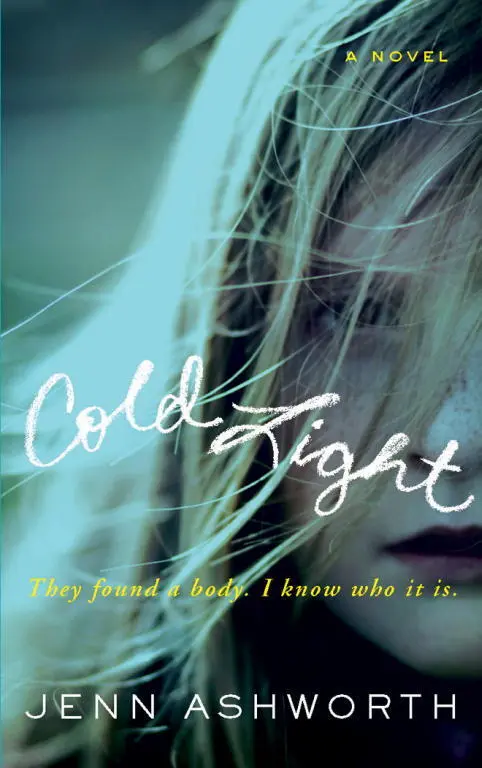
- Название:Cold Light
- Автор:
- Издательство:William Morrow
- Жанр:
- Год:2012
- Город:New York
- ISBN:978-0-06-207603-8
- Рейтинг книги:4 / 5. Голосов: 1
-
Избранное:Добавить в избранное
- Отзывы:
-
Ваша оценка:
Cold Light: краткое содержание, описание и аннотация
Предлагаем к чтению аннотацию, описание, краткое содержание или предисловие (зависит от того, что написал сам автор книги «Cold Light»). Если вы не нашли необходимую информацию о книге — напишите в комментариях, мы постараемся отыскать её.
Blackly funny and with a surreal edge to its portrait of a northern English town, Jenn Ashworth’s gripping novel captures the intensity of girls’ friendships and the dangers they face in a predatory adult world they think they can handle. And it shows just how far that world is willing to let sentiment get in the way of the truth.
An unforgettable tale of friendship and memory – and the shattering truth behind a forgotten dead body newly unearthed –
is a most welcome addition to the crime fiction and thriller ranks.
Cold Light Ashworth already has created great buzz in the U.K. thanks to her stunning debut novel,
, winner of the prestigious Betty Trask Award, and now
places her in elite literary company—alongside Laura Lippman, Kate Atkinson, and other acclaimed masters of intelligent, emotionally powerful mystery and suspense.
http://www.youtube.com/watch?v=3uhjpJWklNw Review
“Hugely readable debut novel […] about the inability to know others and ourselves.” —
“Extremely intense and powerfully intriguing.”
—
“Ashworth has the rare gift of being able to make her reader feel perverse and voyeuristic, implicated somehow in the tragedy laid out on the pages.”
—
(London) “A grimly atmospheric mystery.”
—
(London) “A psychological thriller of the first order.”
—
(Australia) “Another cleverly skewed tale told from the self-conscious perspective of an outsider… arrestingly observant… Ashworth’s second book confirms that the first was no one-off… her talent could take her a long way.”
—
A wonderful tale, beautifully told.
—
A chilling, blackly funny novel with a surreal edge about the intensity of teenage friendship.
—
“[Ashworth] Evokes a damaged mind with the empathy and confidence of Ruth Rendell.”
—
(London)
Cold Light — читать онлайн бесплатно полную книгу (весь текст) целиком
Ниже представлен текст книги, разбитый по страницам. Система сохранения места последней прочитанной страницы, позволяет с удобством читать онлайн бесплатно книгу «Cold Light», без необходимости каждый раз заново искать на чём Вы остановились. Поставьте закладку, и сможете в любой момент перейти на страницу, на которой закончили чтение.
Интервал:
Закладка:
That day there were at least thirty people hanging around and more sitting on the low wall in front of the Spar shop. I was lost in my own thoughts – puzzling over what my next move should be when it came to Emma and Chloe and wondering what was wrong with her. When I saw the queue I walked right past – didn’t even think about it, didn’t pause for a second. I pulled the sleeves of my coat over my hands and no one paid any attention to me. It was just as easy to walk into town and get the bus from there. Could walk all the way home, if it came down to it – and the burning up of calories would probably do me good.
I stopped in front of the Spar and felt the coins inside my pocket, just to make sure I had enough for a can of Coke before I walked in. There was a sign stuck to the inside of the glass of the front door and it said, in black capital letters, that only one child was allowed inside at any one time.
I was looking through the window to see if there was anyone else – anyone in school uniform that is – still in there when I noticed another poster, with Wilson’s face right bang in the middle of it, and some writing underneath.
I think my body knew what that poster was about before my brain did. Even before I was conscious of what the writing said I felt the blood going out of my face and my hands jump up to my stomach on their own as if I was expecting to be hit. I had to go and sit on the bench over the road from the bus stop and look at the toes of my shoes for a while. Deep breaths, and ducking my head so the cold zip of my coat rested under my chin. And once I was calm, I was unsure, and convinced that I was getting carried away with myself and making it all up.
I walked back slowly in front of all those people who were still not paying any attention to me. The bus hadn’t come yet, and I stood there for longer, pretending that I was waiting for it, but drifting back towards the shop just so I could have another look, read it properly and make sure. The second time I was there outside the door the man behind the counter waved his hand at me angrily as if I was looking for something to steal. I walked away quickly in case he remembered my face.
It was no good though. Running away from the shop wasn’t going to get rid of what I had just seen, and I wouldn’t be able to forget it either. From the shop and the bus stop the road dropped downwards and as I walked along the pavement my perspective changed and I got a clear view, right the way down the hill to the bridge over the river at the bottom, then along the flat bit past the allotments and into town. It was almost twilight and the street lights were slowly coming on pink: they looked like lollies all along the road, and I saw, very clearly, that there were more posters taped to every single lamppost the whole way along – on both sides. I was going to have to pass at least ten or fifteen of them. More if they went on into town and in the bus station.
And they will do, I thought, because it was Wilson’s mum and dad that had made the posters. They won’t have stopped at just a few up on lampposts in the suburbs. The town centre is going to be plastered with them and wherever I go I’m going to have to look at his face, or at least, the most recent picture of him blown up and taking up almost all of the space on the paper. I can’t believe I hadn’t noticed them before. I’d been so obsessed with Chloe and her New Year’s Eve party that I’d hardly left the house between Boxing Day and the start of school. My last trip into town had been to return the perfume with Barbara and Donald, and Donald had been such a handful and the whole trip so humiliating I’d hardly raised my head to look at anything. Barbara was right: I really did walk around with my head stuck up my jumper sometimes.
The most recent picture must have been taken on Christmas Day, because Wilson was wearing a red paper party hat out of a cracker, slightly askew on his head. He looked surprised, caught in a laugh or a shout, with watery eyes and an open mouth, curved in an expression that was extraordinarily happy and oblivious to the fact that his gappy teeth were on display and his face was shiny with sweat. There were other things that I hadn’t noticed before, mainly how fine his hair was, how it fell limply over his forehead and receded at the temples, that there were lines around the corners of his eyes.
Wilson was much older than I’d thought when I met him. But what should that matter? His mum and dad weren’t entering him for a beautiful baby contest – they’d chosen a picture they had on hand, showing not only his face, but the reason for their worry and his vulnerability, which were the same thing. And they’d put the picture on a poster and printed out hundreds of copies and spent hours and hours sticking them up all over the place like he was a priceless, irreplaceable pedigree dog that they’d lost and promised a reward to get back.
I tore one of the posters from a lamppost, screwed it into my pocket, and ran. It was still icy outside: each day seemed to be a little colder than the last and the ground was treacherous. I turned my ankle on a frozen puddle, fell, and when I did get home I came through the back door limping. It was dark outside.
Chapter 14
Barbara was standing at the cooker with her lips pursed at a spoon. The kitchen was roasting: the windows running with condensation and the net curtain sticking to them. The television was on in the front room and turned up loud with the doors open so she could listen to it while she was cooking. Terry, of course, running a phone-in about the proposed curfew – should the City still go ahead with its plans to keep us in after eight o’clock, seeing as it looked like the pest had stopped for the winter?
‘Mum?’
She laid the spoon down on a saucer and looked at me, eyebrows raised. Before she could speak to me and tell me to do anything, I told her Chloe was in hospital.
‘I need to go and see her. I want to talk to her and see if she’s all right. Can I have some money for a bus?’
‘Can I have some money for a bus, what?’
‘Please. Please can I have some money for the bus to go and see Chloe. She’s in the hospital.’
‘What’s wrong with her? Where have you been?’
‘I don’t know exactly,’ I said.
Barbara turned the radio down.
‘You don’t know what’s wrong with Chloe, or you don’t know where you’ve been?’ she said, and went back to the pot.
‘I missed the bus,’ I said.
Barbara paused. ‘So, if you didn’t get the bus, you still have your bus fare. If you still have your bus fare, you don’t need more money to go to the hospital.’
‘It’s miles!’
‘Enough, and take your coat off. Hang it up – properly . There’s a nasty bug going about. She won’t want company if she’s got that.’
Despite the commands, the stirring, the checking of the new coat and homework diary and the tutting about the scuffed shoes from my fall, Barbara seemed to be in an unusually good mood. She had on her best apron, which was dark in patches from the washing-up water, and her face was flushed. I didn’t need to ask why she was so happy, because she was itching to tell me herself.
‘I saw that Terry Best today,’ Barbara said when I came back into the kitchen after getting changed. She was smiling and stirring so vigorously her shoulders shook. Her cheeks were red, her hair crinkled with the steam.
‘Great,’ I said.
‘I popped into the garage on the way back from town for your father’s papers and a bottle of milk,’ she went on, ‘and there he was – larger than life. Pink shirt –’ she stirred the air over her head with her fingers, ‘that hair. Do you think it’s all his?’
‘I just need a bit of money for the bus,’ I said, ‘so I can go and see her.’
Читать дальшеИнтервал:
Закладка:
Похожие книги на «Cold Light»
Представляем Вашему вниманию похожие книги на «Cold Light» списком для выбора. Мы отобрали схожую по названию и смыслу литературу в надежде предоставить читателям больше вариантов отыскать новые, интересные, ещё непрочитанные произведения.



Обсуждение, отзывы о книге «Cold Light» и просто собственные мнения читателей. Оставьте ваши комментарии, напишите, что Вы думаете о произведении, его смысле или главных героях. Укажите что конкретно понравилось, а что нет, и почему Вы так считаете.