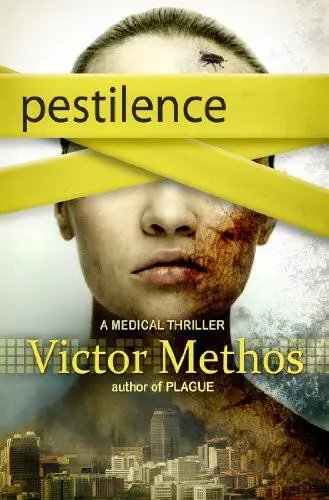
Victor Methos - Pestilence
Здесь есть возможность читать онлайн «Victor Methos - Pestilence» весь текст электронной книги совершенно бесплатно (целиком полную версию без сокращений). В некоторых случаях можно слушать аудио, скачать через торрент в формате fb2 и присутствует краткое содержание. Жанр: Триллер, на английском языке. Описание произведения, (предисловие) а так же отзывы посетителей доступны на портале библиотеки ЛибКат.
- Название:Pestilence
- Автор:
- Жанр:
- Год:неизвестен
- ISBN:нет данных
- Рейтинг книги:5 / 5. Голосов: 1
-
Избранное:Добавить в избранное
- Отзывы:
-
Ваша оценка:
Pestilence: краткое содержание, описание и аннотация
Предлагаем к чтению аннотацию, описание, краткое содержание или предисловие (зависит от того, что написал сам автор книги «Pestilence»). Если вы не нашли необходимую информацию о книге — напишите в комментариях, мы постараемся отыскать её.
Pestilence — читать онлайн бесплатно полную книгу (весь текст) целиком
Ниже представлен текст книги, разбитый по страницам. Система сохранения места последней прочитанной страницы, позволяет с удобством читать онлайн бесплатно книгу «Pestilence», без необходимости каждый раз заново искать на чём Вы остановились. Поставьте закладку, и сможете в любой момент перейти на страницу, на которой закончили чтение.
Интервал:
Закладка:
“Better give me one of those too,” Howie said.
38
Katherine only remembered pain against her jaw and then a headache. Next thing she knew, she was in the Audi, and Ian was sitting in the passenger seat. He opened a sports drink.
“Here,” he said, handing her the bottle.
She drank the warm drink without protest. After swigging half of it, she stopped to wipe her lips with the palm of her hand. Ian took the bottle and drank some before replacing the lid and putting it on the floor between his feet.
“You feel okay?” he asked.
She nodded but didn’t say anything.
“I need you to drive,” he said.
“Drive yourself.”
“I can’t. I’ve injured my leg, and it’s starting not to respond. I need you to drive. There’s just two more.”
“Do you even care that they had a family? That they’re the ones that are going to find them? I know what that will do to their kids. They won’t ever be the same.”
“How do you know that?”
“My mother died of cancer. When she finally passed, I was the one in the hospital with her. She couldn’t talk, but she was trying to say goodbye to me.” She held his gaze. “You think taking lives is a game, but I think you’re scared. I think you’re scared that you’re going to die one day, too.”
He didn’t react but instead watched the landscape through the windshield. They were in a residential neighborhood, and a car stopped in front of one of the houses. A teenage boy of maybe sixteen stepped out and went to the front door. He carefully placed his key in the lock and opened the door, stopping for a moment to see if anyone heard him. Then he went inside and shut the door behind him.
“When I first killed someone, I was so scared, I pissed myself. I mean, I literally pissed my pants. I still remember how warm it was going down my leg. I was in Moscow at the time, and it was freezing, but I remember the comforting feeling of how warm it was. After it was done, I went back to the little room I’d been staying at and cried. I actually fucking cried. Like a little girl that had lost her puppy. It tore me up for a long time. But after the second one, I didn’t cry. I thought I should, and I wanted the tears to come, but they never did. I couldn’t do it. By the fifth one, it didn’t feel like anything anymore. And now… it’s actually fun. It’s probably the only fun I have left in my life.”
“Well, then I feel sorry for you.”
He took a deep breath, staring off into space. “Start the car.”
“No.”
He was quiet for a second. “I said, start the car.”
“You’ll have to kill me. I’m not helping you anymore.”
“I won’t kill you,” he said. “I told you I wouldn’t, so I’d stick to my word. But I will kill your father. And then your sisters and your brother. Any man you ever love will one day disappear, and you won’t know if it was because they left you or because I paid them a visit. You’ll live the rest of your life with me hanging over your shoulder, and you’ll never really know if I’m there or not. Now turn on the fucking car.”
She sat still. No more tears were left. Her emotions were so frayed that she couldn’t even bring up enough passion to plead with him. She turned on the car.
“Who’s the next one?” she said.
“A doctor. Samantha Bower.”
39
The hospital was as still as a museum after hours. No one spoke, the televisions were all off, and the radio, walkie-talkies, and cell phones were silent. Many of the staff, a nurse had told Samantha, had simply left without clocking out or letting their supervisors know. Something was wrong, and everybody knew it, so they wanted to be with their families. Only a handful of the staff remained, including maybe a dozen doctors. Samantha sat outside hematology to ensure that the doctor running her sister’s negative staining test was one of them.
Duncan had fallen asleep on the chairs in the waiting area. He spread out over three of them without armrests, and Sam had unplugged the television to ensure he didn’t wake up. His eyes had black circles underneath them. He wasn’t as used to sleep deprivation as she was.
She went down to the vending machines and got a Diet Coke and a small bag of peanuts. Going back to hematology, she took the long route around the corridor to get blood back into her legs. Hospitals all seemed as though they had been designed and decorated by the same person. The linoleum was spotless in parts and as filthy as mud in others. Antiseptic smells mingled with cleaning products and lifeless, sour air. And they all used lighting that, in a certain percentage of the population, caused migraines.
She had always noticed that they weren’t comforting, and she wondered why that was. Maybe the association with them was so strongly negative that no decorations could ever overcome it. People, of course, only came there when bad things happened. The only exception was childbirth.
For a time during her medical school rotations, she’d thought about going into obstetrics, but pathology and trauma had called to her. When she had joined the CDC, something about it seemed so thrilling, so cutting edge. There she was, hardly out of medical school, and she was in a village in Chad performing an emergency surgery on someone whose gallbladder had ruptured. Initially, she had gone there to investigate a water-supply contaminate.
Samantha discovered the source of the contamination was a single well rumored to contain the feces of some children that had defecated in it as a practical joke, causing an E. coli outbreak. She was the only doctor within two hundred miles. A man suffering from poor hydration and malnutrition had drunk from the well, and the E. coli infected his gallbladder and caused it to rupture.
The village elders had begged her to perform the surgery, and she’d spent just enough time as an emergency room physician and surgeon to operate without killing the man.
She removed the gallbladder and closed the incisions, hoping that no sepsis would occur. The man was rushed 211 miles to the nearest hospital for follow-up care and antibiotics. Sam found out later that the man had survived. He even sent her some homemade trinkets, including a giraffe carved out of yellow wood.
Now, she wasn’t certain that joining the CDC had been the right decision. But she knew the history of infections was the history of the world, and sometimes, she felt there was no greater calling in medicine than to stop the spread of disease.
Microorganisms were responsible for the shaping of antiquity. People thought that history had variables that could be rearranged to predict with some accuracy how history flowed. One country falls to dictatorship, and a certain result follows. Another country inflates its currency, and a specific result was expected. But Samantha knew that wasn’t true. Humans had always been at the mercy of beings too small to see them, except through powerful instruments.
The Emperor of the Byzantine Empire, Justinian the First, had the misfortune of being attributed with the worst plague in history. He expanded the reach of the Byzantine Empire, and by all historical predictions, the Byzantines should have conquered the known world, much as the Romans had. But a simple plague brought the empire to its knees and halted expansion, which allowed the Muslim nations to grow stronger.
The Mongols used to infect their enemies with Plague by catapulting infected persons over the gates of cities they had besieged. The cities would surrender, then the Mongols destroyed them and enslaved their people. Hundreds of cities were conquered this way, and entire nations had been forced to change the way they traded and conducted their politics and economics, based on avoiding confrontation with the Mongols.
Читать дальшеИнтервал:
Закладка:
Похожие книги на «Pestilence»
Представляем Вашему вниманию похожие книги на «Pestilence» списком для выбора. Мы отобрали схожую по названию и смыслу литературу в надежде предоставить читателям больше вариантов отыскать новые, интересные, ещё непрочитанные произведения.






Обсуждение, отзывы о книге «Pestilence» и просто собственные мнения читателей. Оставьте ваши комментарии, напишите, что Вы думаете о произведении, его смысле или главных героях. Укажите что конкретно понравилось, а что нет, и почему Вы так считаете.