Lydia Cooper - My Second Death
Здесь есть возможность читать онлайн «Lydia Cooper - My Second Death» весь текст электронной книги совершенно бесплатно (целиком полную версию без сокращений). В некоторых случаях можно слушать аудио, скачать через торрент в формате fb2 и присутствует краткое содержание. Город: Blue Ash, Год выпуска: 2012, ISBN: 2012, Издательство: Tyrus Books, Жанр: Триллер, на английском языке. Описание произведения, (предисловие) а так же отзывы посетителей доступны на портале библиотеки ЛибКат.
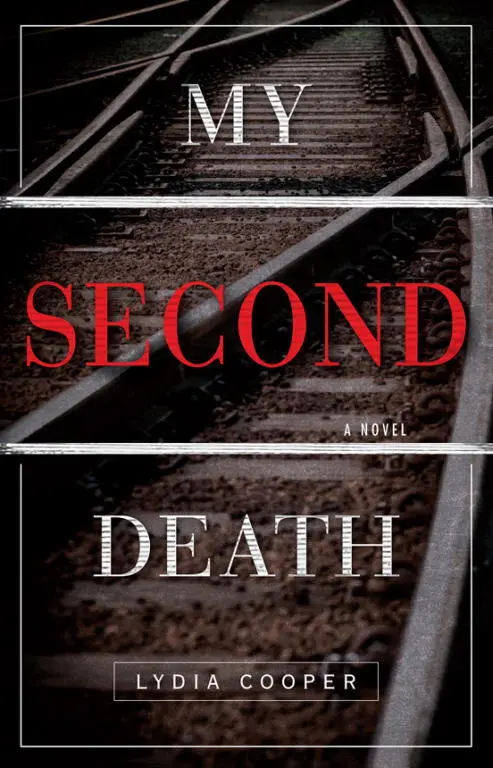
- Название:My Second Death
- Автор:
- Издательство:Tyrus Books
- Жанр:
- Год:2012
- Город:Blue Ash
- ISBN:978-1-4405-6126-9
- Рейтинг книги:4 / 5. Голосов: 1
-
Избранное:Добавить в избранное
- Отзывы:
-
Ваша оценка:
My Second Death: краткое содержание, описание и аннотация
Предлагаем к чтению аннотацию, описание, краткое содержание или предисловие (зависит от того, что написал сам автор книги «My Second Death»). Если вы не нашли необходимую информацию о книге — напишите в комментариях, мы постараемся отыскать её.
But the careful existence Mickey has created in adulthood is upended when she is mysteriously led to a condemned house where she discovers an exquisitely mutilated corpse. The same surreal afternoon, she is asked by a timid, wall-eyed art student to solve a murder that occurred twenty years earlier. While she gets deeper and deeper into the investigation, she begins to lose hold on her tenuous connection to reality—to her maddening students and graduate thesis advisor; to her stoic parents, who are no longer speaking; to her confused, chameleon-like adolescent brother; and to her older brother, Dave, a zany poet who is growing increasingly erratic and keenly interested in Mickey’s investigation.
Driven by an unforgettable voice, and filled with razor-sharp wit and vivid characters,
is a smart, suspenseful novel and a provocative examination of family, loyalty, the human psyche, and the secrets we keep to save ourselves. From “I rarely eat dead animals, and I haven’t killed a man since I was ten,” confesses University of Akron doctoral candidate Michaela “Mickey” Brandis. She’s not supernatural; she’s just antisocial. Really, really antisocial. Knowing she doesn’t have the capacity to feel or respond like other people, Mickey lives in a self-imposed exile, leaving her parents’ garage apartment only to teach and work on her thesis. Then a cryptic message in her campus mailbox directs her to an abandoned building where she finds a mutilated corpse. Later, she’s asked by one of her brother’s artist friends to solve his mother’s 20-year-old murder. Is Mickey looking for one killer or two? For a person who vomits after physical contact with others, Mickey is severely stressed by the interactions required in investigative work. Literature professor Cooper’s debut novel is a fast-paced psychological thriller with an unforgettable heroine. This damaged yet fiercely independent protagonist will appeal to fans of Stieg Larsson and Gillian Flynn.
—Karen Keefe
My Second Death — читать онлайн бесплатно полную книгу (весь текст) целиком
Ниже представлен текст книги, разбитый по страницам. Система сохранения места последней прочитанной страницы, позволяет с удобством читать онлайн бесплатно книгу «My Second Death», без необходимости каждый раз заново искать на чём Вы остановились. Поставьте закладку, и сможете в любой момент перейти на страницу, на которой закончили чтение.
Интервал:
Закладка:
The woman rubs the back of her neck and shakes her head. “It really could be a lot of people. With a backpack?”
“A cartoon character — it’s bright and shiny. Pink.”
“Oh, pink.” The woman thinks for a minute. “That kind of sounds like Desiree.”
“Desiree.”
“Hold on a sec.” She yells toward the back. “Carmen! Hey, Carmen, get over here.”
A woman comes over, thin, hobbled by a long straight jean skirt and a baggy brown turtleneck. She’s wearing thick wire-frame glasses and she pulls them off when she comes up and rubs twin kidney-shaped reddish spots on the bridge of her nose.
“What?”
“Do you know Desiree?”
“Yeah, she comes in sometimes. Why?”
“She have a pink — what kind of backpack now?”
“Dora,” I say. “The Explorer. I think.”
“Yeah, that’s Desiree,” glasses-girl says. She puts her glasses back on, tucks her hair behind her ears. The lenses magnify her eyes like a grasshopper’s. Oversized and childish, they stare out at me.
I pull out my backpack and scribble my name and phone number on a card. “Can you call me if she comes in?”
“Why?”
But she takes the card.
“Just please, call me. It’s important.”
“I’m not sure that’s—” She looks up at the larger woman. “I mean—”
The larger woman shrugs. “I don’t think there’s a rule against it. Just to tell you if she stops by?”
“Yeah.”
“I’ll give her your card. How about that. Then she can contact you.”
“She can’t,” I say. “Are you an idiot? You work with these people. God, it’s not like they’ve got a cell phone charger in one hand and the latest iPhone model in the other.”
The larger woman blinks a couple of times. But she doesn’t cuss me out or raise her voice. In the same flat tone, she says, “I’ll have Carmen give her your card, but I’ll give you a call too. Fair?”
“Thanks,” I say. “That’s good.”
When I leave the wind is shrill, singing atonally like some old-world seer calling down doom on the mortal sphere. The air smells like encroaching winter, old smoke and dead earth, and I wonder how the fire was started, and who started it, and why Aidan’s mother died in a house fire that must have burnt like a Viking pyre and lit the neighborhood with aureoles of gilded ash.
The fourth floor hallway of the humanities building with its buzzing runner-lights and speckled linoleum seems unusually festive. Someone tacked a paper chain made of orange and brown construction paper links along the blank wall in front of the stairwell and shreds of cotton now adorn the bulletin board. I push into the graduate student office to collect my books for class and see equally cheap decorations have exploded across our office space as well.
I drop a note in Telushkin’s mailbox informing him that my next chapter will be late, and rip up a pink slip informing me to phone the dean at his earliest convenience. Then I head to the library. In my study carrel, I open my laptop and get online. The medical examiner’s office is downtown, about a block away from the university campus. I write down the address, realizing I’ve driven by the unprepossessing concrete block and glass building a hundred times. It’s crammed between parking decks, the marble-faced courthouse, and high brick buildings with fluted windows and lawyer’s names on brass plaques.
I wonder if the autopsies are performed at the actual office or if the medical examiner has to go down to the hospital’s morgue with a briefcase full of surgical knives in one hand and a Starbucks in the other. I imagine some young resident doctor who barely passed her exams trotting in expensive heels toward a steel table on which rests the burned and flayed husk of my corpse.
I blink and shake my head and go back to researching, draft notes for my dissertation chapter. I study for hours and close up the laptop when my eyelids start to feel gritty. I rub my fists against my eyes and crack my neck. Then I swing my backpack over my shoulder, lock up the carrel, and walk downtown to the banks of lawyer offices and courthouses.
The medical examiner’s office smells like polyurethane and Calvin Klein perfume. It’s clearly just an office. What little solid flesh remains of James A. Sims resides elsewhere.
I take a breath and walk toward the front desk. A large woman wearing chunky gold jewelry and a papery smock blouse sits behind it, flipping through Dog Fancy magazine. She hands me a form without looking up when I ask for an information release.
I print “Barbara Devorecek” in the slot labeled Name of the Deceased . When I finish filling out the form I pay three dollars and the woman puts the form into a manila folder and tells me the information packet will be mailed to my address within the week.
I have reached the lobby door when she says, “Hey, hon? Ah, Miss Brandis?”
I turn around.
Her hooked, lacquered fingernails hover over her keyboard. “This case is an unsolved homicide. We don’t mail out information on current cases, okay?”
I go back to the desk and lean my elbows on it. She smells musky, a scent like chalky clay. “Unsolved?” I remember reading about this in a newspaper story.
Her computer screen is tilted up and I see a name followed by a list of vital statistics. Stella Devorecek. Height, weight, current residence. The current residence is an assisted living facility. At the top of the screen it says “material witness.”
I keep my eyes unfocused, traveling the wall behind her desk with its mundane calendar featuring Ohio’s covered bridges and a small crayon drawing done by a juvenile hand.
“It just means the investigation was never completed. It happens more than you’d think. It could be any reason. Sometimes they know what’s happened but a material witness can’t be located or interviewed. Or sometimes it’s something else. It can be anything.”
I touch my thumbs together and look at the child’s scrawl behind her. “Can I ask something?”
The woman’s chair creaks as she sits back, turning away from her computer monitor. “What would that be, hon?”
“I know about the two fire sources but that could be coincidence, right? Or an accident. I mean, why is it an unsolved homicide instead of, like, just involuntary manslaughter?”
The woman’s tongue touches her lower lip. She lifts a hand and jiggles the thick gold ring in one earlobe. “I don’t know where you’re getting your information from, honey. I can’t tell you any of that stuff.”
“Just, can you please tell me why it’s been classified a homicide, and not just a, a tragic accident?” I pitch my voice low and work a tremulous quaver into it. My eyes flicker to her computer screen, to the tiny print, and catch on the word “asphyxiation.”
Cause of death, asphyxiation. Secondary causes of death, 48 milligrams of zolpidem tartrate, partially metabolized, and 30 milligrams of fluoxetine hydrochloride.
The woman looks back at her computer screen. “I can’t print off the coroner’s report. It’s the rules, okay?”
I lean against the countertop and put my fist under my nose. “Okay.” I hiccup. I want to look like I’m crying but really I’m trying to block my nasal passages. The office has a bitter lye stench from printer toner and air freshener.
“Are you okay?”
“Yes. Thank you.”
“I’m sorry.”
“It’s okay.” I push away from the counter and walk out slowly, dragging the balls of my feet. When I push through the doors I stop and straighten, easing my spine and facial muscles out of the posture of feigned suffering. Cars hurtle past and a cop stands on a street corner smoking. Raveling threads of steam twist from sewage grates. I turn my wrist to look at my watch. I need to put in another celebrity appearance — look, look, a pose, a profile shot! — for my weekly office hours.
Читать дальшеИнтервал:
Закладка:
Похожие книги на «My Second Death»
Представляем Вашему вниманию похожие книги на «My Second Death» списком для выбора. Мы отобрали схожую по названию и смыслу литературу в надежде предоставить читателям больше вариантов отыскать новые, интересные, ещё непрочитанные произведения.



Обсуждение, отзывы о книге «My Second Death» и просто собственные мнения читателей. Оставьте ваши комментарии, напишите, что Вы думаете о произведении, его смысле или главных героях. Укажите что конкретно понравилось, а что нет, и почему Вы так считаете.