Paul Cain - The Paul Cain Omnibus
Здесь есть возможность читать онлайн «Paul Cain - The Paul Cain Omnibus» весь текст электронной книги совершенно бесплатно (целиком полную версию без сокращений). В некоторых случаях можно слушать аудио, скачать через торрент в формате fb2 и присутствует краткое содержание. Город: New York, Год выпуска: 2013, ISBN: 2013, Издательство: Mysterious Press, Жанр: Крутой детектив, на английском языке. Описание произведения, (предисловие) а так же отзывы посетителей доступны на портале библиотеки ЛибКат.
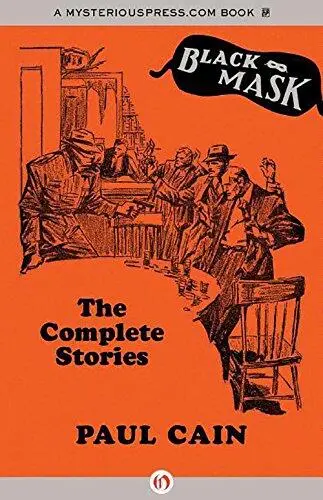
- Название:The Paul Cain Omnibus
- Автор:
- Издательство:Mysterious Press
- Жанр:
- Год:2013
- Город:New York
- ISBN:978-1-4804-5689-1
- Рейтинг книги:5 / 5. Голосов: 1
-
Избранное:Добавить в избранное
- Отзывы:
-
Ваша оценка:
The Paul Cain Omnibus: краткое содержание, описание и аннотация
Предлагаем к чтению аннотацию, описание, краткое содержание или предисловие (зависит от того, что написал сам автор книги «The Paul Cain Omnibus»). Если вы не нашли необходимую информацию о книге — напишите в комментариях, мы постараемся отыскать её.
Following gangsters, blackmailers, and gunmen through the underbelly of 1930s America on their journeys to do dark deeds, Paul Cain’s stories are classics of his genre. The protagonists of ambiguous morality who populate Cain’s work are portrayed with a cinematic flair for the grim hardness of their world.
Cain’s only novel, was originally serialized in
in the 1930s. It introduces us to Gerry Kells, a hard-nosed criminal who still holds fast to his humanity in a Los Angeles that’s crooked to the core.
This collection presents Cain’s classic crime writing to a contemporary audience.
The Paul Cain Omnibus — читать онлайн бесплатно полную книгу (весь текст) целиком
Ниже представлен текст книги, разбитый по страницам. Система сохранения места последней прочитанной страницы, позволяет с удобством читать онлайн бесплатно книгу «The Paul Cain Omnibus», без необходимости каждый раз заново искать на чём Вы остановились. Поставьте закладку, и сможете в любой момент перейти на страницу, на которой закончили чтение.
Интервал:
Закладка:
She said: “Sure.” They sat at the table and drank a great deal of coffee. Kells sent the boy out for a paper. RUTH PERRY CONFESSES HUSBAND SHOT HAARDT was spread across the front page.
Kells said: “Ain’t nature wonderful!” He got up and put on a suit coat that Rainey had given him. “I’m going to town.”
Granquist said: “Me too. Can I ride with you?”
They went down and got into a cab and went to the parking station near the P & O wharf where Kells had left Cullen’s car.
It was very hot, driving into Los Angeles. Kells took off his coat and drove in his shirtsleeves. His face was battered and Rainey’s shoes hurt his feet and he wanted very much to get into a bathtub and then get into bed.
He said: “Did you come out with Kastner and O’Donnell?”
Granquist looked at him and smiled sleepily. She said: “Uh-huh.”
“You O’Donnell’s girl?”
“My God, no! I just came along for the ride.” She slid down into the corner of the seat and closed her eyes.
Kells said: “Do you think O’Donnell shot Kastner?”
He looked at her. She nodded with her eyes closed.
He parked the car off Eighth Street and they went into a side entrance of the hotel, up the service stairway to Kells’ room. He said: “I’ll have to go downtown for questioning this afternoon — if they don’t pick me up before. I want to have four or five hot baths and a little shut-eye first.”
He went into the bathroom and turned on the water. When he came out, Granquist had curled up on the divan, was asleep. She had taken off her hat, and awry honey-colored hair curved over her face and throat.
The telephone buzzed while Kells was in the tub. It buzzed again after he had dressed. He answered it and the operator said, “Mrs Perry wants to talk to you.” Kells stared vacantly out the window and said: “All right — put her on.” Then he said: “Hello, baby... Swell... No, I’ve got to go out right away and I won’t be back until tonight. I’ll try to give you a ring then... Sure... Okay, baby — ’bye.”
Granquist stirred in sleep, threw one arm above her head, sighed. Her eyelids fluttered. Kells stood there for a while looking at her then went out.
Lead Party
Gerry Kells from the East, who pulled a “fast one” in West Coast gambling, skirts the edges of the political racket and sits in when the blow-off comes.
At one-thirty, Kells got out of a cab and went into the Sixth Street entrance of the Howard Hotel. In the elevator he said: “Four.” Around two turns, down a short corridor, he knocked at a heavy old-fashioned door.
A voice yelled: “Come in.”
There were three men in the small room. One sat at a typewriter near the window. He had a leathery good-natured face and he spoke evenly into the telephone beside him: “Sure... Sure...”
The other two were playing cooncan on a suit-box balanced on their laps. One of them put down his hand, put the suit-box on the floor, stood up.
Kells said: “Fenner.”
The man at the telephone put one hand over the mouthpiece, turned his head to call through an open door behind him: “A gent to see you, L.D.” The man who had stood up walked to the door and nodded at someone in the next room and turned to Kells. “In here.”
Kells went past him into the room and closed the door behind him. That room was larger. Fenner, a slight, silver-haired man of about fifty, was lying on a bed in his trousers and undershirt. There was an electric light on the wall behind the bed. Fenner put down the paper he had been reading and swung up to sit facing Kells. He said “Sit down,” and picked up his shoes and put them on. Then he went over and raised the blind on one of the windows that looked out on Spring Street. He said: “Well, Mister Kells, is it hot enough for you?”
Kells nodded, said sarcastically: “You’re harder to see than De Mille. I called your hotel and they made me get a Congressional Okay and make out a couple dozen affidavits before they gave me this number.” He jerked his head towards the little room through which he had entered. “What’s it all about, L.D.?”
Fenner sat down in a big chair and smiled sleepily. He took a crumpled package of Home Runs out of his pocket, extracted a cigarette and lighted it. “About a year ago,” he said, “a man named Dickinson — a newspaperman — came out here with a bright idea and a little capital, and started a scandal sheet called The Coaster.”
Fenner inhaled his cigarette deeply, blew a soft gray cone of smoke towards the ceiling. “He ran it into the ground on the blackmail side and got into a couple libel jams...”
Kells said: “I remember.”
Fenner went on: “I got postponements on the libel cases and I got the injunction raised. Now it’s the Coast Guardian: A Political Weekly for Thinking People . Dickinson is still the editor and publisher, and” — he smiled thinly — “I’m the silent partner. The first number comes out next week, no sale, we give it away.” Kells said: “The city campaign ought to start rolling along about next week...”
Fenner slapped his knee in mock surprise. “By George! That’s a coincidence.” He sat grinning contentedly at Kells. Then his face hardened a little and a faint fanatical twinkle came into his eyes. He spoke, and it was as if he had said the same thing many times before. “I’m a working boss, Mister Kells. I gave this city the squarest deal it ever had. They beat my men at the polls last time, but by God they didn’t beat me — and next election day I’m going to take the city back.” He paused and then very pointedly made the pun, “like Bow took Richman.”
Kells said: “I doubt it.” He smiled a little to take the edge off his words, went on: “What did you get from Perry?”
“Nothing.” Fenner yawned. “I got to his wife right after you called and gave her your message and arranged for her bail. She’s witness number one for the State. It took me a little longer to beat the incommunicado on Perry, and when I saw him and told him she had confessed that he killed Haardt, he closed up like a clam.”
Kells took off his hat and rubbed his scalp violently with his fingers. “It must have taken a lot of pressure to make a yellow bastard like him pipe down.”
Fenner said: “ Who killed Haardt?”
“Perry’ll do for a while, won’t he?” Kells put on his hat.
“Are you sure you’re in the clear?”
“Yes.” Kells stood up. “You’ve got enough to work on. Lieutenant Reilly, who was your best on the force, is in a play with Jack Rose to take over the town and open it up over your head. Dave Perry was in on it. They want it all, and they figure that you and I and a few more of the boys are in their way.”
He walked over to the window and looked down at the swarming traffic on Spring Street. “Doc Haardt was in their way — figure it out for yourself.”
Fenner said: “You act like you know what you’re talking about.”
“I do.”
Fenner went on musingly: “One of the advantages of a reform administration is that you can blame it for everything. Maybe opening up the town for a few weeks isn’t such a bad idea.”
“But it’s nice to know about it when you’re supposed to be the boss...” Kells smiled. “And it won’t be so hot when it gets so wide open that a few of Reilly and Rose’s imports from the East come up here and shove a machine gun down your throat.”
Fenner said: “No.”
“Me, I’m going to scram,” Kells went on. “I came out here to play, and by God if I can’t play here I’ll go back to Broadway. My fighting days are over.”
Fenner stared quizzically at Kells’ battered face, smiled. “You’d better stick around,” he said — “I like you.”
Читать дальшеИнтервал:
Закладка:
Похожие книги на «The Paul Cain Omnibus»
Представляем Вашему вниманию похожие книги на «The Paul Cain Omnibus» списком для выбора. Мы отобрали схожую по названию и смыслу литературу в надежде предоставить читателям больше вариантов отыскать новые, интересные, ещё непрочитанные произведения.




Обсуждение, отзывы о книге «The Paul Cain Omnibus» и просто собственные мнения читателей. Оставьте ваши комментарии, напишите, что Вы думаете о произведении, его смысле или главных героях. Укажите что конкретно понравилось, а что нет, и почему Вы так считаете.