Ace Atkins - New Orleans Noir - The Classics
Здесь есть возможность читать онлайн «Ace Atkins - New Orleans Noir - The Classics» весь текст электронной книги совершенно бесплатно (целиком полную версию без сокращений). В некоторых случаях можно слушать аудио, скачать через торрент в формате fb2 и присутствует краткое содержание. Город: New York, Год выпуска: 2016, ISBN: 2016, Издательство: Akashic Books, Жанр: Детектив, на английском языке. Описание произведения, (предисловие) а так же отзывы посетителей доступны на портале библиотеки ЛибКат.
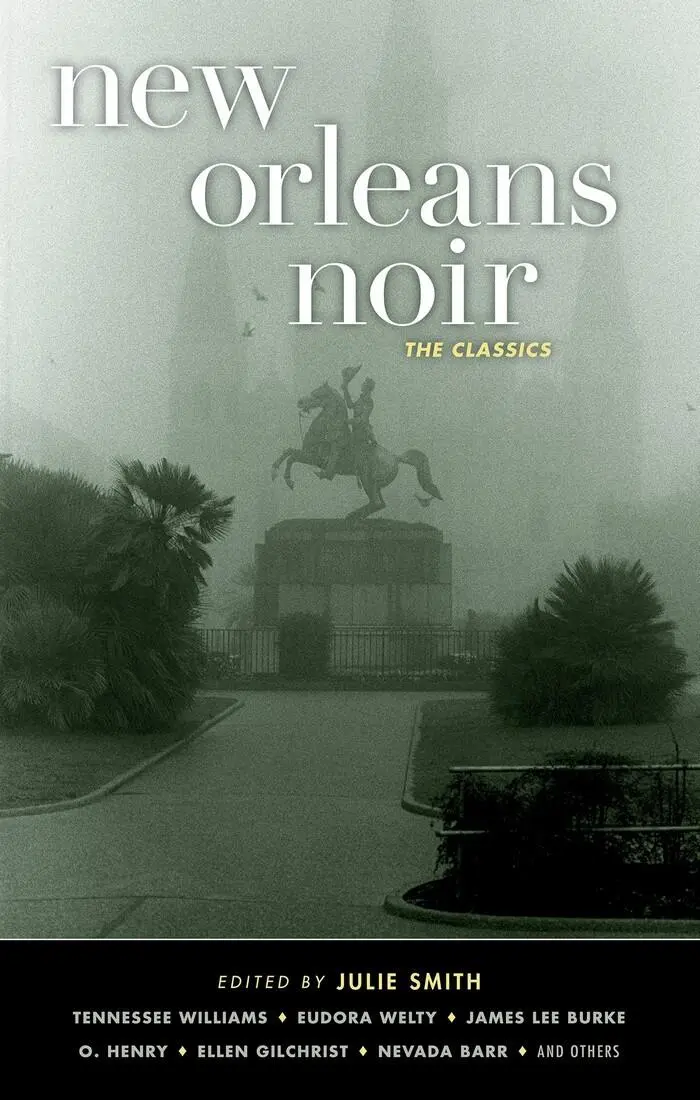
- Название:New Orleans Noir: The Classics
- Автор:
- Издательство:Akashic Books
- Жанр:
- Год:2016
- Город:New York
- ISBN:978-1-61775-384-8
- Рейтинг книги:3 / 5. Голосов: 1
-
Избранное:Добавить в избранное
- Отзывы:
-
Ваша оценка:
New Orleans Noir: The Classics: краткое содержание, описание и аннотация
Предлагаем к чтению аннотацию, описание, краткое содержание или предисловие (зависит от того, что написал сам автор книги «New Orleans Noir: The Classics»). Если вы не нашли необходимую информацию о книге — напишите в комментариях, мы постараемся отыскать её.
takes a literary tour through some of the darkest writing in New Orleans history.
New Orleans Noir: The Classics — читать онлайн бесплатно полную книгу (весь текст) целиком
Ниже представлен текст книги, разбитый по страницам. Система сохранения места последней прочитанной страницы, позволяет с удобством читать онлайн бесплатно книгу «New Orleans Noir: The Classics», без необходимости каждый раз заново искать на чём Вы остановились. Поставьте закладку, и сможете в любой момент перейти на страницу, на которой закончили чтение.
Интервал:
Закладка:
Tom stood by the bedroom window trying to think of something to say to Letty. He kept his back turned to her and he was making a nickel disappear with his left hand. He thought of himself at Tommie Keenen’s birthday party wearing his black coat and hat and doing his famous rope trick. Mr. Keenen had given him fifteen dollars. He remembered sticking the money in his billfold.
“My god, Letty, I’m sorry. I don’t know what the shit’s going on. I thought she was hurting the dog. I know I shouldn’t have hit her and there’s something I need to tell you about the bank. Kennington is getting sacked. I may be part of the housecleaning.”
“Why didn’t you tell me before? Can’t Daddy do anything?”
“I don’t want him to do anything. Even if it happens it doesn’t have anything to do with me. It’s just bank politics. We’ll say I quit. I want to get out of there anyway. That fucking place is driving me crazy.”
Tom put the nickel in his pocket and closed the bedroom door. He could hear the maid down the hall comforting Helen. He didn’t give a fuck if she cried all night. He walked over to Letty and put his arms around her. He smelled like he’d been drinking for a week. He reached under her dress and pulled down her pantyhose and her underpants and began kissing her face and hair while she stood awkwardly with the pants and hose around her feet like a halter. She was trying to cooperate.
She forgot that Tom smelled like sweat and whiskey. She was thinking about the night they were married. Every time they made love Letty pretended it was that night. She had spent thousands of nights in a bridal suite at the Sherry Netherland Hotel in New York City.
Letty lay on the walnut bed leaning into a pile of satin pillows and twisting a gold bracelet around her wrist. She could hear the children playing outside. She had a headache and her stomach was queasy, but she was afraid to take a Valium or an aspirin. She was waiting for the doctor to call her back and tell her if she was pregnant. She already knew what he was going to say.
Tom came into the room and sat by her on the bed.
“What’s wrong?”
“Nothing’s wrong. Please don’t do that. I’m tired.”
“Something’s wrong.”
“Nothing’s wrong. Tom, please leave me alone.”
Tom walked out through the French windows and onto a little balcony that overlooked the play yard and the dog runs. Sunshine flooded Philip Street, covering the houses and trees and dogs and children with a million volts a minute. It flowed down to hide in the roots of trees, glistening on the cars, baking the street, and lighting Helen’s rumpled hair where she stooped over the puppy. She was singing a little song. She had made up the song she was singing.
“The baby’s dead. The baby’s dead. The baby’s gone to heaven.”
“Jesus God,” Tom muttered. All up and down Philip Street fathers were returning home from work. A jeep filled with teenagers came tearing past and threw a beer can against the curb.
Six or seven pieces of Tom’s mind sailed out across the street and stationed themselves along the power line that zigzagged back and forth along Philip Street between the live oak trees.
The pieces of his mind sat upon the power line like a row of black starlings. They looked him over.
Helen took the dog out of the buggy and dragged it over to the kennel.
“Jesus Christ,” Tom said, and the pieces of his mind flew back to him as swiftly as they had flown away and entered his eyes and ears and nostrils and arranged themselves in their proper places like parts of a phrenological head.
Tom looked at his watch. It said six fifteen. He stepped back into the bedroom and closed the French windows. A vase of huge roses from the garden hid Letty’s reflection in the mirror.
“I’m going to the camp for the night. I need to get away. Besides, the season’s almost over.”
“All right,” Letty answered. “Who are you going with?”
“I think I’ll take Helen with me. I haven’t paid any attention to her for weeks.”
“That’s good,” Letty said, “I really think I’m getting a cold. I’ll have a tray up for supper and try to get some sleep.”
Tom moved around the room, opening drawers and closets and throwing some gear into a canvas duffel bag. He changed into his hunting clothes.
He removed the guns he needed from a shelf in the upstairs den and cleaned them neatly and thoroughly and zipped them into their carriers.
“Helen,” he called from the downstairs porch, “bring the dog in the house and come get on some play clothes. I’m going to take you to the duck camp with me. You can take the dog.”
“Can we stop and get beignets?” Helen called back, coming running at the invitation.
“Sure we can, honey. Whatever you like. Go get packed. We’ll leave as soon as dinner is over.”
It was past nine at night. They crossed the Mississippi River from the New Orleans side on the last ferry going to Algier’s Point. There was an offshore breeze and a light rain fell on the old brown river. The Mississippi River smelled like the inside of a nigger cabin, powerful and fecund. The smell came in Tom’s mouth until he felt he could chew it.
He leaned over the railing and vomited. He felt better and walked back to the red Chevrolet pickup he had given himself for a birthday present. He thought it was chic for a banker to own a pickup.
Helen was playing with the dog, pushing him off the seat and laughing when he climbed back on her lap. She had a paper bag of doughnuts from the French Market and was eating them and licking the powdered sugar from her fingers and knocking the dog off the seat.
She wasn’t the least bit sleepy.
“I’m glad Tim didn’t get to go. Tim was bad at school, that’s why he had to stay home, isn’t it? The sisters called Momma. I don’t like Tim. I’m glad I got to go by myself.” She stuck her fat arms out the window and rubbed Tom’s canvas hunting jacket. “This coat feels hard. It’s all dirty. Can we go up in the cabin and talk to the pilot?”
“Sit still, Helen.”
“Put the dog in the back, he’s bothering me.” She bounced up and down on the seat. “We’re going to the duck camp. We’re going to the duck camp.”
The ferry docked. Tom drove the pickup onto the blacktop road past the city dump and on into Plaquemines Parish.
They drove into the brackish marshes that fringe the Gulf of Mexico where it extends in ragged fingers along the coast below and to the east of New Orleans. As they drove closer to the sea the hardwoods turned to palmetto and water oak and willow.
The marshes were silent. Tom could smell the glasswort and black mangrove, the oyster and shrimp boats.
He wondered if it were true that children and dogs could penetrate a man’s concealment, could know him utterly.
Helen leaned against his coat and prattled on.
In the Wilson house on Philip Street, Tim and the twins were cuddled up by Letty, hearing one last story before they went to bed.
A blue wicker tray held the remains of the children’s hot chocolate. The china cups were a confirmation present sent to Letty from Limoges, France.
Now she was finishing reading a wonderful story by Ludwig Bemelmans about a little convent girl in Paris named Madeline who reforms the son of the Spanish ambassador, putting an end to his terrible habit of beheading chickens on a miniature guillotine.
Letty was feeling better. She had decided God was just trying to make up to her for Jennifer.
The camp was a three-room wooden shack built on pilings out over Bayou Lafouche, which runs through the middle of the parish.
The inside of the camp was casually furnished with old leather office furniture, hand-me-down tables and lamps, and a walnut poker table from Neiman-Marcus. Photographs of hunts and parties were tacked around the walls. Over the poker table were pictures of racehorses and their owners and an assortment of ribbons won in races.
Читать дальшеИнтервал:
Закладка:
Похожие книги на «New Orleans Noir: The Classics»
Представляем Вашему вниманию похожие книги на «New Orleans Noir: The Classics» списком для выбора. Мы отобрали схожую по названию и смыслу литературу в надежде предоставить читателям больше вариантов отыскать новые, интересные, ещё непрочитанные произведения.











Обсуждение, отзывы о книге «New Orleans Noir: The Classics» и просто собственные мнения читателей. Оставьте ваши комментарии, напишите, что Вы думаете о произведении, его смысле или главных героях. Укажите что конкретно понравилось, а что нет, и почему Вы так считаете.