Brian Freeman - Marathon
Здесь есть возможность читать онлайн «Brian Freeman - Marathon» весь текст электронной книги совершенно бесплатно (целиком полную версию без сокращений). В некоторых случаях можно слушать аудио, скачать через торрент в формате fb2 и присутствует краткое содержание. Город: New York, Год выпуска: 2017, ISBN: 2017, Издательство: Quercus, Жанр: Детектив, на английском языке. Описание произведения, (предисловие) а так же отзывы посетителей доступны на портале библиотеки ЛибКат.
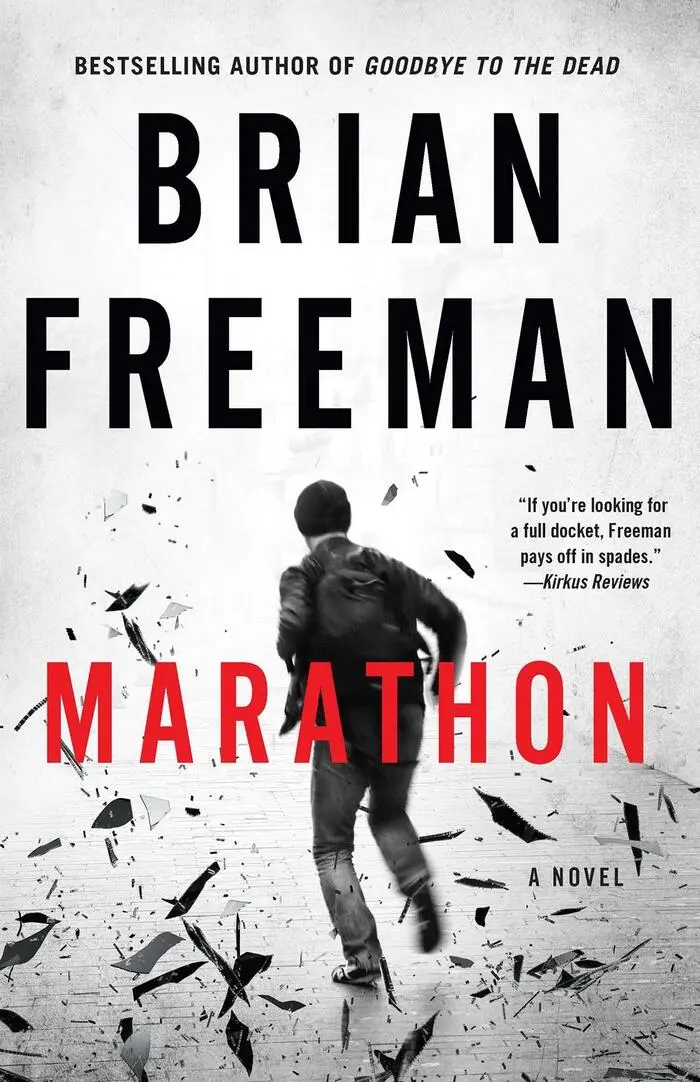
- Название:Marathon
- Автор:
- Издательство:Quercus
- Жанр:
- Год:2017
- Город:New York
- ISBN:978-1-68144-241-9
- Рейтинг книги:4 / 5. Голосов: 1
-
Избранное:Добавить в избранное
- Отзывы:
-
Ваша оценка:
Marathon: краткое содержание, описание и аннотация
Предлагаем к чтению аннотацию, описание, краткое содержание или предисловие (зависит от того, что написал сам автор книги «Marathon»). Если вы не нашли необходимую информацию о книге — напишите в комментариях, мы постараемся отыскать её.
Within minutes, Jonathan Stride, Serena Dial, and Maggie Bei are at work with the FBI to find the terrorists behind the tragedy. As social media feeds a flood of rumors and misinformation, one spectator remembers being jostled by a young man with a backpack not far from the bomb site. He spots a Muslim man in a tourist’s photo of the event and is convinced that this was the man who bumped into him in the crowd — but now the man’s backpack is missing.
When he tweets the photo to the public, the young man, Khan Rashid, becomes the most wanted man in the city. And the manhunt is on.
But are the answers behind the Duluth bombing more complex than anyone realizes? And can Stride, Serena, and Maggie find the truth before more innocent people are killed?
Marathon — читать онлайн бесплатно полную книгу (весь текст) целиком
Ниже представлен текст книги, разбитый по страницам. Система сохранения места последней прочитанной страницы, позволяет с удобством читать онлайн бесплатно книгу «Marathon», без необходимости каждый раз заново искать на чём Вы остановились. Поставьте закладку, и сможете в любой момент перейти на страницу, на которой закончили чтение.
Интервал:
Закладка:
A bullet hole bled in a single trickle down the middle of his forehead.
The cop was dead. Young, helpless, shot dead. Khan didn’t understand. Who killed him? How did it happen?
It didn’t matter. He couldn’t stay here; he had only seconds to escape. The police lights sweeping the ground hadn’t found him yet. His ankle and his injuries didn’t slow him down. He picked himself up, and he ran through the cemetery the way a deer runs, panicked and fast, and the night swallowed him up.
21
Ahdia hummed as she tucked Pak into bed. The boy was asleep practically as soon as his head sank into the pillow. She envied that kind of innocent sleep. She was a worrier, letting everything keep her up in the middle of the night. Her job. Money. Her husband and the strangers in his cab. Her fears for her child and the kind of world he would inherit.
She turned off the light. She left a CD of songs by Pakistani singer Hadiqa Kiani playing softly, because Pak liked her music, and she hoped it gave him good dreams.
The grandfather clock in the living room ticked loudly, counting off seconds. The chimes rang every half hour overnight, reminding her of how long she lay awake. She wished Khan would sell it, but something about the dusty old clock appealed to him. Khan, like Pak, slept well, except when the occasional nightmare took him back to his childhood. On those nights, she would comfort him with her head on his chest, until the past gave up its grip on him.
She returned to the kitchen. She still had baking to do. It surprised her that Khan wasn’t back with the coconut yet. The market wasn’t far, and he’d left a long time ago, but she also knew that Khan had a soft heart. If someone spotted his cab and needed a ride, he’d be right there to take them home, even if it meant going halfway across the city in the rain and the darkness.
Then a sharp knock on their back door startled her. Khan never came in through the back; besides, he always had his keys. She pushed aside the flowered curtain on the window, and when she saw the man on their back porch, she opened the door immediately, letting him in along with an ocean of rain.
“Haq,” she said. “What are you doing here? Why did you come to the back door?”
Ahdia knew Haq Al-Masri well. Every Muslim in Duluth did. He often gave the Friday sermon at the mosque, and he was an unofficial spokesman when Islam was in the news, as it too often was. He was a handsome man, like Khan, although Haq had more ego and liked to show off his professor’s intellect. Even so, he’d been the first to welcome them when they moved to the city and to make sure they felt a part of the community.
“I parked on the dirt road on Hubbell and came through the trees,” Haq told her.
“What on earth for?”
Haq didn’t explain. “Is Khan here? Did he make it home?”
“No, he went to the market. I expect him any minute now.” Then she saw the look on Haq’s face. “What is it? What’s wrong?”
“Have you seen the news?”
“No, why? Is it Malik?”
“Worse,” Haq replied. “There’s no time to explain. We need to get you away from here. Put some things in a small bag, and then we must take Pak and go.”
“Go? What are you talking about? Haq, tell me what’s going on.”
He sighed in impatience. “Turn off your living room lights, and then look out the front window.”
Ahdia hesitated, but she obeyed. She darkened the front room and peered carefully from one side of the curtains. At the curb, on both sides of the street, she saw police cars with their lights off. Under the streetlight, she saw a uniformed cop behind the wheel of one of the cars. He was studying her house and speaking into his radio.
“Police!” she said. “What do they want with us?”
“They want Khan,” Haq replied.
Ahdia cupped her hands over her chin. “They found out he was at the marathon? They think he’s the bomber!”
“Yes, some fool posted a picture of Khan in Canal Park before the explosion. He says he saw Khan carrying a backpack.”
“Khan doesn’t own a backpack!” Ahdia protested.
“It doesn’t matter. It’s too late. Dawn Basch spread the picture around the city. There was an incident at the market. Someone saw Khan and tried to stop him from leaving. They fought.”
“They fought? Is Khan okay? Where is he?”
“I don’t know. I haven’t heard more since then. I came over here immediately.”
Ahdia shook her head. “Haq, this is crazy. Khan is innocent.”
“There are no innocent Muslims the day after a bomb goes off! You know that. Ahdia, people at the market claimed that Khan had a gun. Is that true?”
“Khan with a gun? Nonsense. Khan never held a gun in his whole life.”
Haq shook his head. “Even so, the police are treating him as armed and dangerous.”
“We have to find him!” Ahdia said.
“Right now, we have to get you and Pak away from here. Otherwise, the police will take you and interrogate you. And this house isn’t safe. Basch is stoking the flames with her mob. We need to find somewhere for you and Pak to hide. Tomorrow we can find a lawyer, and we can try to clear Khan’s name.”
Ahdia stared at Haq through the shadows of the living room. She thought: This is how it happens. This is how the innocent become guilty. A stone rolls downhill, and soon it’s going so fast, it cannot be stopped.
She glanced at the doorway to her son’s bedroom and saw Pak sleepily wiping his eyes. “Mama, I heard voices.”
“It’s Uncle Haq,” she told him. “He came for a visit.”
Pak’s face brightened as he saw Haq, who marched into the bedroom and scooped the boy into his arms. “Would you like to go on an adventure?” Haq asked. “Do you have the heart of a tiger in the jungle?”
Pak was immediately awake. “Yes!”
“Good. I knew I could count on your courage. The three of us will head into the woods, and you will be a brave hero like Amir Hamza!”
“Will Papa come, too?”
“Very soon. He will be with us very soon.”
Ahdia stared at her son, who beamed in Haq’s arms. She cast another glance toward the street, where the police waited.
“All right, Haq, whatever you say,” she murmured wearily.
Haq gave her a reassuring smile. “It’s the best thing. Now hurry. We should be gone in two minutes, no more. Take only a couple of things for you and the boy.”
“My phone?”
“Take it with you, but turn it off.”
“But what if Khan tries to call?” she asked.
“If your phone is on, they can track you. They’ll find you wherever we go.”
Ahdia squeezed her plump lips into a thin white line. The rose of her cheeks was gone. She grabbed her phone from the coffee table and turned it off.
She was ready to go in less than a minute. She always kept a travel bag ready on a shelf in their closet. Somehow, she’d known that a day might come when they would have to leave their lives behind that way. It was one of the things that kept her awake in the nights.
With a cloth bag over her shoulder, Ahdia turned off the last of the house lights, and then she, Pak, and Haq crept out the back door into the storm and made their way toward the safety of the trees.
Khan ran and ran.
He escaped from Forest Hill southward into the wooded streets and picked his way undetected through the backyards of houses. Behind him, he heard overlapping sirens, wailing and moaning as if they were calling out his name. He ran until the noise of the police cars faded behind the rain. He lost track of the streets and the direction he was going, but the downward slope of the hills told him he was headed toward the lake.
When he finally stopped to catch his breath, he found himself near a Christian church on the northeast end of Superior Street. It was built of red brick and had a sharp white steeple. He’d been here once before, during an interfaith dinner.
Читать дальшеИнтервал:
Закладка:
Похожие книги на «Marathon»
Представляем Вашему вниманию похожие книги на «Marathon» списком для выбора. Мы отобрали схожую по названию и смыслу литературу в надежде предоставить читателям больше вариантов отыскать новые, интересные, ещё непрочитанные произведения.


Обсуждение, отзывы о книге «Marathon» и просто собственные мнения читателей. Оставьте ваши комментарии, напишите, что Вы думаете о произведении, его смысле или главных героях. Укажите что конкретно понравилось, а что нет, и почему Вы так считаете.