Thomas Adcock - Brooklyn Noir 3 - Nothing but the Truth
Здесь есть возможность читать онлайн «Thomas Adcock - Brooklyn Noir 3 - Nothing but the Truth» весь текст электронной книги совершенно бесплатно (целиком полную версию без сокращений). В некоторых случаях можно слушать аудио, скачать через торрент в формате fb2 и присутствует краткое содержание. Город: New York, Год выпуска: 2008, ISBN: 2008, Издательство: Akashic Books, Жанр: Детектив, на английском языке. Описание произведения, (предисловие) а так же отзывы посетителей доступны на портале библиотеки ЛибКат.
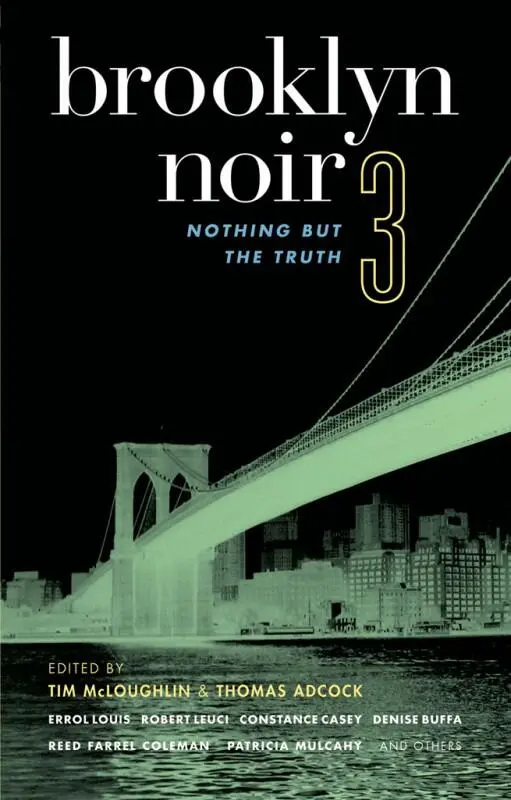
- Название:Brooklyn Noir 3: Nothing but the Truth
- Автор:
- Издательство:Akashic Books
- Жанр:
- Год:2008
- Город:New York
- ISBN:978-1-933354-14-9
- Рейтинг книги:3 / 5. Голосов: 1
-
Избранное:Добавить в избранное
- Отзывы:
-
Ваша оценка:
Brooklyn Noir 3: Nothing but the Truth: краткое содержание, описание и аннотация
Предлагаем к чтению аннотацию, описание, краткое содержание или предисловие (зависит от того, что написал сам автор книги «Brooklyn Noir 3: Nothing but the Truth»). Если вы не нашли необходимую информацию о книге — напишите в комментариях, мы постараемся отыскать её.
. This volume presents the first nonfiction collection in the series, curated by acclaimed novelists Tim McLoughlin and Thomas Adcock.
Brand-new stories by: Robert Leuci, Dennis Hawkins, Tim McLoughlin, Thomas Adcock, Errol Louis, Denise Buffa, Patricia Mulcahy, C. J. Sullivan, Reed Farrel Coleman, Aileen Gallagher, Christopher Musella, Kim Sykes, Robert Knightly, Jess Korman, Constance Casey, and Rosemarie Yu.
Brooklyn Noir 3: Nothing but the Truth — читать онлайн бесплатно полную книгу (весь текст) целиком
Ниже представлен текст книги, разбитый по страницам. Система сохранения места последней прочитанной страницы, позволяет с удобством читать онлайн бесплатно книгу «Brooklyn Noir 3: Nothing but the Truth», без необходимости каждый раз заново искать на чём Вы остановились. Поставьте закладку, и сможете в любой момент перейти на страницу, на которой закончили чтение.
Интервал:
Закладка:
As I walked up the courthouse steps, I remembered that it was also here, eighteen months earlier, that Charles Joseph Hynes, the New York State special prosecutor for the city criminal justice system, scheduled the arraignment of the “dirty dozen” cops from the 77th Precinct in Brooklyn.
It was a most extraordinary arraignment in which Joe Hynes, after addressing the judge in a stately manner — “May it please the Court” — made an elegant opening speech about the entire investigation and the reason we the prosecutors, the twelve defendants, their defense attorneys, and a full house of journalists were in court that day.
Joe had a commanding presence in the courtroom, and neither the judge nor defense attorneys objected during his speech. He talked about the scope of the corruption that led to the arrest of defendants who had betrayed their oaths as police officers. When he finished, he sat, leaving the “technicalities” of the arraignment to me and my colleagues, who had presented the cases to a grand jury for the return of indictments.
One by one we stood to present the charges, only to have the reading of them waived by defense counsels. One by one the defendants pled not guilty and we made bail arguments. Return dates and a schedule for motions and discovery were set.
I recall nothing from that day of police officer Gil Ortiz, charged with five counts that ranged from conspiracy in the fourth degree, an E felony, all the way down to a trespassing violation. Perhaps I should have paid more attention, because this was the case I would ultimately try. But my thoughts were on the charges against Officer William Gallagher, charged with eighty-six counts, ranging from criminal sale of a controlled substance, an A-II felony, down to the A misdemeanor of official misconduct. Gallagher’s was the case I had hoped to try — the first and most important case of the lot.
I also wondered, Where the hell is Gallagher’s partner, Brian O’Regan? He had been scheduled to surrender with the rest, but had not reported to Internal Affairs division headquarters that morning. Was he in Ireland? That was surely where I would have been if I were he.
But those arraignments were long ago. Since then, O’Regan killed himself rather than surrender; Gallagher and three others pled guilty before trial; two other defendants were tried and convicted, two were acquitted after trial; and two others had indictments dismissed. Three defendants were left: Gil Ortiz, plus two others involved in the theft of precinct garbage cans — the bottom of the barrel, so to speak.
Today was my turn in that barrel, as prosecutor in People v. Ortiz . I was not looking forward to the trial, given that the evidence was a single taped conversation between Ortiz and Henry Winter, one of two dirty cops who had flipped at the beginning of the four-month investigation. Winter was possibly one of the most corrupt cops in the precinct, although he had denied it in an earlier trial, accusing Gallagher and O’Regan of being even more corrupt.
Ortiz was represented by Barry Agulnick, an experienced defense attorney who specialized in representing police officers. He was one of the defense lawyers in the high-profile Michael Stewart case back in 1985, resulting in the acquittal of all the transit police officers accused by the Manhattan district attorney of killing Stewart during his arrest for writing graffiti in the subways. I knew Barry because he had represented Gallagher and had negotiated a realistic plea agreement for his client. The evidence in that case was overwhelming, and Barry knew it; he obviously had a different read on the Ortiz case.
This trial would only be my fifth; my first two as second seat counsel had resulted in convictions, my next two as lead prosecutor the same. I was not cocky about my skills, but thought I made a nice appearance, spoke well, was organized, and had done the prep work needed. I also knew the central weakness of the case: Henry Winter versus a good-looking rookie cop, namely Gil Ortiz.
We assembled in a large courtroom on an upper floor of Kings County Supreme Court to select a jury on that beautiful spring morning. I still did not fully understand the science of jury selection, and to this day wonder if it isn’t all just a crapshoot.
How do you tell in a few minutes if a jury prospect will be fair, if he or she will truly listen to the facts of your case and do the right thing? There are attorneys who wax poetic about their ability to identify a juror who will be good for the prosecution or good for the defense. There are old wives’ tales about the predilections of accountants, social workers, and church ladies. There are jury consultants who will tell you that if a juror grows roses, it’s a sure bet that person is patient and discerning. I didn’t know then and I don’t know now if I buy all that. What I did know is that I wanted smart people who could get along with their fellow jurors, make a group decision, and not hate my star witness — Henry Winter, a guy known to cops as a “rat.”
I prepared the prospective jurors to the extent that I could during voir dire interviews. They would be hearing from a witness who committed many other crimes himself before finally being caught and offered a deal for his cooperation, I informed the prospects. I then asked them if they could listen carefully to the testimony of such a witness, if they could fairly assess the truthfulness of his testimony, and if they could reserve judgment until hearing all the evidence. Both Barry and I explored prejudices that might get in the way of their rendering a just verdict, which is another way of figuring out if they could buy into the theory of our respective cases.
Jury selection was uneventful, with a minimum of posturing by either Barry or myself. Along with the judge, we ultimately believed we had a competent panel. For my part, I was happy with the twelve jurors in the box because I thought I had connected with a number of them, and that they considered me trustworthy. I’m sure Barry felt the same way.
After our jurors were told when to return for trial, Barry approached me to say, “I’ve never seen a prosecutor do what you did today.”
My first thought was that Barry was trying to play head games with me, even though that had not been my experience with him in the past.
“What do you mean?” I asked him.
“When you asked some of the jurors whether they would stick up for their views — even if all the other jurors disagreed — you were asking a defense attorney’s question. What are you looking for, Dennis? A hung jury?”
If I were not olive-skinned, Barry would have seen my blush. To any other attorney, I might have said, “Fuck you.”
But to Barry: “I just want strong, independent jurors.”
And Barry’s hunch was sound. I was indeed going for a hung jury. One of my colleagues on an earlier case had been stung with a not guilty verdict in ninety-six minutes flat. I was not about to let that happen to me.
Childish? Absolutely. But unlike the paragons of prosecutorial virtue we see in fiction, or in self-congratulatory memoirs, I had flaws and they were evident in this tactic. Certainly to Barry.
At some level, I believed in the case, even though I knew it was very weak. I had invested too much of my life in the investigation to just walk away.
Ultimately, it was my faith in Henry Winter and the investigation that inspired me to proceed to trial. Perhaps that was a mistake. But you can be the judge.
I met Henry after he’d been “flipped” by Joe Hynes, when I talked my way into being part of the investigative team that would run him as a confidential informant for an extraordinary four months.
Having a mole inside a notoriously corrupt police precinct was an investigative attorney’s dream. The role of investigative attorney — my job — is rarely portrayed by TV dramas that prefer to organize their shows law-and-order style: the cops investigate, the prosecutors bring police cases to trial. My job was and is the missing dimension in TV–Land. I actually ran the investigations I brought to trial.
Читать дальшеИнтервал:
Закладка:
Похожие книги на «Brooklyn Noir 3: Nothing but the Truth»
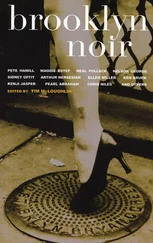
Представляем Вашему вниманию похожие книги на «Brooklyn Noir 3: Nothing but the Truth» списком для выбора. Мы отобрали схожую по названию и смыслу литературу в надежде предоставить читателям больше вариантов отыскать новые, интересные, ещё непрочитанные произведения.

Обсуждение, отзывы о книге «Brooklyn Noir 3: Nothing but the Truth» и просто собственные мнения читателей. Оставьте ваши комментарии, напишите, что Вы думаете о произведении, его смысле или главных героях. Укажите что конкретно понравилось, а что нет, и почему Вы так считаете.