Алистер Маклин - Where Eagles Dare
Здесь есть возможность читать онлайн «Алистер Маклин - Where Eagles Dare» — ознакомительный отрывок электронной книги совершенно бесплатно, а после прочтения отрывка купить полную версию. В некоторых случаях можно слушать аудио, скачать через торрент в формате fb2 и присутствует краткое содержание. Год выпуска: 2011, Издательство: Sterling, Жанр: Боевик, prose_military, на английском языке. Описание произведения, (предисловие) а так же отзывы посетителей доступны на портале библиотеки ЛибКат.
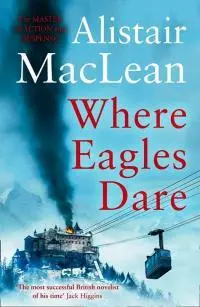
- Название:Where Eagles Dare
- Автор:
- Издательство:Sterling
- Жанр:
- Год:2011
- ISBN:нет данных
- Рейтинг книги:5 / 5. Голосов: 1
-
Избранное:Добавить в избранное
- Отзывы:
-
Ваша оценка:
Where Eagles Dare: краткое содержание, описание и аннотация
Предлагаем к чтению аннотацию, описание, краткое содержание или предисловие (зависит от того, что написал сам автор книги «Where Eagles Dare»). Если вы не нашли необходимую информацию о книге — напишите в комментариях, мы постараемся отыскать её.
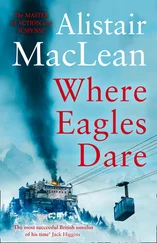
A team of British Special Forces commandos parachutes into the high peaks of the Austrian Alps with the mission of stealing into an invulnerable alpine castle – accessible only by aerial gondola – the headquarters of Nazi intelligence. Supposedly sent in to rescue one of their own, their real mission turns out to be a lot more complicated – and the tension climbs as team members start to die off, one by one.
Written by Alistair Maclean, author of the Guns of Navarone, this is the novel that set the pace for the modern action thriller (the film version, with Richard Burton and Clint Eastwood, also helped), and it still packs twice the punch of most contemporary best-selling thrillers. What's more, the cast of spooks, turncoats, and commandos who drive this story are more relevant than ever in our new era of special forces, black ops, and unpredictable alliances.
Where Eagles Dare — читать онлайн ознакомительный отрывок
Ниже представлен текст книги, разбитый по страницам. Система сохранения места последней прочитанной страницы, позволяет с удобством читать онлайн бесплатно книгу «Where Eagles Dare», без необходимости каждый раз заново искать на чём Вы остановились. Поставьте закладку, и сможете в любой момент перейти на страницу, на которой закончили чтение.
Интервал:
Закладка:
‘What do you think I am? A bus-diviner? Of course I knew about it.’
Smith climbed into the driver’s seat. The keys were in the ignition. Smith switched on and watched the fuel gauge climb up to the half-full mark. He located the headlamps switch and turned it on. They worked. He pressed the starter button and the engine caught at once. Smith killed it immediately. Schaffer watched the performance with interest.
‘I suppose you know you need a PSV licence to drive one of those, boss?’
‘I have one around somewhere. Leave half the explosives in the back of the bus. And hurry. Heidi might be down with the next car.’
Smith climbed down from the driver’s seat, went to the front doors, unbolted both, top and bottom, and pushed gently. The doors gave an inch, then stopped.
‘Padlocked,’ Smith said briefly.
Schaffer surveyed the massive steel plough on the front of the bus and shook his head sorrowfully.
‘Poor old padlock,’ he said.
The snow had stopped but the wind from the west was now very strong. The cold was intense. Masses of ragged dark cloud hurried across the sky and the entire valley was alternately cast into the deepest shadow or bathed in contrastingly dazzling light as the moon was alternately obscured by the clouds or shone through the shifting gaps between them. But there was no alternating light and shade at the far end of the village: the station still burnt furiously enough to render the moon’s best efforts pretty ineffectual.
A cable-car was coming slowly down the valley, less than a hundred yards now from the lower station. Impelled by the powerfully gusting wind, it swung wildly, terrifyingly, across the night sky. But as it approached the end of its journey the motion quickly dampened down and disappeared altogether as it approached the station.
The cable-car jerked to a stop. Heidi, the only passenger, climbed out: understandably enough, she was looking rather pale. She walked down the steps at the back of the station, reached ground level then stopped dead as she heard the softly-whistled first few notes of ‘Lorelei’. She whirled round, then slowly approached two shapes, clad all in white, huddled by the side of the station.
‘The Major Smiths of this world don’t drive off cliff-tops,’ she said calmly. She paused, then stepped forward suddenly and gave each man a quick hug and kiss on the cheek. ‘But you had me a little worried there.’
‘You just keep on worrying like that,’ Schaffer said. ‘No need to worry about him, though.’
Heidi waved a hand in the direction of the other end of the village. From the cable-car station on the lower slopes they had an excellent if distant view of the fire. ‘Are you responsible for this?’ she asked.
‘It was a mistake,’ Smith explained.
‘Yeah. His hand slipped,’ Schaffer added.
‘You two should audition for a turn on vaudeville,’ Heidi said dryly. Suddenly serious she said: ‘Mary thinks you’re both gone.’
‘Weissner doesn’t,’ Smith said. ‘The car that went over the cliff went without us. They’re on to us.’
‘Hardly surprising,’ she murmured. ‘Or hadn’t you noticed the size of the fire.’ She paused, then went on bleakly: ‘They’re not the only ones who are on to you. Kramer knows you’re British agents after General Carnaby.’
‘Well, well, well,’ Smith said thoughtfully. ‘I wonder what little bird has been whispering in Kramer’s shell-like ear. One with a very long-range voice, me thinks.’
‘What are you talking about?’
‘Nothing. It’s not important.’
‘It’s not important! But don’t you see ?’ Her voice was imploring, almost despairing. ‘They know – or will any minute – that you’re alive. They know who you are. They’ll be expecting you up there.’
‘Ah, but you overlook the subtleties, my dear Heidi,’ Schaffer put in. ‘What they don’t know is that we are expecting them to be expecting us . At least, that’s what I think I mean.’
‘You’re whistling in the dark, Lieutenant. And one last thing: your friends are being brought up to the castle any time now.’
‘For interrogation?’ Smith asked.
‘I don’t expect they’ve been asked up for tea,’ she said acidly.
‘Fair enough,’ Smith nodded. ‘We’ll go up with them.’
‘In the same car?’ The words didn’t question Smith’s sanity, but the tone and expression did.
‘Not “in”. With.’ Smith peered at his watch. ‘The post-bus in Sulz’s garage. Be there in eighty minutes. And oh! – bring a couple of crates of empty beer bottles.’
‘Bring a couple of – oh, all right.’ She shook her head in conviction. ‘You’re both mad.’
‘Shines through in our every word and gesture,’ Schaffer agreed, then, suddenly serious, added: ‘Say a prayer for us, honey. And if you don’t know any prayers, keep your fingers crossed till they ache.’
‘Please come back,’ she said. There was a catch in her voice. She hesitated, made to say more, turned and walked quickly away. Schaffer looked after her admiringly as she walked down the street.
‘There goes the future Mrs Schaffer,’ he announced. ‘Bit tetchy and snappy, perhaps.’ He pondered. ‘But funny, I thought she was near crying at the end there.’
‘Maybe you’d be tetchy and snappy and tearful if you’d been through what she’s been in the past two and a half years,’ Smith said sourly.
‘Maybe she’d be less tetchy and tearful if she knew a bit more about what’s going on.’
‘I haven’t the time to explain everything to everybody.’
‘You can say that again. Devious, boss. That’s the word for you.’
‘Like enough.’ Smith glanced at his watch. ‘I wish to God they’d hurry up.’
‘Speak for yourself.’ Schaffer paused. ‘When we – well, if we – get away, is she coming with us?’
‘Is who coming with us?’
‘Heidi, of course!’
‘Heidi, of course. If we make it – and we can only do it through Mary, and Mary was introduced by–’
‘Say no more.’ He stared after the retreating figure and shook his head. ‘She’ll be a sensation in the Savoy Grill,’ he said dreamily.
SIX
The seconds crawled by and became minutes, and the minutes in turn piled up with agonizing slowness until almost quarter of an hour had passed. Brilliant moonshine and a contrastingly almost total darkness had alternated a score of times as the low, tattered, black clouds scudded across the valley, and the cold deepened until it reached down into the bones of the two watchers in the shadows. And still they waited. They waited because they had to: they couldn’t reach the Schloss Adler without company and company was a long time in coming.
And they waited in silence, each man alone with his own thoughts. What was in Schaffer’s mind Smith couldn’t guess. Probably he was blissfully envisaging himself as the instigator of a series of uncontrollable stampedes in a selection of the better known hostelries in the West End of London. Smith’s own thoughts were much more pragmatic and concerned solely with the immediate future. He was becoming concerned, and seriously concerned, about the intense cold and how it would affect their chances of making the trip up to the castle intact. Stamp their feet and flail their arms as they might, that numbing cold tightened its grip on them with every minute that passed. What they were about to do needed both physical strength and quick reactions in full measure, and that glacial cold was swiftly draining them of both. Briefly and bleakly he wondered what odds any reasonable bookmaker would have given against their chances of reaching the castle but dismissed the thought still-born. When no other option offered there was no point in figuring the percentages, and, besides, they were due to find out immediately: the long-awaited company was at hand.
Читать дальшеИнтервал:
Закладка:
Похожие книги на «Where Eagles Dare»
Представляем Вашему вниманию похожие книги на «Where Eagles Dare» списком для выбора. Мы отобрали схожую по названию и смыслу литературу в надежде предоставить читателям больше вариантов отыскать новые, интересные, ещё непрочитанные произведения.



Обсуждение, отзывы о книге «Where Eagles Dare» и просто собственные мнения читателей. Оставьте ваши комментарии, напишите, что Вы думаете о произведении, его смысле или главных героях. Укажите что конкретно понравилось, а что нет, и почему Вы так считаете.