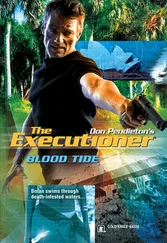
Robert Jones - Blood Tide
Здесь есть возможность читать онлайн «Robert Jones - Blood Tide» весь текст электронной книги совершенно бесплатно (целиком полную версию без сокращений). В некоторых случаях можно слушать аудио, скачать через торрент в формате fb2 и присутствует краткое содержание. Год выпуска: 2014, Жанр: Старинная литература, на английском языке. Описание произведения, (предисловие) а так же отзывы посетителей доступны на портале библиотеки ЛибКат.
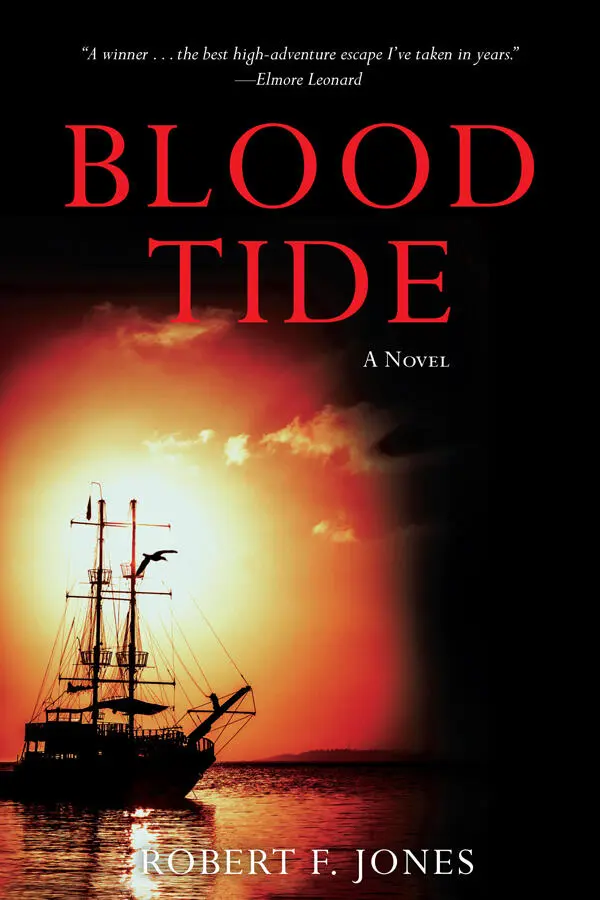
- Название:Blood Tide
- Автор:
- Жанр:
- Год:2014
- ISBN:нет данных
- Рейтинг книги:5 / 5. Голосов: 1
-
Избранное:Добавить в избранное
- Отзывы:
-
Ваша оценка:
Blood Tide: краткое содержание, описание и аннотация
Предлагаем к чтению аннотацию, описание, краткое содержание или предисловие (зависит от того, что написал сам автор книги «Blood Tide»). Если вы не нашли необходимую информацию о книге — напишите в комментариях, мы постараемся отыскать её.
Blood Tide — читать онлайн бесплатно полную книгу (весь текст) целиком
Ниже представлен текст книги, разбитый по страницам. Система сохранения места последней прочитанной страницы, позволяет с удобством читать онлайн бесплатно книгу «Blood Tide», без необходимости каждый раз заново искать на чём Вы остановились. Поставьте закладку, и сможете в любой момент перейти на страницу, на которой закончили чтение.
Интервал:
Закладка:
“I should’ve known. That dog of yours. Good times, all right. Now listen, let me know what’s happening. Don’t be a stranger.” He headed for the door. “Keep in touch. Take care. Have a nice day.” Then his eyes went scared for a moment. “ But don’t call me at the office .”
“Hey, Phil, what’s the name of that island down there, the one near Palawan?”
“San Lázaro,” Chalmers said.
FIFTEEN

From Miranda’s log:
Better than halfway there now. Still making good time, nearly 200 miles a day, but the wind’s suddenly shifted to the SE. Some glitch in the trades, I guess, maybe El Niño’s doing, who knows? If it continues this way, we might make better time by heading up to Wake Island for a midpoint landfall rather than proceeding to Majuro in the Marshalls. Suggested that to Freddie and Culdee this afternoon. “Whatever you think, Skipper,” Freddie said. Culdee disagreed. “If we head NW at this point, we’ll probably pick up the NE trades when we’re only partway there. Better stick to your original plot. Anyway, Wake sucks. Nothing but thornbushes and coral. No fresh water there except what they ferry in. No fresh fruit. Just fucking navy types who’ll treat us like spies.”
Makes sense. We’re holding our track for Majuro. Odd, though, how Culdee loves the navy and hates it at the same time. Usually he can’t say a good word about anything but the navy—the old navy he knew, I guess—and certainly nothing good about civilians. What does he figure he is if not one or the other? Just some Flying Dutchman, I suppose. No, Flying Irishman is more like it. The apostate heir of Saint Brendan, maybe. Culdees were unordained priests of the old Scotch-Irish Church, I read somewhere. After the Vikings invaded Ireland, many of them sailed off to Iceland, and some disappeared to the West. Maybe they reached America?
* * *
Flying west to Japan many years ago, Culdee’s plane—a prop-driven Boeing Constellation—had put down at Wake Island to refuel. Culdee was on his way to join a new ship in Yokosuka. He’d read about Wake’s valiant defense in the early days of the war, seen the movie four or five times—big Bill Bendix skewering cowardly Japs on his bayonet, tough marines in World War I tin-pot helmets and puttees, courageous civilians grabbing up old Springfield bolt-action rifles to do their bit. Culdee was only seven or eight years old when he read that series in The Saturday Evening Post , “The Last Man off Wake Island.” It and the movie brought the war alive for him for the first time, thrilling, horrifying, the most exciting thing imaginable to a small, immortal boy. Now here he was, a jaded, salty young white hat with his own war wounds still red from Korea, about to land on Wake a full fourteen years after it had fallen. He was as excited as ever.
From the air, as the Connie swept in to land, Wake looked scruffy—no waving palms trees, just dusty desert scrub and huge masses of bone-white coral rubble. Surf crashed high on the windward reefs, turning the brilliant blue of the lagoon to a milky green. The rusty bow of a sunken Japanese maru stuck from the shallows near the boat channel like so many red bones. Be interesting to dive from that hull, good spearfishing in wrecks. There was no air-conditioning in the bar adjacent to the airstrip, just slow old ceiling fans stirring the hot, humid salty-tasting air. The Connie’s passengers bellied up to the bar. At least the beer was cold. One of the passengers, a civilian hard hat enroute to a job at Atsugi Airfield in Japan, wiped his sweating forehead and chugged down can after can of Blatz.
“Never thought I’d live to see this fuckin’ rathole again,” he told Culdee.
“You been here before?”
“Here when the fuckin’ Japs took the island.”
“Navy or Corps?”
“Neither. I was driving a Cat on a government contract. Straight up and down civilian, this fella.” He ordered two more beers and slid one to Culdee.
“You guys fought alongside the jarheads, didn’t you?”
“Fuck,” the hard hat said, and laughed bitterly. “Hell no! We hid out in the puckerbrush, most of us. Lived on land crabs and rainwater while those jerks tried to hold off the whole fuckin’ Jap Navy.”
“But some of the civilians fought, didn’t they?”
“Just the stupes. Got killed for it, too. Ten in the first Jap air raid on December eighth—same day as Pearl Harbor, but we’re across the date line here. Then fifty-five more when the Japs bombed the hospital the next day. There were about twelve hundred civilians on the island when it started. Only about a dozen, maybe fifteen, were nutso enough to work during the fighting. Mainly PanAm mechanics who helped with the marine Wildcats while they lasted. Some of them joined the gun crews, too.”
“Didn’t they sink some Jap ships, those guns?”
“Sank a destroyer I heard, shot up a couple or three more. A leatherneck pilot sank another destroyer. But that just made the Japs madder. They went away and regrouped. That was on the eleventh. Ten days later they came back and kicked ass.”
He flagged down two more beers. Culdee was about to refuse his, or at least insist on paying for them. This civilian wasn’t telling him what he wanted to hear. Then he thought, fuck it. If he’s fool enough to buy them . . .
“Our so-called government had no right to keep us there,” the hard hat said. “No right to have hired us for that job in the first place. Don’t tell me Rooz-veld and those Yid advisers of his didn’t know what the Japs were up to. They just wanted to get the U.S. into the war and save their Jew-boy relatives in Europe from Hitler’s soap works. Needed a couple of sacrificial lambs to get America fighting mad, to shut up the isolationists. So they gave the Nips Pearl, Wake, the whole fuckin’ Philippines to boot.”
“So what happened when the Japs came back?” Culdee asked. He couldn’t look at the man now.
“Shit happened,” the hard hat said. “After they’d pounded us flat with dive-bombers and cruiser guns, they sent a couple a thousand Jap marines ashore—big guys, mean as hell, the Maizuru Second Special Naval Landing Force. The marines killed a bunch of them on Wilkes Island, where I was hiding out, just across the boat channel from Wake proper. But the Japs kept coming. Wave after wave. Even when one of the guns on the airstrip hammered a transport and set it on fire, the troops still came ashore. They killed all the fighters on Wake, then rounded up the rest of us. Tied us up with wire. They were pissed that there were no women to fuck on the island. So they took it out on us—boots, rifle butts, whips made of bob wire.”
“I don’t believe Washington set you guys up as sacrifices,” Culdee said at last. “Just doesn’t make sense. Lose those places on purpose and then have to fight for four years just to get ’em back?”
“Bullshit!” the hard hat yelled. “It was a setup! Hell, the navy had a relief force under way from Pearl—carriers, cruisers, oilers, destroyers, the works. Then at the last minute the brass in Honolulu called them back. They were just over the fuckin’ horizon all that time. We’d even sent a message—‘issue in doubt.’ One air strike might have turned it. But they called them back. Rooz-veld and them.” He shook his head and spit between his boots.
“So what happened then?”
“You don’t wanna know, kid. Just pray you’re never a prisoner of war. Not a prisoner of the slopes, anyways. But we got Uncle Sugar back for it, after the war. Those of us who survived the camps, that is. About twelve of us—civilian working stiffs—we sued the contractor who’d hired us for half a million in back pay and fuckin’ damages.” He cackled happily at the memory. “We had ’em by the balls, and they had to cough up.”
Читать дальшеИнтервал:
Закладка:
Похожие книги на «Blood Tide»
Представляем Вашему вниманию похожие книги на «Blood Tide» списком для выбора. Мы отобрали схожую по названию и смыслу литературу в надежде предоставить читателям больше вариантов отыскать новые, интересные, ещё непрочитанные произведения.






Обсуждение, отзывы о книге «Blood Tide» и просто собственные мнения читателей. Оставьте ваши комментарии, напишите, что Вы думаете о произведении, его смысле или главных героях. Укажите что конкретно понравилось, а что нет, и почему Вы так считаете.