Robert Jones - Blood Tide
Здесь есть возможность читать онлайн «Robert Jones - Blood Tide» весь текст электронной книги совершенно бесплатно (целиком полную версию без сокращений). В некоторых случаях можно слушать аудио, скачать через торрент в формате fb2 и присутствует краткое содержание. Год выпуска: 2014, Жанр: Старинная литература, на английском языке. Описание произведения, (предисловие) а так же отзывы посетителей доступны на портале библиотеки ЛибКат.
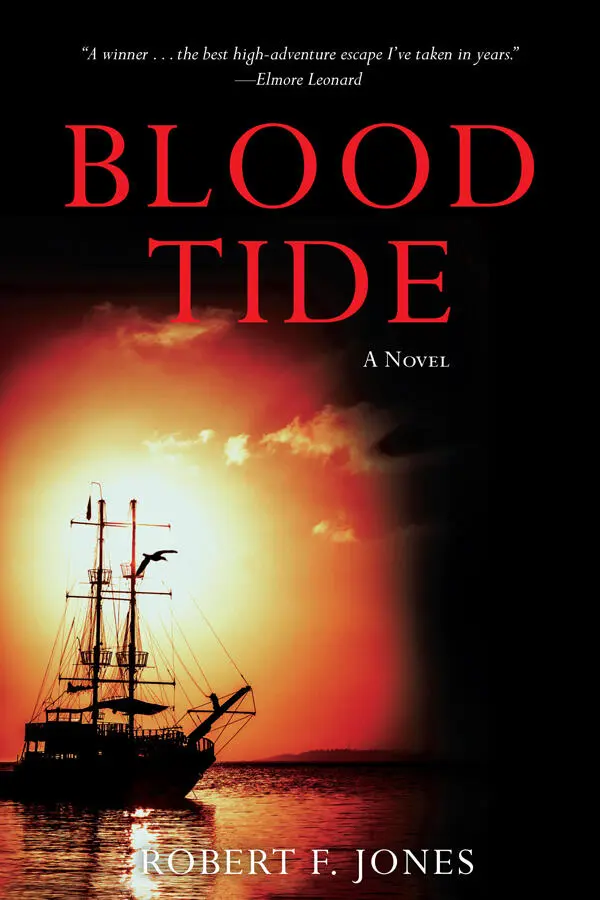
- Название:Blood Tide
- Автор:
- Жанр:
- Год:2014
- ISBN:нет данных
- Рейтинг книги:5 / 5. Голосов: 1
-
Избранное:Добавить в избранное
- Отзывы:
-
Ваша оценка:
Blood Tide: краткое содержание, описание и аннотация
Предлагаем к чтению аннотацию, описание, краткое содержание или предисловие (зависит от того, что написал сам автор книги «Blood Tide»). Если вы не нашли необходимую информацию о книге — напишите в комментариях, мы постараемся отыскать её.
Blood Tide — читать онлайн бесплатно полную книгу (весь текст) целиком
Ниже представлен текст книги, разбитый по страницам. Система сохранения места последней прочитанной страницы, позволяет с удобством читать онлайн бесплатно книгу «Blood Tide», без необходимости каждый раз заново искать на чём Вы остановились. Поставьте закладку, и сможете в любой момент перейти на страницу, на которой закончили чтение.
Интервал:
Закладка:
Culdee bounced against the brick wall and slid left, but the marine caught him with a wide flailing right that stung. Culdee tasted blood. He tied the marine up and tried to knee him in the nuts, but he swung a hip around to block it. He pounded Culdee over the heart. Culdee swung around and bounced the marine’s head against the wall, making a hollow, thumping sound, like kicking a pumpkin. The marine’s eyes went blurry. They were both breathing rough. It was raining hard now, a deluge. The pavement underfoot was slippery, glinting cold; hard lights glared from the passing cars. Culdee thought Shore Patrol. This was taking too long. He measured the marine up against the wall and hit him with a solid right that, despite tape and bandage, sent fire racing to his shoulder.
The marine went down along the wall. Culdee kicked him in the jaw. Then he took the wallet from the man’s hip pocket. It was fat with twenty-dollar bills. Enough maybe to buy a plane ride back to the mainland? Culdee riffled the bills with his thumb. His right hand was already puffing up, and his knees were shaking with adrenaline. All around and through him he could feel the singing: rain on cobbles, tires on asphalt, pulsing jukes and the song of strong drink in young blood, the silky hiss of women moving in the warm, wicked dark. Back on the mainland there was nothing but booze and bad dreams. West and south, though, far over the ocean, the song of this moment grew stronger. He took a bill from the wallet and pocketed it. Then he placed the wallet under the marine’s head, like a leather pillow. He left by the back end of the alley.
By midnight Culdee was back aboard, sitting in the stern sheets in a pool of lantern light. The rain had stopped. A bottle of Philippine Tanduay rum stood on the chart table. He was listening to the boom of the surf and soaking his right hand in a bucket of seawater. He heard Miranda’s oars creaking in the dark, the bump as the dinghy came alongside. Someone in the dinghy started handing up bags of groceries and cardboard boxes of hardware, then slung a heavy seabag after them. A man climbed up behind Miranda—a dark, wiry, frizzy-haired Filipino with a foxy face and a wry, slightly mad grin. He was wearing a cheap aloha shirt with the price tag still dangling from it and a pair of ragged bell-bottoms.
Miranda’s face jumped from Culdee to the rum bottle, then back to Culdee.
“Did a little shopping of your own?” Then she looked at the rum bottle again and saw it wasn’t opened. Her face relaxed.
“I had to see if I could do it,” Culdee said. “I could.” He pulled his hand from the bucket and showed it to her, puffed and purple.
The Filipino in the aloha shirt was Effredio, Miranda’s old pal from the PI. He’d wangled a deadhead flight to Honolulu to meet them, knowing Miranda would be shorthanded. A good shipmate, Culdee thought. And another watch stander, thank God.
“All right,” Miranda said, “let’s get this stuff stowed. I want to sail at dawn.”
Culdee slung the bottle over the side and turned to. He was on for the passage.
Part Three
LÁZARO

TWELVE
The straight-line distance across the South China Sea from My Tho in the mouth of the Mekong River to Balabac Strait in the Philippines is a little more than six hundred miles. A well-found ship encountering no hazards and averaging a speed of six knots should make the passage in just over four days. It took the Vietnamese junk Happy Life nearly six weeks, and then her troubles had barely begun. But trouble was nothing new to this voyage.
Since slipping out of the Mekong Delta on a squally moonless night in early May, the fifty-foot trading vessel had encountered one disaster after another. Her rotting cotton mainsail blew out the very first night, its battens cracked by sudden gusts that howled like sea devils from every quarter. Near Con Son Island, as the ship staggered around at the wind’s whim, crying babies and squealing pigs nearly betrayed her to a government patrol boat. Only another squall’s blinding descent saved the ship that time. But the squall exacted tribute for its mercy: three women were swept overboard with infants at their breasts, and the foremast was carried away, sail and rigging with it.
Off Investigator Shoal a month later, the junk’s worm-riddled hull touched coral. Holed in three places, she settled rapidly, increasing her draft enough to hit another coral head, which snapped the prop from her ancient French engine. Not that there was much fuel left. Half a dozen drums of diesel, bought at peril on the black market in Ho Chi Minh City, proved mostly water (salt at that) topped with a deceptive two-inch skim of oil.
But the hull had been patched, the bilges bailed—with buckets, cook pots, rice bowls, even tea cups—and the voyage continued. There were still fifty-seven persons aboard, mainly women and children and a scattering of older men—former officers and noncoms of the defeated Army of the Republic of Vietnam, a few prematurely retired businessmen from Saigon and Vung Tau, and the elderly sailor Tho Van Huong, who owned the Happy Life and served as her captain.
Most of the pigs and chickens that began the voyage had already been eaten or lost overboard in one storm or another, along with two of the three monkeys smuggled aboard as pets. The surviving monkey, a fierce, pregnant female, took refuge atop the mizzenmast, where her long, quick teeth fended off all attempts to recapture her. At night, especially in bad weather, she descended the rigging to steal food and water from the most unlikely and carefully protected places. Early one morning, before first light, Captain Tho had seen her loot a bag of sticky rice and a full gourd of nuoc mam from between the legs of the fat one-time banker, Nguyen Tran Le, then urinate on his pillow before scampering back aloft. Captain Tho had the only weapon aboard the junk, a rust-pitted American M2 carbine dating back to the days of the French, and could have shot the monkey from the rigging anytime he chose. But he admired her courage and contempt. Besides, he told himself, if I shot her as she huddled on the mizzenmast, she might fall overboard, and we wouldn’t be able to eat her. I would only have wasted a bullet—I have just twenty rounds for the carbine, and those I must save in case of pirates.
It was more than that, though. Twenty rounds would not go far against the pirates on the South China Sea—Vietnamese, Cambodge, Thai, and the even crueler Filipino mundo they were bound to encounter as they neared their destination—all armed with automatic weapons and even (he’d been warned) rapid-fire cannon. Twenty rounds would barely suffice for the suicides he planned to recommend to the men and old women in his charge in the event they were taken. Horrible as survival might be for them, with its promise of rape and slavery, the young women and children had a chance, but the old, the ugly, the male—they would surely be slaughtered. No, twenty rounds was nothing. In the end, he would not shoot the monkey simply because he had seen too much death already.
His mother, father, brothers, and most of his sisters had died at the hands of the Japanese during the Pacific war, or under the martial ministrations of French and Viet Minh soldiery in the decade before Dien Bien Phu. His own wife and two sons—mercifully, he had had no daughters—were killed later by forces as random as a napalm cannister, a Viet Cong bicycle bomb, and a U.S. Marine Corps hand grenade.
The grenade had taken his wife—and two young water buffalo grazing nearby—as she planted rice shoots one foggy morning in a paddy near Phu Loc, up the coast from Da Nang. At Captain Tho’s urging she’d gone north to the supposed safety of Da Nang, where her sister lived. Too many VC in the delta, he told her. Go north. The marines will protect you. They are the best of the My —the best of the Americans. Then one morning a truckload of drunken long-noses, red-faced and roaring with laughter, had driven past the paddy, heading up to the fighting around Hue in that bloody Tet of 1968, and one of them had thrown the grenade. The marine’s friends congratulated him on his accuracy, Captain Tho’s sister-in-law said later. She had witnessed the murder from the far side of the buffalo, which absorbed most of the fragments from the blast. Captain Tho’s wife lay dead, a bundle of black and red rags sinking into the mud—just another wasted slope, as the My would say.
Читать дальшеИнтервал:
Закладка:
Похожие книги на «Blood Tide»
Представляем Вашему вниманию похожие книги на «Blood Tide» списком для выбора. Мы отобрали схожую по названию и смыслу литературу в надежде предоставить читателям больше вариантов отыскать новые, интересные, ещё непрочитанные произведения.










Обсуждение, отзывы о книге «Blood Tide» и просто собственные мнения читателей. Оставьте ваши комментарии, напишите, что Вы думаете о произведении, его смысле или главных героях. Укажите что конкретно понравилось, а что нет, и почему Вы так считаете.