Friends (2013) - Adams, Robert
Здесь есть возможность читать онлайн «Friends (2013) - Adams, Robert» весь текст электронной книги совершенно бесплатно (целиком полную версию без сокращений). В некоторых случаях можно слушать аудио, скачать через торрент в формате fb2 и присутствует краткое содержание. Год выпуска: 2013, Жанр: Старинная литература, на русском языке. Описание произведения, (предисловие) а так же отзывы посетителей доступны на портале библиотеки ЛибКат.
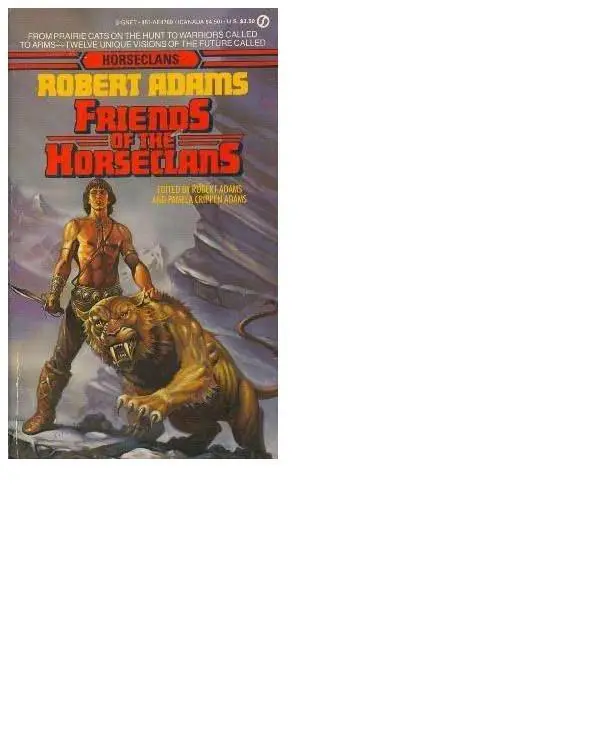
- Название:Adams, Robert
- Автор:
- Жанр:
- Год:2013
- ISBN:нет данных
- Рейтинг книги:3 / 5. Голосов: 1
-
Избранное:Добавить в избранное
- Отзывы:
-
Ваша оценка:
Adams, Robert: краткое содержание, описание и аннотация
Предлагаем к чтению аннотацию, описание, краткое содержание или предисловие (зависит от того, что написал сам автор книги «Adams, Robert»). Если вы не нашли необходимую информацию о книге — напишите в комментариях, мы постараемся отыскать её.
Adams, Robert — читать онлайн бесплатно полную книгу (весь текст) целиком
Ниже представлен текст книги, разбитый по страницам. Система сохранения места последней прочитанной страницы, позволяет с удобством читать онлайн бесплатно книгу «Adams, Robert», без необходимости каждый раз заново искать на чём Вы остановились. Поставьте закладку, и сможете в любой момент перейти на страницу, на которой закончили чтение.
Интервал:
Закладка:
The broad, verdant plain surrounding the city was the logical place for any battle. True, it was not all open ground, there were a few copses here and there, a few folds of the landscape, but none large enough or deep enough to allow for ambushes or unpleasant surprises for any save the smallest of units.
A week after the visit of Stehrghiahnos to his camp, the elderly strahteegos was apprised by a sweating, bleeding galloper that a detachment of his far-ranging lancers had made contact—violent contact—with an estimated two thousand men, mixed horse and foot, who were apparently guarding a long ~wagon train, a large herd of cattle and a smaller herd of horses and mules. The newcomers were marching west to east in the direction of Kahlkopolis.
Grinning like a winter wolf, Thoheeks Pahvlos dispatched Thoheeks Portos and a mounted force consisting of both the heavy and the medium-heavy cavalry. As an afterthought, he reinforced the units of lancers which were ambling about just beyond bowshot of the city walls, lest someone in there get the idea of riding forth to succor the obvious supply train.
A bit after nightfall, Thoheeks Portos rode into camp to report few casualties to his own force, most of the foemen dead and thfe few survivors scattered and running hard. His troopers were bringing in the wagons and the horse herd, but had left the scrawny cattle to wander at will.
At dawn, a herald was sent to the main gate of the city to summon Stehrghiahnos. When that renegade dismounted before Pahvlos’ pavilion, ranged beyond the hitching rail were a number of wooden stakes, each crowned with a livid, blood-streaked head—the sharp features and prominent, outthrust incisors which had given Ratface Billisos his name were on one of those ghastly heads, and that fact gave Stehrgiahnos the clear, indisputable message that there would be no reinforcements or resupply no matter how long his overlord waited.
Pahvlos' words were short and brusque. “Yesterday, Master Stehrghiahnos, my cavalry intercepted and extirpated the western contingent of your chief’s bandit band. We captured some two hundred head of horses and mules, considerable amounts of arms and armor and horse gear, and above fifty wagon- and wainloads of supplies, as well as so many cattle that we had to leave the most of them running loose around the site of the battle.
“You had best advise your chief that he will not now be reinforced or supplied, so he had best come to battle with me as soon as possible, before his force within the city begins to suffer and be weakened by starvation and disease. Not that Thoheeks Ahramos and 1 give a damn how many bandits and renegades starve or suffer or waste away of the pox or the bloody flux, but we want no undue suffering to befall the innocent, the noncombatants within the city.”
Screened by a long file of mounted lancers who, under orders, were raising as much dust as possible in their slow progress, Gil Djohnz and the elephant Sunshine led the way toward the assigned position. Sunshine, Tulip and Newgrass were all armored for the coming battle, but their huge, distinctively shaped bodies had for the nonce been covered with sheets of a dull-colored cloth, while the heavy, cumbersome wood-and-leather archer boxes had been dismounted and now were being borne in their wake by the teams ol archcis who would occupy them.
After the third or fourth time he slipped and stumbled on the broken, uneven footing, Gil found himself steadied and lifted easily back onto his feet by the gentle but powerful trunk of Sunshine. “You are silly to try to walk, Man-Gil,” the pachyderm mindspoke him. “Your poor little feet will be sore beyond bearing tonight. Those men yonder are astride their horses, so why do you not ride Sunshine?”
Gil sighed. Sunshine was as stubborn as any mule when she chose to be. “It is still as I have said ere this, sister mine: High as you are, if I mount you, anyone watching from the other army will know that at least one elephant is in this area, and it is our plan that they not know such until we are ready to attack them.”
“Silly!” Sunshine mindspoke. “Two-legs are surely the very silliest of creatures. Fighting is the silliest of two-leg pastimes, and Sunshine is herself silly for taking part in such silliness; she only does so because she loves you, Gil.”
At that same moment, seven huge, tawny felines were but just arrived in position to the rear of the cavalry reserve of the bandit army. They crouched within a tiny copse, their sleek bodies unmoving, their colors blending well with the dead leaves that covered the ground.
One of the prairiecats—for such they were, come south as part of the Horseclans force—meshed his mind with those of two others to gain sufficient strength for farspeak and beamed out, “We are where you said we should be. The horses cannot smell us . . . yet. But I fear the wind soon may shift . . . ?”
Strahteegos Thoheeks Pahvlos’ well-concocted plan of battle had to be severely altered. With the bandit army formed up in position, it became clear that in order to avoid having his center outflanked by the center of the enemy, he must either stretch his lines of armored pikemen to suicidal thinness or commit the unarmored pikemen of Ahzprinos—for the umpteenth time he cursed the old-fashioned, obstinate, obtuse officer and his failure to emulate the other two pike regiments.
At length, the strahteegos made what he felt to be the best of a bad situation. He extended the regiments of Hehluh and Bizahros to a depth of only six men, but then he ordered the first and second battalions of Ahzprinos’ regiment to form up two men deep immediately behind the armored regiments.
Of course, this left him damn-all reserve—one battalion of old-styleipikemen, the headquarters guard of heavy horse and a scattering of lancers—but it would have to do.
Nor was he formed up any too soon. Out from both wings of the bandit army came clattering the warcarts—barded to the fetlocks as they were, there was no way to determine just how heavily or fully the pairs of big mules were armored, only safe to assume that they were; three men stood in each jouncing, springless cart, two archers and a spearman; the man responsible for guiding the pair was mounted on the near-side mule, fully armored and bearing shield and sword or axe. The carts kept a good distance from each other lest the steel blades projecting from each wheelhub become entangled with another set or, worse, cripple a mule.
Pahvlos saw immediately that there were not enough of the armored warcarts to tempt even such an amateur as the bandit chief to send them head-on against the massed pikes and hope to get any of them back. Anyone knew that the cavalry on the wings could easily ride deadly rings around such slow, cumbersome conveyances, and that left only a couple of alternative uses for the archaic weapons: an attempt to drive between wing and center and take the pikemen on the flank or a series of passes back and forth across the front while raining the pikemen they assumed to be unarmored and shieldless with darts and arrows.
It was the latter. In staggered lines, the warcarts were drawn, clattering and bouncing, the length of the formations of pikemen, expending quantities of arrows for precious few casualties. As the first line of warcarts reached the end of that first pass and began to wheel about, however, they got an unexpected and very sharp taste of similar medicine to that they had been so lavishly dispensing. Chief Pawl Vawn of Vawn, commanding the left wing, treated the carts and mules to such an arrow storm that some quarter of the carts were unable to return to the raking of the pikelines. Nor did the carts receive any less from the Horseclansmen under Tomos Gonsalos on the right wing.
Читать дальшеИнтервал:
Закладка:
Похожие книги на «Adams, Robert»
Представляем Вашему вниманию похожие книги на «Adams, Robert» списком для выбора. Мы отобрали схожую по названию и смыслу литературу в надежде предоставить читателям больше вариантов отыскать новые, интересные, ещё непрочитанные произведения.



Обсуждение, отзывы о книге «Adams, Robert» и просто собственные мнения читателей. Оставьте ваши комментарии, напишите, что Вы думаете о произведении, его смысле или главных героях. Укажите что конкретно понравилось, а что нет, и почему Вы так считаете.