Friends (2013) - Adams, Robert
Здесь есть возможность читать онлайн «Friends (2013) - Adams, Robert» весь текст электронной книги совершенно бесплатно (целиком полную версию без сокращений). В некоторых случаях можно слушать аудио, скачать через торрент в формате fb2 и присутствует краткое содержание. Год выпуска: 2013, Жанр: Старинная литература, на русском языке. Описание произведения, (предисловие) а так же отзывы посетителей доступны на портале библиотеки ЛибКат.
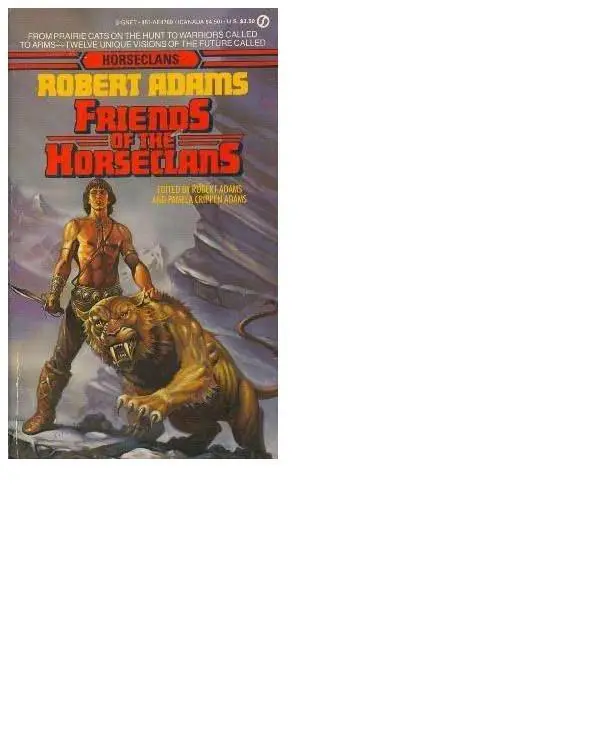
- Название:Adams, Robert
- Автор:
- Жанр:
- Год:2013
- ISBN:нет данных
- Рейтинг книги:3 / 5. Голосов: 1
-
Избранное:Добавить в избранное
- Отзывы:
-
Ваша оценка:
Adams, Robert: краткое содержание, описание и аннотация
Предлагаем к чтению аннотацию, описание, краткое содержание или предисловие (зависит от того, что написал сам автор книги «Adams, Robert»). Если вы не нашли необходимую информацию о книге — напишите в комментариях, мы постараемся отыскать её.
Adams, Robert — читать онлайн бесплатно полную книгу (весь текст) целиком
Ниже представлен текст книги, разбитый по страницам. Система сохранения места последней прочитанной страницы, позволяет с удобством читать онлайн бесплатно книгу «Adams, Robert», без необходимости каждый раз заново искать на чём Вы остановились. Поставьте закладку, и сможете в любой момент перейти на страницу, на которой закончили чтение.
Интервал:
Закладка:
Only when they’d reached the base of the plateau, and dusk was closing in, did they finally take a count of their numbers. The horses and ponies were presumed dead or run off. From a party of twenty warriors, thirty-five clanswomen, six prairiecats, and five Moon Maidens, their numbers were reduced to eight men, ten women, two cats . . . and none of the Moon Maidens. Von kept up their spirits with: “We don’t know that any be dead we didn’t see with our own eyes. Others may be lost from us, as we are lost from other clans.”
“Wouldn’t we have received mindspeak?” asked a young girl.”
“Nothing is certain,” Von insisted.
Further discussion would most certainly have involved plans to reconnoiter and set up camp. Foraging would be no problem with all the fresh food so newly descended from the plateau. Their deliberations never got anywhere, because they were ambushed!
Exhausted as they were from the arduous journey, they still had the strength to put up resistance. The nature of the enemy was so completely unexpected, however, that it delayed their response. The enemy was a short, hairy Ganik, but what was worse, he carried a weapon the likes of which none of the Horseclansmen had ever seen.
The noise from the strange weapon was frightening; in fact, they feared that the earthshaking had started again. Even more frightening were the smoke and sparks thrown by the strange weapon. None of the clansmen were harmed, however; and the idea of a Ganik deliberately shooting to miss was almost as inconceivable as his using an incomprehensible weapon in the first place. Before Von could give orders to rush the enemy, a giant of a man, almost nine feet in height, appeared from around a boulder to their right, blocking their only avenue of escape, since none wished to challenge the unknown weapon to their left.
“Don’t give hard time,” shouted the giant. “Bigboy hurt when ground shook. Back hurts. Ribs hurt. Don’t fight or Bigboy hurt you bad.” The Horseclansmen stood still, several thanking Wind that they could understand the strange language of the Ganiks. Somehow it made the bad situation a little better.
“Hey, shaggy man,” taunted Terrell. “Aren’t you afraid that your demon, Plooshun, will feed your guts to your children for sinning against him? He will strike you down for using that strange weapon!”
Von was surprised. He knew that Terrell spoke many languages, but he hadn’t realized that his young lieutenant knew so much about the Ganiks and their strange beliefs. Terrell’s words were having good effect on their first captor— the little man was sweating heavily, and cursing in his coarse dialect. However, before they could take advantage of the Ganik’s fear, the giant shouted again.
“Leave him be! Bigboy talk now,” he cried. “Come. The Judge decide what happens to you now.” The Horseclansmen still might have succeeded in rushing the enemy, despite their weakened state. Swifteye mindspoke to Von, assuring him that nothing could prevent her from tearing out the throat of whichever Ganik he assigned. Then suddenly a small army of Ganiks appeared, creeping forth from among the shadows.
Von broadbeamed a silent warning to his people: “Had they meant but to kill us, they’d have done so ere now. Wait for a better chance. We’ll bathe the ground in blood before we enter their stewpots, I promise it.” His people, more angry and frustrated than exhausted, eager to meet a tangible enemy after enduring natural disaster, agreed with their chief. They would bide their time.
So it was that Horseclansmen were introduced to the peculiar legal practices of a renegade Witchman.
The earthquake had played a game upon Noplis. Miserable over his latest performance, even obsessed with it, all the forces of nature had risen up to remove the would-be entertainer from his no doubt grateful audience. At least, it felt that way to him. If the earthquake were a bard itself, it could have done no better than to leave the singer of woeful tales with but one companion: his most severe critic, Flatear. Surely the earthquake had too blatant a sense of irony to be a first-rate artist.
“Sacred Sun is barely visible,” observed the prairiecat. A feline’s excellent night vision was of no use in a sky befouled with debris. On top of that, the big cat was continually sneezing in Noplis’ direction.
If the Witchmen were driven to learn the secrets of how mutant telepathy worked, it was something taken for granted by the Kindred, as natural a part of their daily lives as breathing or eating. Something about the earthquake was interfering with both the cat’s and the bard’s farspeak, although they could still communicate one-to-one. Was it magnetic disturbance released from the earth? Was it smoke and dust in the air? Whatever the reason, long-range telepathy was impeded in this locality.
“Last mindcall was over there,” observed the prairiecat, his good ear twitching in the direction of the wall of rock that had been vomited from the bowels of the plateau only a short distance from Noplis.
“Then we can’t follow,” moaned the bard, “and the other way lies certain death.” The wall of fire was a safe distance from them, but how much longer that would last neither dared venture a guess.
“We must find another route or perish,” said Flatear, already moving with grace and precision along the side of the new barrier. “There needs be an opening somewhere,” insisted the cat. “Help me look, two-legs.”
Well into the afternoon they searched, the inferno blazing nearer, a reminder of the urgency of their plight. There was little opportunity for the exchange of bantering words, and no breath was wasted. Search, hope, move swiftly ... or die.
It wasn’t exactly friendship that was formed by the ordeal, but there was a lessening of enmity. Treating a companion as an enemy is a luxury that danger does not allow.
The fire crept nearer, hot and hungry for them; the wall of rock remained impervious; the great eye of the sun was ever more occluded by the shroud of dust. Over and over, Noplis said a silent prayer: Let me not lose courage before this brave prairiecat. He had not even noticed that his prayer had changed from a screaming, hysterical plea of: Get me out of here!
They found a dead mountain pony. All they could salvage of his gear was a coil of rope. As Noplis worked at this task, he received a surprise. “Two-legs,” beamed Flatear, his tongue hanging from his mouth, perspiring, “if I don’t have another chance to tell you truly, I like one thing about your songs.”
“You do?” asked Noplis, a sudden weight removed from his heart.
“You pronounce names correctly.”
* * *
The Judge had been in a bad humor. Earthquakes tended to do that to him. The last occasion he had felt this way had been four hundred years earlier, during the submergence of Florida. Between his phenomenal memory and love of history, it was natural that he had made the joke: “Well, this will put a real dent in the tourist industry.” Alas, the technicians at the Center were no more likely to laugh at his humor than were the vaguely human forms that made up his new community, but at least he didn’t expect anything from the latter.
His mood was instantly lightened by glad tidings. “We’ve found Milo-men,” said a Ganik, using a term that his master had taught him.
“Splendid! At times like this, nothing is so welcome as a trial.”
The closet in which he kept his handmade vestments and favorite mirror (a floor-length one) had survived the tremors. Hurrying there, he eagerly reached out clawlike hands to fondle a moldy black robe—-yet another reason to be grateful that his olfactory senses didn’t work—and draped the garment around his bony frame. Even more absurd was the makeshift wig, once the working end of an old mop. One had to make do. Outfitted in the splendor of his office, he proceeded to court.
Читать дальшеИнтервал:
Закладка:
Похожие книги на «Adams, Robert»
Представляем Вашему вниманию похожие книги на «Adams, Robert» списком для выбора. Мы отобрали схожую по названию и смыслу литературу в надежде предоставить читателям больше вариантов отыскать новые, интересные, ещё непрочитанные произведения.



Обсуждение, отзывы о книге «Adams, Robert» и просто собственные мнения читателей. Оставьте ваши комментарии, напишите, что Вы думаете о произведении, его смысле или главных героях. Укажите что конкретно понравилось, а что нет, и почему Вы так считаете.