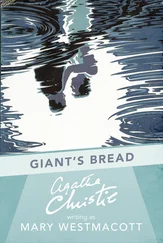
Mary Westmacott - Giant's Bread
Здесь есть возможность читать онлайн «Mary Westmacott - Giant's Bread» весь текст электронной книги совершенно бесплатно (целиком полную версию без сокращений). В некоторых случаях можно слушать аудио, скачать через торрент в формате fb2 и присутствует краткое содержание. Город: London, Год выпуска: 2013, ISBN: 2013, Издательство: HarperCollins Publishers, Жанр: Старинная литература, на английском языке. Описание произведения, (предисловие) а так же отзывы посетителей доступны на портале библиотеки ЛибКат.
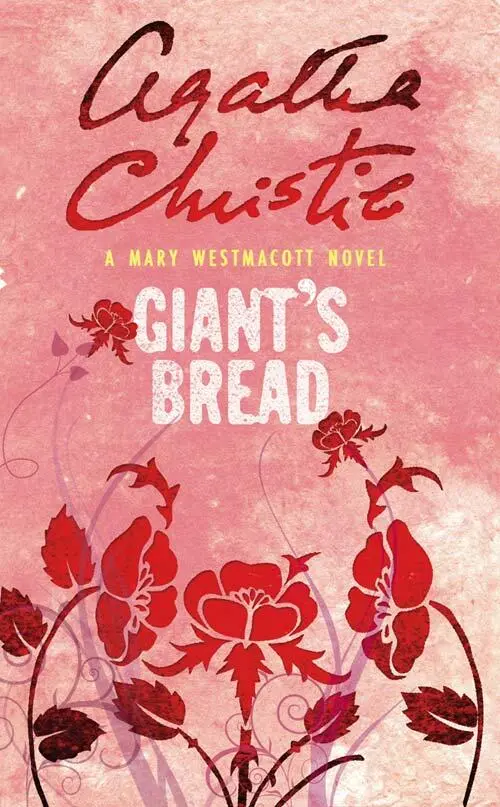
- Название:Giant's Bread
- Автор:
- Издательство:HarperCollins Publishers
- Жанр:
- Год:2013
- Город:London
- ISBN:9780007535002
- Рейтинг книги:3 / 5. Голосов: 1
-
Избранное:Добавить в избранное
- Отзывы:
-
Ваша оценка:
Giant's Bread: краткое содержание, описание и аннотация
Предлагаем к чтению аннотацию, описание, краткое содержание или предисловие (зависит от того, что написал сам автор книги «Giant's Bread»). Если вы не нашли необходимую информацию о книге — напишите в комментариях, мы постараемся отыскать её.
Giant's Bread — читать онлайн бесплатно полную книгу (весь текст) целиком
Ниже представлен текст книги, разбитый по страницам. Система сохранения места последней прочитанной страницы, позволяет с удобством читать онлайн бесплатно книгу «Giant's Bread», без необходимости каждый раз заново искать на чём Вы остановились. Поставьте закладку, и сможете в любой момент перейти на страницу, на которой закончили чтение.
Интервал:
Закладка:
Yours,
Vernon.
MOSCOW.
You’re an understanding devil, Sebastian. You don’t complain that I ought to have written you a description of samovars, the political situation and life in Russia generally. The country, of course, is in a bloody muddle. What else could it be in? But it’s jolly interesting …
Love from Jane.
Vernon.
MOSCOW.
Dear Sebastian, –
Jane was right to bring me here. Point No. 1, no one is likely to come across me here and joyously proclaim my resurrection from the dead. Point No. 2, this is about the most interesting place in the world to be from my point of view. A kind of free and easy laboratory where everyone is trying experiments of the most dangerous kind. The whole world seems concerned with Russia from a purely political point of view. Economics, starvation, morals, lack of liberty, diseased and decadent children … etc …
But amazing things are sometimes born out of vice and filth and anarchy. The whole trend of Russian thought in art is extraordinary … part of it the most utter childish drivel you ever heard – and yet wonderful gleams peeping through – like shining flesh through a beggar’s rags …
The ‘Nameless Beast’ … Collective Man … Did you ever see that plan for a monument to the Communist Revolution? The Colossus of Iron? I tell you, it stirs the imagination.
Machinery – an Age of Machinery … How the Bolsheviks worship anything to do with machinery – and how little they know about it! That’s why it’s so wonderful to them, I suppose. Imagine a real mechanic of Chicago composing a dynamic poem describing his city as ‘ built upon a screw! Electro dynamo mechanical city! Spiral shaped – on a steel disc. At every stroke of the hour turning round itself – Five thousand skyscrapers …’ Anything more alien from the spirit of America!
And yet – do you ever see a thing when you’re too close to it? It’s the people who don’t know machinery who see its soul and its meaning … The ‘Nameless Beast’ … My Beast? … I wonder …
Collective Man – forming himself in turn into a vast machine … The same herd instinct that saved the race of old coming out again in a different form …
Life’s becoming too difficult – too dangerous – for the individual. What was it Dostoevsky says in one of his books?
The flock will collect again and submit once more, and then it will be for ever, for ever. We will give them a quiet modest happiness .
Herd instinct … I wonder …
Yours,
Vernon.
MOSCOW.
I have found the other passage in Dostoevsky. I think it is the one you mean.
‘ And we alone, we who guard the mystery, we alone shall be unhappy. There will be thousands of millions of happy children and only a hundred thousand martyrs who have taken on themselves the curse of good and evil .’
You mean, and Dostoevsky meant, that there must always be individualists. It is the individualists who carry on the torch. Men welded into a vast machine must ultimately perish. For the machine is soulless and will end as scrap iron.
Men worshipped stone and built Stonehenge – and today, the men who built it have perished and are unknown and Stonehenge stands. And yet, by a paradox, the men are alive in you and me, their descendants, and Stonehenge and what it stood for, is dead. The things that die, endure, and the things that endure, perish.
It is Man that goes on for ever. (Does he? Isn’t that unwarrantable arrogance? Yet we believe it!) And so, there must be individualists behind the Machine. So Dostoevsky says and so you say. But then you’re both Russians. As an Englishman I’m more pessimistic.
Do you know what that passage from Dostoevsky reminds me of? My childhood. Mr Green’s hundred children – and Poodle, Squirrel and Tree. Representatives of the hundred thousand …
Yours,
Vernon.
MOSCOW.
Dear Sebastian, –
I suppose you’re right. I never have thought much before. It seemed to me an unprofitable exercise. In fact, I’m not sure I don’t still regard it as such.
The trouble is, you see, that I can’t ‘say it in Music’. Damn it all, why can’t I say it in Music? Music’s my job. I’m more sure of that than ever. And yet – nothing doing …
It’s Hell …
Vernon.
Dear Sebastian, –
Haven’t I mentioned Jane? What is there to say about her? She’s splendid. We both know that. Why don’t you write to her yourself?
Yours ever,
Vernon.
Dear Old Sebastian, –
Jane says you may be coming out here. I wish to God you would. I’m sorry I haven’t written for six months – I never was one of the world’s ready letter writers.
Have you seen anything of Joe? I’m glad Jane and I looked her up passing through Paris. Joe’s staunch – she’ll never split on us, and I’m glad she at anyrate knows. We never write to each other, she and I, we never have … But I wondered if you’d heard anything. I didn’t think she looked awfully fit … Poor old Joe – she’s made a mess of things …
Have you heard anything of Tatlin’s scheme for a monument to the Third International? To consist of a union of three great glass chambers connected by a system of vertical axes and spirals. By means of special machinery they were to be kept in perpetual motion but at different rates of speed.
And inside, I suppose, they’d sing hymns to a Holy Acetylene blowpipe!
Do you remember, one night, we were motoring back to town, and we took the wrong turning somewhere amongst the tram lines of Lewisham, and instead of making for the haunts of civilization we turned up somewhere among the Surrey docks, and through an opening in the frowsy houses we saw a queer kind of Cubist picture of cranes and cloudy steam and iron girders. And immediately your artistic soul bagged it for a drop scene – or whatever the technical term is.
My God, Sebastian! What a magnificent spectacle of machinery you could build up – sheer effects and lighting – and masses of humans with inhuman faces – mass – not individuals. You’ve something of the kind in mind, haven’t you?
The architect, Tatlin, said something that I think good and yet a lot of nonsense.
‘Only the rhythm of the metropolis, of factories and machines together with the organization of the masses can give the impulse to the new art …’
And he goes on to speak of the ‘monument of the machine’, the only adequate expression of the present.
You know, of course, all about the modern Russian Theatre. That’s your job. I suppose Mayerhold is as marvellous as they say he is. But can one mix up Drama and Propaganda?
All the same, it’s exciting to arrive at a theatre and be compelled at once to join a marching crowd – up and down – in strict step – till the performance begins – and the scenery – composed of rocking chairs and cannons and revolving bays and God knows what! It’s babyish – absurd – and yet one feels that baby has got hold of a dangerous and rather interesting toy that in other hands …
Your hands, Sebastian … You’re a Russian. But thank Heaven and Geography, no Propagandist – just a Showman pure and simple …
The rhythm of the metropolis – made pictorial …
My God – if I could give you the Music … It’s the Music that’s needed.
Lord – their ‘Noise Orchestras’ – their symphonies of factory sirens! There was a show at Baku in 1922 – batteries of artillery – machine-guns, choirs, naval fog horns. Ridiculous! Yes, but – if they had a composer …
Читать дальшеИнтервал:
Закладка:
Похожие книги на «Giant's Bread»
Представляем Вашему вниманию похожие книги на «Giant's Bread» списком для выбора. Мы отобрали схожую по названию и смыслу литературу в надежде предоставить читателям больше вариантов отыскать новые, интересные, ещё непрочитанные произведения.
![Fredrik Backman - Britt-Marie Was Here [Britt-Marie var här]](/books/61260/fredrik-backman-britt-marie-was-here-britt-thumb.webp)









Обсуждение, отзывы о книге «Giant's Bread» и просто собственные мнения читателей. Оставьте ваши комментарии, напишите, что Вы думаете о произведении, его смысле или главных героях. Укажите что конкретно понравилось, а что нет, и почему Вы так считаете.