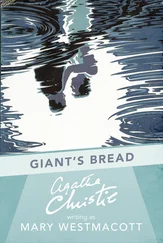
Mary Westmacott - Giant's Bread
Здесь есть возможность читать онлайн «Mary Westmacott - Giant's Bread» весь текст электронной книги совершенно бесплатно (целиком полную версию без сокращений). В некоторых случаях можно слушать аудио, скачать через торрент в формате fb2 и присутствует краткое содержание. Город: London, Год выпуска: 2013, ISBN: 2013, Издательство: HarperCollins Publishers, Жанр: Старинная литература, на английском языке. Описание произведения, (предисловие) а так же отзывы посетителей доступны на портале библиотеки ЛибКат.
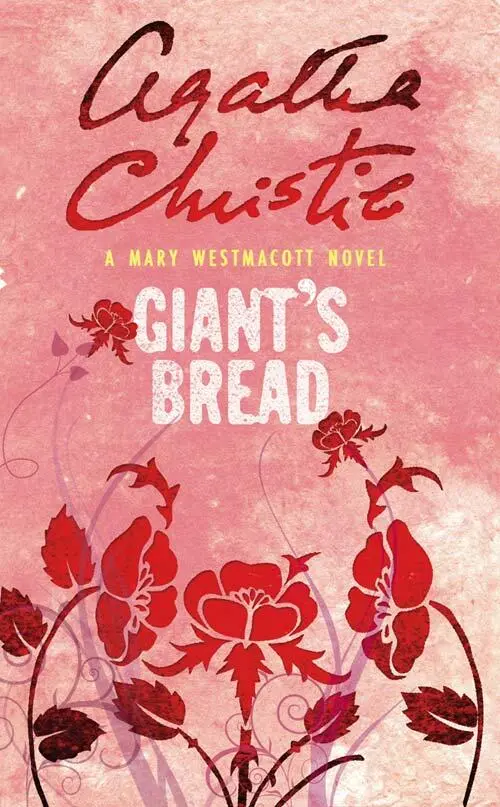
- Название:Giant's Bread
- Автор:
- Издательство:HarperCollins Publishers
- Жанр:
- Год:2013
- Город:London
- ISBN:9780007535002
- Рейтинг книги:3 / 5. Голосов: 1
-
Избранное:Добавить в избранное
- Отзывы:
-
Ваша оценка:
Giant's Bread: краткое содержание, описание и аннотация
Предлагаем к чтению аннотацию, описание, краткое содержание или предисловие (зависит от того, что написал сам автор книги «Giant's Bread»). Если вы не нашли необходимую информацию о книге — напишите в комментариях, мы постараемся отыскать её.
Giant's Bread — читать онлайн бесплатно полную книгу (весь текст) целиком
Ниже представлен текст книги, разбитый по страницам. Система сохранения места последней прочитанной страницы, позволяет с удобством читать онлайн бесплатно книгу «Giant's Bread», без необходимости каждый раз заново искать на чём Вы остановились. Поставьте закладку, и сможете в любой момент перейти на страницу, на которой закончили чтение.
Интервал:
Закладка:
There was a silence – only broken by something like a smothered sob from the other occupant of the room. Levinne turned to her.
‘Telephone to the theatre, Jane,’ he said. ‘You can’t appear tonight.’
She nodded and left the room. Levinne looked after her and then said abruptly:
‘You’ve seen Miss Harding before?’
‘Yes, sir. I drove her home today.’
Levinne sighed. Green looked at him inquiringly.
‘Is – is that all, sir? I’m sorry to have been so little use. I know I’ve been a bit – well, queer since the war. My own fault. Perhaps Mr Bleibner told you – I – I didn’t do my duty as I should have done.’
His face flushed but he brought out the words resolutely. Had the old josser told them or not? Better to say that anyway. At the same time, a pang of shame pierced him keenly. He was a deserter – a man who had run away! A rotten business.
Jane Harding came back into the room and resumed her place behind the table. She looked paler than when she had gone out, Green thought. Curious eyes she had – so deep and tragic. He wondered what she was thinking about. Perhaps she had been engaged to this Mr Deyre. No, Mr Levinne wouldn’t have urged him to speak out if that had been the case. It was probably all to do with money. A will or something like that.
Mr Levinne began questioning him again. He made no reference to the last sentence.
‘Your father was killed in the Boer War, I believe?’
‘Yes, sir.’
‘You remember him?’
‘Oh, yes, sir.’
‘What did he look like?’
Green smiled. The memory was pleasant to him.
‘A burly sort of chap. Mutton chop whiskers. Very bright blue eyes. I remember him as well as anything singing in the choir. Baritone voice he had.’
He smiled happily.
‘And he was killed in the Boer War?’
A sudden look of doubt crept into Green’s face. He seemed worried – distressed. His eyes looked pathetically across the table like a dog at fault.
‘It’s queer,’ he said. ‘I never thought of that. He’d be too old. He – and yet I’d swear – I’m sure …’
The look of distress in his eyes was so acute that the other said, ‘Never mind,’ and went on: ‘Are you married, Green?’
‘No, sir.’
The answer came with prompt assurance.
‘You seem very certain about that,’ said Mr Levinne smiling.
‘I am, sir. It leads to nothing but trouble – mixing yourself up with women.’ He stopped abruptly and said to Jane, ‘I beg your pardon.’
She smiled faintly and said: ‘It doesn’t matter.’
There was a pause. Levinne turned to her and said something so quickly that Green could not catch it. It sounded like:
‘Extraordinary likeness to Sydney Bent. Never imagined it was there.’
Then they both stared at him again.
And suddenly he was afraid – definitely childishly afraid – in the same way that he remembered being afraid of the dark when he was a baby. There was something up – that was how he put it to himself – and these two knew it. Something about him.
He leant forward – acutely apprehensive.
‘What’s the matter?’ he said sharply. ‘There’s something …’
They didn’t deny it – just continued to look at him.
And his terror grew. Why couldn’t they tell a chap? They knew something that he didn’t. Something dreadful … He said again, and this time his voice was high and shrill:
‘ What’s the matter? ’
The lady got up – he noticed in the background of his mind as it were how splendidly she moved. She was like a statue he’d seen somewhere – she came round the table and laid a hand on his shoulder. She said comfortingly and reassuringly: ‘It’s all right. You mustn’t be frightened.’
But Green’s eyes continued to question Levinne. This man knew – this man was going to tell him. What was this horrible thing that they knew and he didn’t?
‘Very odd things have happened in this war,’ began Levinne. ‘People have sometimes forgotten their own names.’
He paused significantly, but the significance was lost on Green. He said with a momentary return to cheerfulness:
‘I’m not as bad as that. I’ve never forgotten my name.’
‘But you have .’ He stopped – then went on: ‘Your real name is Vernon Deyre.’
The announcement ought to have been dramatic, but it wasn’t. The words seemed to Green simply silly. He looked amused.
‘I’m Mr Vernon Deyre? You mean I’m his double or something?’
‘I mean you are him.’
Green laughed frankly.
‘I can’t monkey about with that stuff, sir. Not even if it means a title or a fortune! Whatever the resemblance I’d be bound to be found out.’
Sebastian Levinne leant forward over the table and rapped out each word separately with emphasis:
‘You – are – Vernon – Deyre …’
Green stared. The emphasis impressed him.
‘You’re kidding me?’
Levinne slowly shook his head. Green turned suddenly to the woman who stood beside him. Her eyes, very grave and absolutely assured, met his. She said very quietly:
‘You are Vernon Deyre. We both know it.’
There was dead silence in the room. To Green, it seemed as though the whole world was spinning round. It was like a fairy story, fantastic and impossible. And yet something about these two compelled credence. He said uncertainly:
‘But – but things don’t happen like that. You couldn’t forget your own name!’
‘Evidently – since you have done so.’
‘But – but, look here, sir – I know I’m George Green. I – well – I just know it!’
He looked at them triumphantly, but slowly and remorselessly Sebastian Levinne shook his head.
‘I don’t know how that’s come about,’ he said. ‘A doctor would probably be able to tell you. But I do know this – that you are my friend, Vernon Deyre. There is no possible doubt of that.’
‘But – but, if that’s true, I ought to know it.’
He felt bewildered, horribly uncertain. A strange sickening world where you couldn’t be sure of anything. These were kindly sane people – he trusted them – what they said must be so – and yet something in him refused to be convinced. They were sorry for him – he felt that. And that frightened him. There was something more yet – something that he hadn’t been told.
‘Who is he?’ he said sharply. ‘This Vernon Deyre, I mean.’
‘You come from this part of the world. You were born and spent most of your childhood at a place called Abbots Puissants –’
Green interrupted him in astonishment.
‘Abbots Puissants? Why, I drove Mr Bleibner there yesterday. And you say it’s my old home and I never recognized it!’
He felt suddenly buoyed up and scornful. The whole thing was a pack of lies! Of course it was! He had known it all the time. These people were honest, but they were mistaken. He felt relieved – happier.
‘After that you went to live near Birmingham,’ continued Levinne. ‘You went to school at Eton and from there you went on to Cambridge. After that you went to London and studied music. You composed an opera.’
Green laughed outright.
‘There you’re quite wrong, sir. Why, I don’t know one note of music from another.’
‘The war broke out. You obtained a commission in the Yeomanry. You were married –’ he paused, but Green gave no sign, ‘and went out to France. In the spring of the following year you were reported “Killed in Action”.’
Green stared at him incredulously. What sort of a rigmarole was this? He couldn’t remember a thing about any of it.
‘There must be some mistake,’ he said confidently. ‘Mr Deyre must have been what they call my “double”.’
Читать дальшеИнтервал:
Закладка:
Похожие книги на «Giant's Bread»
Представляем Вашему вниманию похожие книги на «Giant's Bread» списком для выбора. Мы отобрали схожую по названию и смыслу литературу в надежде предоставить читателям больше вариантов отыскать новые, интересные, ещё непрочитанные произведения.
![Fredrik Backman - Britt-Marie Was Here [Britt-Marie var här]](/books/61260/fredrik-backman-britt-marie-was-here-britt-thumb.webp)





Обсуждение, отзывы о книге «Giant's Bread» и просто собственные мнения читателей. Оставьте ваши комментарии, напишите, что Вы думаете о произведении, его смысле или главных героях. Укажите что конкретно понравилось, а что нет, и почему Вы так считаете.