Mary Westmacott - Giant's Bread
Здесь есть возможность читать онлайн «Mary Westmacott - Giant's Bread» весь текст электронной книги совершенно бесплатно (целиком полную версию без сокращений). В некоторых случаях можно слушать аудио, скачать через торрент в формате fb2 и присутствует краткое содержание. Город: London, Год выпуска: 2013, ISBN: 2013, Издательство: HarperCollins Publishers, Жанр: Старинная литература, на английском языке. Описание произведения, (предисловие) а так же отзывы посетителей доступны на портале библиотеки ЛибКат.
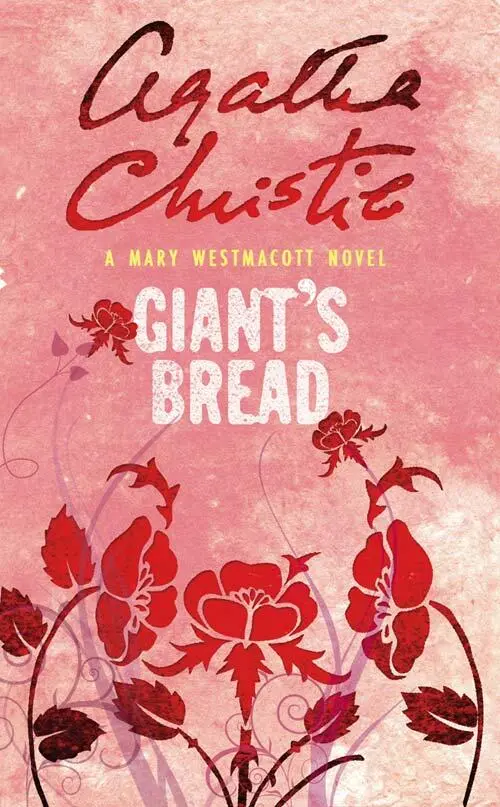
- Название:Giant's Bread
- Автор:
- Издательство:HarperCollins Publishers
- Жанр:
- Год:2013
- Город:London
- ISBN:9780007535002
- Рейтинг книги:3 / 5. Голосов: 1
-
Избранное:Добавить в избранное
- Отзывы:
-
Ваша оценка:
Giant's Bread: краткое содержание, описание и аннотация
Предлагаем к чтению аннотацию, описание, краткое содержание или предисловие (зависит от того, что написал сам автор книги «Giant's Bread»). Если вы не нашли необходимую информацию о книге — напишите в комментариях, мы постараемся отыскать её.
Giant's Bread — читать онлайн бесплатно полную книгу (весь текст) целиком
Ниже представлен текст книги, разбитый по страницам. Система сохранения места последней прочитанной страницы, позволяет с удобством читать онлайн бесплатно книгу «Giant's Bread», без необходимости каждый раз заново искать на чём Вы остановились. Поставьте закладку, и сможете в любой момент перейти на страницу, на которой закончили чтение.
Интервал:
Закладка:
‘Which of you thought of that first?’
‘I did,’ said Joe.
She felt those small jet black eyes boring into her. What a queer boy he was. His ears seemed to stick out more than ever.
‘All right,’ said the boy. ‘I’d like to.’
There was a minute’s embarrassed pause.
‘What’s your name?’ said Joe.
‘Sebastian.’
There was just the faintest lisp, so little as hardly to be noticed.
‘What a funny name. Mine’s Joe and this is Vernon. He’s at school. Do you go to school?’
‘Yes. I’m going to Eton later.’
‘So am I,’ said Vernon.
Again a faint tide of hostility rose between them. Then it ebbed away – never to return.
‘Come and see our swimming pool,’ said Sebastian. ‘It’s rather jolly.’
Chapter 8
The friendship with Sebastian Levinne prospered and throve apace. Half the zest of it lay in the secrecy that had to be adopted. Vernon’s mother would have been horrified if she had guessed at anything of the kind. The Levinnes would certainly not have been horrified – but their gratification might have led to equally dire results.
School time passed on leaden wings for poor Joe, cooped up with a daily governess, who arrived every morning, and who subtly disapproved of her outspoken and rebellious pupil. Joe only lived for the holidays. As soon as they came, she and Vernon would set off to a secret meeting-place where there was a convenient gap in a hedge. They had invented a code of whistles and many unnecessary signals. Sometimes Sebastian would be there before time – lying on the bracken – his yellow face and jutting out ears looking strangely at variance with his knickerbocker suit.
They played games, but they also talked – how they talked! Sebastian told them stories of Russia – they learnt of the persecution of Jews – of Pogroms! Sebastian himself had never been in Russia, but he had lived for years amongst other Russian Jews and his own father had narrowly escaped with his life in a Pogrom. Sometimes he would say sentences in Russian to please Vernon and Joe. It was all entrancing.
‘Everybody hates us down here,’ said Sebastian. ‘But it doesn’t matter. They won’t be able to do without us because my father is so rich. You can buy everything with money.’
He had a certain queer arrogance about him.
‘You can’t buy everything,’ objected Vernon. ‘Old Nicoll’s son has come home from the war without a leg. Money couldn’t make his leg grow again.’
‘No,’ admitted Sebastian. ‘I didn’t mean things like that. But money would get you a very good wooden leg, and the best kind of crutches.’
‘I had crutches once,’ said Vernon. ‘It was rather fun. And I had an awfully nice nurse to look after me.’
‘You see, you couldn’t have had that if you hadn’t been rich.’
Was he rich? He supposed he was. He’d never thought about it.
‘I wish I was rich,’ said Joe.
‘You can marry me when you grow up,’ said Sebastian, ‘and then you will be.’
‘It wouldn’t be nice for Joe if nobody came to see her,’ objected Vernon.
‘I wouldn’t mind that a bit,’ said Joe. ‘I wouldn’t care what Aunt Myra or anybody said. I’d marry Sebastian if I wanted to.’
‘People will come and see her then,’ said Sebastian. ‘You don’t realize. Jews are frightfully powerful. My father says people can’t do without them. That’s why Sir Charles Alington had to sell us Deerfields.’
A sudden chill came over Vernon. He felt without putting the thought into words that he was talking to a member of an enemy race. But he felt no antagonism towards Sebastian. That was over long ago. He and Sebastian were friends – somehow he was sure they always would be.
‘Money,’ said Sebastian, ‘isn’t just buying things. It’s ever so much more than that. And it isn’t only having power over people. It’s – it’s being able to get together lots of beauty.’
He made a queer un-English gesture with his hands.
‘What do you mean,’ said Vernon, ‘by get together?’
Sebastian didn’t know what he meant. The words had just come.
‘Anyway,’ said Vernon, ‘things aren’t beauty.’
‘Yes, they are. Deerfields is beautiful – but not nearly so beautiful as Abbots Puissants.’
‘When Abbots Puissants belongs to me,’ said Vernon, ‘you can come and stay there as much as ever you like. We’re always going to be friends, aren’t we? No matter what anyone says?’
‘We’re always going to be friends,’ said Sebastian.
Little by little the Levinnes made headway. The church needed a new organ – Mr Levinne presented it with one. Deerfields was thrown open on the occasion of the choir boys’ outing, and strawberries and cream provided. A large donation was given to the Primrose League. Turn where you would, you came up against the opulence and the kindness of the Levinnes.
People began to say: ‘Of course they’re impossible – but Mrs Levinne is wonderfully kind .’
And they said other things.
‘Oh, of course – Jews ! But perhaps it is absurd of one to be prejudiced. Some very good people have been Jews.’
It was rumoured that the Vicar had said: ‘Including Jesus Christ,’ in answer. But nobody really believed that. The Vicar was unmarried which was very unusual – and had odd ideas about Holy Communion – and sometimes preached very incomprehensible sermons; but nobody believed that he would have said anything really sacrilegious.
It was the Vicar who introduced Mrs Levinne to the Sewing Circle which met twice a week to provide comforts for our brave soldiers in South Africa. And meeting her twice a week there certainly made it awkward.
In the end, Lady Coomberleigh, softened by the immense donation to the Primrose League, took the plunge and called. And where Lady Coomberleigh led, everybody followed.
Not that the Levinnes were ever admitted to intimacy. But they were officially accepted, and people were heard saying:
‘She’s a very kind woman – even if she does wear impossible clothes for the country.’
But that, too, followed. Mrs Levinne was adaptable like all her race. A very short time elapsed before she appeared in even tweedier tweeds than her neighbour’s.
Joe and Vernon were solemnly bidden to tea with Sebastian Levinne.
‘We must go this once, I suppose,’ said Myra, sighing. ‘But we need never get really intimate. What a queer-looking boy he is. You won’t be rude to him, will you, Vernon, darling?’
The children solemnly made the official acquaintance of Sebastian. It amused them very much.
But the sharp-witted Joe fancied that Mrs Levinne knew more about their friendship than Aunt Myra did. Mrs Levinne wasn’t a fool. She was like Sebastian.
Walter Deyre was killed a few weeks before the war ended. His end was a gallant one. He was shot when going back to rescue a wounded comrade under heavy fire. He was awarded a posthumous VC, and the letter his colonel wrote to Myra was treasured by her as her dearest possession.
‘Never,’ wrote the colonel, ‘have I known anyone so fearless of danger. His men adored him and would have followed him anywhere. He has risked his life again and again in the gallantest way. You can indeed be proud of him.’
Myra read that letter again and again. She read it to all her friends. It wiped away the faint sting that her husband had left no last word or letter for her.
‘But being a Deyre, he wouldn’t,’ she said to herself.
Yet Walter Deyre had left a letter ‘in case I should be killed’. But it was not to Myra, and she never knew of it. She was grief-stricken, but happy. Her husband was hers in death as he had never been in life, and with her easy power of making things as she wished them to be, she began to weave a convincing romance of her wonderfully happy married life.
Читать дальшеИнтервал:
Закладка:
Похожие книги на «Giant's Bread»
Представляем Вашему вниманию похожие книги на «Giant's Bread» списком для выбора. Мы отобрали схожую по названию и смыслу литературу в надежде предоставить читателям больше вариантов отыскать новые, интересные, ещё непрочитанные произведения.
![Fredrik Backman - Britt-Marie Was Here [Britt-Marie var här]](/books/61260/fredrik-backman-britt-marie-was-here-britt-thumb.webp)







Обсуждение, отзывы о книге «Giant's Bread» и просто собственные мнения читателей. Оставьте ваши комментарии, напишите, что Вы думаете о произведении, его смысле или главных героях. Укажите что конкретно понравилось, а что нет, и почему Вы так считаете.