Julian Stockwin - Victory
Здесь есть возможность читать онлайн «Julian Stockwin - Victory» весь текст электронной книги совершенно бесплатно (целиком полную версию без сокращений). В некоторых случаях можно слушать аудио, скачать через торрент в формате fb2 и присутствует краткое содержание. Жанр: Старинная литература, на английском языке. Описание произведения, (предисловие) а так же отзывы посетителей доступны на портале библиотеки ЛибКат.
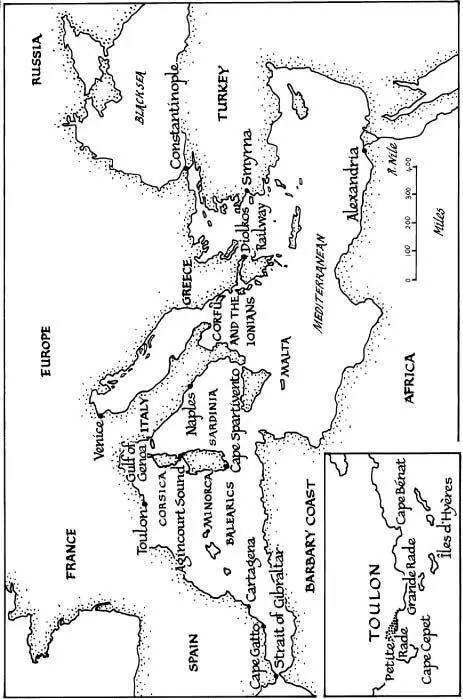
- Название:Victory
- Автор:
- Жанр:
- Год:неизвестен
- ISBN:нет данных
- Рейтинг книги:4 / 5. Голосов: 1
-
Избранное:Добавить в избранное
- Отзывы:
-
Ваша оценка:
Victory: краткое содержание, описание и аннотация
Предлагаем к чтению аннотацию, описание, краткое содержание или предисловие (зависит от того, что написал сам автор книги «Victory»). Если вы не нашли необходимую информацию о книге — напишите в комментариях, мы постараемся отыскать её.
Victory — читать онлайн бесплатно полную книгу (весь текст) целиком
Ниже представлен текст книги, разбитый по страницам. Система сохранения места последней прочитанной страницы, позволяет с удобством читать онлайн бесплатно книгу «Victory», без необходимости каждый раз заново искать на чём Вы остановились. Поставьте закладку, и сможете в любой момент перейти на страницу, на которой закончили чтение.
Интервал:
Закладка:
‘Abandoning the blockade at two chief ports – this seems a risk.’
‘Far worse, sir, to allow the French to combine.’
‘Very well. When will this intercepting come to pass, do you think?’
‘Within the week, sir.’
‘And who is the admiral you’ve chosen to stand before the French at this crucial juncture?’
‘Calder.’
The rock fortress of Gibraltar shimmered in the heat, the ships of the Mediterranean squadron at anchor in torpid tranquillity. A sultry night closed in, still without word of Villeneuve. Nelson remained ashore but no one begrudged him that: for some two years he had never stepped on to dry land and he was said to be nearing exhaustion with the nervous strain of the chase.
Another day – two, three. No word. The French did not materialise out of the bright westward haze; neither did coastal traders pass word of a great fleet somewhere in the Mediterranean. On the fourth day Victory ’s Blue Peter was hoisted. Orders came: as a last forlorn move, the squadron would sail north on a vague rumour as well as to seek out the Channel Fleet for any intelligence – and perhaps a final desperate engagement with the enemy.
In full battle array the fleet sailed up the coast of Spain, then across Biscay, and a dozen leagues off Brest Nelson’s ships fell in with the Channel Fleet of Admiral Cornwallis and all was revealed.
The new first lord of the Admiralty was Lord Barham, who apparently had a strong and decisive hand on the tiller. The invasion had not yet eventuated: England still remained staunch and ready.
And Villeneuve? Yes, the French were found. Admiral Calder and a picked fleet from the blockading squadrons had intercepted him inward-bound from the West Indies out at sea off Cape Finisterre before he was able to link up with the waiting ships-of-the-line in their harbours. An indecisive engagement had followed in near impossible conditions of fog and night.
Unnerved by the encounter, Villeneuve had run for safety to Vigo and now the situation was precisely as before: the French were still in scattered groups in ports and once more safely under British blockade. Napoleon’s plan had failed.
In profound relief and fatigued beyond measure by the years of blockade and pursuit, Nelson begged the Admiralty for release and orders quickly came out granting the request. Victory , accompanied by the worn-out Superb , was to sail immediately for Portsmouth. There, Admiral Lord Nelson would haul down his flag as commander-in-chief of the Mediterranean Squadron and at last take rest. All other vessels of Nelson’s command, however, would remain on station save the lightest of his frigates as escort.
The next morning L’Aurore led the two veteran ships into the Channel for their homeward journey after a chase of near ten thousand miles and without a single shot fired. That this was no fault of theirs was without question, but how would they be received by a frightened and demanding public in England?
Familiar coastlines came and went, a sweet sadness after a voyage that had ranged from the balmy Mediterranean to the mangroves of Trinidad with nothing to show for it at its end. In the hours of darkness they approached the Isle of Wight and in the first soft rays of morning they anchored at Spithead.
At ten the flag of St George slowly descended from the fore-mast of Victory and Kydd’s barge fell in behind that of Nelson in escort as he was rowed ashore. A sea of people lined the ancient ramparts and towers of Old Portsmouth, stretching all the way to the grassy sward of Southsea.
As he returned on board his ship, Kydd’s face was a picture of wonder. ‘It’s madness! They’ve taken Lord Nelson to their hearts and won’t let him go. He’s their god, they worship him.’ He shook his head in disbelief. ‘Nothing will do save it honours him.’
In his cabin he told Renzi about the seething crowds, the screaming women pressing forward – and the transformation it had wrought in the worn figure of their admiral. ‘It set him up at once, the old fire and ardour, topping it the hero – it’s not to m’ taste, Nicholas, but by glory, I give him joy of it.’
He frowned. ‘And now I, a simple captain, have a decision to make. Do the hands get liberty ashore or will I end with a ship and no crew?’
Without waiting for a response he made his way to the upper deck. The question had no easy answer: it was customary after a major cruise to grant liberty but would L’Aurore be paying off? If not, he was duty-bound to keep the frigate at sea readiness – but on the other hand his men had every moral reason to expect a riotous spree ashore, having been denied it after their Caribbean commission in another ship.
‘Clear lower deck – hands to muster,’ he ordered. Seamen tumbled up from below, wary looks betraying suspicion as to why they had been assembled.
Kydd advanced to the breast-rail. He took in the crowd in the waist and the petty officers along the gangways to the fo’c’sle. Then, loudly, he ordered the flanking marines to take position away behind him on the quarterdeck.
‘L’Aurores, we’ve sailed together now thrice a thousand leagues. We’ve followed Lord Nelson in a chase the like o’ which has never been seen and one to tell your grandchildren.’ He watched the impassive faces for reaction. Oaken with sea and sun, their strong and open features spoke of self-reliance in times of testing, confidence in their skills and a bond between each other – and their ship.
Kydd made his decision. ‘There’s those who’d say I’d be pixie-led to give my ship’s company liberty into that lunacy ashore – but I am! I’ve just returned on board after seeing our Lord Nelson to land and the people are crying out for their hero, because they trust in him and his tars to save them from Bonaparte.
‘We’ve unfinished business with that tyrant, the time will be soon, and I’m putting you on your honour that when Our Nel calls you’re there when he needs you.
‘Mr Howlett, liberty ashore to both watches!’
The surprised stirring among the men turned to incredulous delight. A shout went up. ‘Huzza t’ Lord Nelson! Another f’r Cap’n Kydd! An’ three times three for th’ old Billy Roarer !’
Kydd turned to Howlett and fought down a grin. ‘Now, that’s what I’d call a right oragious body o’ men.’ He left the man standing open-mouthed and went happily below.
‘Well, Nicholas, it’s done. I’m to Guildford for a few days, just to see my folk, settle their fears. It could be that Cecilia is at home. Do you like to come?’
‘No. That is, it’s inconvenient at this time, I find.’
Chapter 12
Mercifully, the wind was in the east and the Dublin packet was able to make good progress up the Thames to London. Cecilia patiently held the hand of the Marchioness of Bloomsbury who had ever been a martyr to sea-sickness; the Irish Sea had been days of misery and for her their arrival was not a moment too soon.
It was odd to be back in the capital. There was an uneasy touch of hysteria about the busy crowds, strangers and tradesmen only too ready to pass on the latest dreadful rumour and, above it all, the sense that some climactic thunderclap of history was about to burst upon them.
There was little conversation in the carriage back to the mansion; the marquess, called away suddenly by unrest in Ireland, had been delayed and would follow later while the marchioness wanted only blessed peace, a ceasing of motion.
‘Cecilia, my dear,’ she said weakly, ‘I do so crave the solace of my bed and to be alone. If you would wish to spend a few days with your family . . .’
The nervous excitement of London was disturbing and wearing, and Cecilia lost no time in taking coach to Guildford. The jolting sway of the vehicle was uncomfortable and her mood was bleak as she stared out at the passing countryside. At the front of her mind was the insistent thought that in the very near future she would have to take the decision she dreaded, for Captain Pakenham was making his intentions clear.
Читать дальшеИнтервал:
Закладка:
Похожие книги на «Victory»
Представляем Вашему вниманию похожие книги на «Victory» списком для выбора. Мы отобрали схожую по названию и смыслу литературу в надежде предоставить читателям больше вариантов отыскать новые, интересные, ещё непрочитанные произведения.





Обсуждение, отзывы о книге «Victory» и просто собственные мнения читателей. Оставьте ваши комментарии, напишите, что Вы думаете о произведении, его смысле или главных героях. Укажите что конкретно понравилось, а что нет, и почему Вы так считаете.