Thomas Perry - Vanishing Act
Здесь есть возможность читать онлайн «Thomas Perry - Vanishing Act» весь текст электронной книги совершенно бесплатно (целиком полную версию без сокращений). В некоторых случаях можно слушать аудио, скачать через торрент в формате fb2 и присутствует краткое содержание. Жанр: Старинная литература, на английском языке. Описание произведения, (предисловие) а так же отзывы посетителей доступны на портале библиотеки ЛибКат.
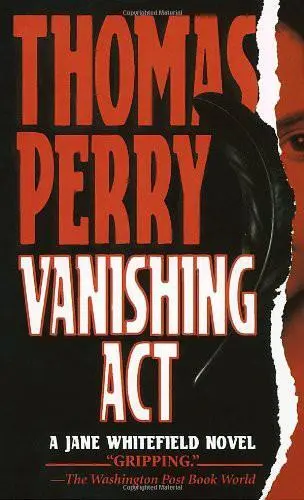
- Название:Vanishing Act
- Автор:
- Жанр:
- Год:неизвестен
- ISBN:нет данных
- Рейтинг книги:4 / 5. Голосов: 1
-
Избранное:Добавить в избранное
- Отзывы:
-
Ваша оценка:
Vanishing Act: краткое содержание, описание и аннотация
Предлагаем к чтению аннотацию, описание, краткое содержание или предисловие (зависит от того, что написал сам автор книги «Vanishing Act»). Если вы не нашли необходимую информацию о книге — напишите в комментариях, мы постараемся отыскать её.
--The New York Times
Jane Whitefield is a Native American guide who leads people out of the wilderness--not the tree-filled variety but the kind created by enemies who want you dead. She is in the one-woman business of helping the desperate disappear. Thanks to her membership in the Wolf Clan of the Seneca tribe, she can fool any pursuer, cover any trail, and then provide her clients with new identities, complete with authentic paperwork. Jane knows all the tricks, ancient and modern; in fact, she has invented several of them herself.
So she is only mildly surprised to find an intruder waiting for her when she returns home one day. An ex-cop suspected of embezzling, John Felker wants Jane to do for him what she did for his buddy Harry Kemple: make him vanish. But as Jane opens a door out of the world for Felker, she walks into a trap that will take all her heritage and cunning to escape....
"Thomas Perry keeps pulling fresh ideas and original characters out of thin air. The strong-willed heroine he introduces in Vanishing Act rates as one of his most singular creations."
--The New York Times Book Review
ONE THRILLER THAT MUST BE READ . . . . Perry has created his most complex and compelling protagonist."
--San Francisco Examiner
Vanishing Act — читать онлайн бесплатно полную книгу (весь текст) целиком
Ниже представлен текст книги, разбитый по страницам. Система сохранения места последней прочитанной страницы, позволяет с удобством читать онлайн бесплатно книгу «Vanishing Act», без необходимости каждый раз заново искать на чём Вы остановились. Поставьте закладку, и сможете в любой момент перейти на страницу, на которой закончили чтение.
Интервал:
Закладка:
"I was hoping you’d say that," said Felker. "Is there a couch or something ..."
’’There are two bedrooms. Pick one."
He hesitated. "Jane ... before I go to sleep I should say this. You saved my life maybe three times last night. I want to thank—"
"Save it," she interrupted. "We can talk later."

Jane soaked in Jimmy’s bathtub for a long time, letting the warm water soothe the muscles in her back and arms and legs. On the wall above her, presumably for Jimmy’s contemplation, was a large poster of a blond woman who for some reason had taken off all of her clothes and sat straddling a big black motorcycle. Jane viewed her critically. She wasn’t really that attractive. It was only a matter of attitude.
13
She woke up slowly, fighting off consciousness for a long time as she lay in the bed with the sun beginning to shine into the room. She had held herself in the dream, had explored it and found that it wasn’t the kind of dream with boundaries but the kind that opened out before her in every direction she looked. She finally had relinquished it, like a swimmer giving in to the need to rise to the surface for air. When she opened her eyes she felt an instant when she couldn’t remember where she was, and it was like coming up and gulping for air too soon and breathing water. She felt a sensation like drowning must be, a desperate reflex to get up and out of it.
She sat up and looked around her at Jimmy’s room to make the dream go away. Then she listened for Felker. He was moving around in the living room. That was probably all it had been: She had heard him, and her mind had acted to absorb the noise into her dream so that it could get the sleep it needed. She stood up and went to the dresser to get her leather bag, and took it into the bathroom with her.
When she was dressed in clean blue jeans and a sweatshirt, she came out and bypassed the living room to get to the kitchen. When he came in to join her, she was making coffee. She didn’t look at him as she said, "Sorry I slept so late."
"That’s okay," he said. "I just got up myself." She turned around and saw him run his hand over the thick whiskers that had grown in on his jaw. "Do you think I should grow a mustache?"
"A mustache is not a great disguise for you."
"What’s a great disguise?"
"Great? Great is like you take female hormones for a year, get a sex-change operation that’s so good that your reclusive billionaire husband never suspects that you weren’t always a woman, and neither do any of his army of security people."
"I’d better settle for good. What’s good?"
"I haven’t decided yet." She frowned. "You’re a big, muscular, hairy ex-cop. You add a mustache, it just makes you look more like what you were anyway. You’ll need something that makes you look like a different kind of person who just happens to look like you."
"This is starting to sound like Zen."
"It’s not, but it is an attitude. What we’ve got to do is think about you." She stared at him for a moment. "You know who looks most like cops?"
"Who?"
"Criminals. They walk the same and they have the same facial expressions. Criminals just have worse tattoos and better haircuts."
"Passing for a criminal doesn’t sound like a step up."
’’That was just an example," she said. "You could pass for an old soldier. Were you ever in the military?"
"Yeah. Army. I hated it."
"But you know the names of things and where the bases are and all that. If you just don’t try to pass for a soldier in an army camp, you’re okay."
"I also don’t get paid. Say I’m a retired master sergeant. How does that help?"
"It gives people a box to put you in, so they don’t have to spend any energy thinking about you. We do all the thinking ourselves now."
"But what’s the smartest thing to be?"
"Just start thinking about who you really are. I mean, what would you have done if circumstances and accidents hadn’t pushed you into all this? We can make up other circumstances to account for anything. It just has to be something you can keep being for a long, long time."
"How long? Forever?"
"Say, twenty years. I imagine you’ve noticed, but it’s amazing how few people who carry guns for a living last that long."
"I noticed," he said. Then he added, "But there’s an endless supply."
"But the replacements won’t care about you, because John Felker is dead too and you’re somebody else." She watched him for a moment. "So what do you want to be when you grow up?"
"I don’t know."
"Then keep thinking about it."
They spent the day in the kitchen, sometimes sitting across the table from each other, sometimes up and walking around the room, now and then stopping to eat something, wash dishes, or make more coffee, but always talking.
"A lot of it is premeditation," Jane said. "You think ahead so that what you do doesn’t cause somebody to ask questions you can’t answer yourself."
"Like what?"
"Apply for a job where you need a security clearance or where they give employees lie-detector tests."
’’That one I know. The first question they ask is your name, so they’ll know what it looks like when you’re not lying. What else?"
"You don’t buy a house until you can survive a credit check. You rent. You think before you do anything."
"So I live like a rat in a hole forever."
"No, just the opposite. You look for ways to be average. You don’t get a job as a dishwasher, for instance. It’s perfectly honorable, but it’s what people do who are convicts or something. It makes you as vulnerable as they are. You pick the best career you can handle. If you need references or papers, you call the number I’m going to give you. They’ll come."
"You have people writing fake references?"
"Let’s just say there are people who do it. Or fill out ten years of fake tax returns on the right obsolete forms. Whatever it takes."
"I’ve seen some forged papers in my time, but none of them were quite right."
"If you knew they were forged, then they weren’t. It’s like anything else you can buy."
"You make it sound like an industry."
"It is," she said. "I didn’t invent it; I just found it. You’re used to picking up some career criminal and seeing his papers have somebody else’s name. It’s much bigger than that."
"What do you mean?"
"Nobody has any idea how many people are living this way. There are divorced parents who take their own kids and run off, millions of illegal aliens, women hiding from some lunatic who’s stalking them, people who made a bad start and don’t have the right degree or the right discharge or good enough grades. Ones who just got fed up and wanted out. All of these people need the same things. Most of them come on paper or can be gotten by using paper. When there’s a market, somebody will get into the business. It’s a lot easier to counterfeit a driver’s license than a twenty-dollar bill, and you can get more than twenty dollars for it."
"But won’t these people know who I am and where I am?"
"That’s a problem I solve. I don’t help people who are running away from debts or paternity suits or something. I don’t use shops that laminate I.D.’s so teenagers can buy a drink. I use the very best."
"But they’re still criminals."
"So are we. The paper is the easy part. What we’ve got to work on is you."
By the time they quit, it was after midnight. The next morning when Jane came into the kitchen, he was smiling. "I think I figured it out."
"What did you figure out?" she asked. She was glad to see that he had made the coffee. She had been dreaming again, and it had left her feeling confused and irritable. The dreams were caused by anxiety, she knew, and the constant talk and concentration on every aspect of his past and future to the exclusion of everything else in the world, like air and sunshine. She poured a cup and turned to face him.
Читать дальшеИнтервал:
Закладка:
Похожие книги на «Vanishing Act»
Представляем Вашему вниманию похожие книги на «Vanishing Act» списком для выбора. Мы отобрали схожую по названию и смыслу литературу в надежде предоставить читателям больше вариантов отыскать новые, интересные, ещё непрочитанные произведения.


Обсуждение, отзывы о книге «Vanishing Act» и просто собственные мнения читателей. Оставьте ваши комментарии, напишите, что Вы думаете о произведении, его смысле или главных героях. Укажите что конкретно понравилось, а что нет, и почему Вы так считаете.