Cody McFadyen - Abandoned
Здесь есть возможность читать онлайн «Cody McFadyen - Abandoned» весь текст электронной книги совершенно бесплатно (целиком полную версию без сокращений). В некоторых случаях можно слушать аудио, скачать через торрент в формате fb2 и присутствует краткое содержание. Жанр: Старинная литература, на английском языке. Описание произведения, (предисловие) а так же отзывы посетителей доступны на портале библиотеки ЛибКат.
- Название:Abandoned
- Автор:
- Жанр:
- Год:неизвестен
- ISBN:нет данных
- Рейтинг книги:5 / 5. Голосов: 1
-
Избранное:Добавить в избранное
- Отзывы:
-
Ваша оценка:
Abandoned: краткое содержание, описание и аннотация
Предлагаем к чтению аннотацию, описание, краткое содержание или предисловие (зависит от того, что написал сам автор книги «Abandoned»). Если вы не нашли необходимую информацию о книге — напишите в комментариях, мы постараемся отыскать её.
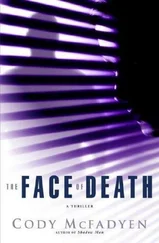
Cody McFadyen, acclaimed author of The Darker Side, The Face of Death," " and Shadow Man," "delivers this shocking new thriller that brings to light a psychopath unlike any we've ever seen--a killer who thrives in absolute darkness and doesn't derive pleasure from the kill. And only one woman has the ability to see him coming...even if it's already too late to stop her own murder.
For FBI Special Agent Smoky Barrett, the wedding of one of their own was cause for celebration. Until a woman staggered down the aisle, incoherent, emaciated, head shaved, and wearing only a white nightgown. No one knows who she is or where she's come from--or why she's chosen to appear in a church filled with law enforcement agents. Then a fingerprint check determines that the woman has been missing for nearly eight years--that once she was someone's wife, someone's mother...and a cop. Imprisoning her in a dark cell, depriving her of any contact with the outside world, her enigmatic captor was a man she didn't know and who seldom spoke, who punished her only when she failed to follow his most basic instructions designed to keep her alive. Cold, businesslike, seemingly indifferent to his victims, he's a predator with an M.O. as terrifyingly inscrutable as any Smoky has ever encountered. As she fits together the pieces of what remains of his victim's fractured life, a chilling picture emerges of a killer every bit as calculating, masterful, and professional as Smoky and the team she leads--a professional psychopath who doesn't take murder personally and never makes a mistake. There's a reason he let one of his victims go free. And by the time Smoky pierces the darkness of his twisted mind, it may cost her more than she can bear to lose to escape. For a trap snapped closed the moment she took this case too much to heart.
Abandoned — читать онлайн бесплатно полную книгу (весь текст) целиком
Ниже представлен текст книги, разбитый по страницам. Система сохранения места последней прочитанной страницы, позволяет с удобством читать онлайн бесплатно книгу «Abandoned», без необходимости каждый раз заново искать на чём Вы остановились. Поставьте закладку, и сможете в любой момент перейти на страницу, на которой закончили чтение.
Интервал:
Закладка:

“Tell me something I can use,” I say.
It’s late morning and we’re back at the office, with my team gathered around. We’ve briefed them on our interview with Douglas Hollister, on Heather, on all the rest of it.
I thought, on the way back, about Avery Hollister screaming into the thick shag of the bathroom carpet forever. I thought about Jeremy Abbott screaming like a baby for his next meal. I thought about the possibility of Dana screaming inside her own mind, beating with futile fists against the darkness.
I thought about Heather too, of course. He’d let her go, but she was still trapped. She sat in a hospital room, picking sores into her skin, surrounded by light that wasn’t real to her.
Murder is murder, and it’s always a terrible, inhuman thing, but my monsters are less concerned with that end result than they are with the elevation of suffering. It’s their successes in this regard that haunt me the most. Avery Hollister will bother me less than Jeremy Abbott ten years from now. I will not forget him, but he didn’t suffer enough to earn a place in my personal pantheon.
“I have something on the car crashes,” James says.
“Go ahead.”
“Four cars were involved in accidents. I was able to locate the accident reports on each one. Every case reported catastrophic brake failure, and all were slightly older-model vehicles, ten to fifteen years old.”
“That’s a pretty high percentage for one parking lot,” Alan says.
“It’s an impossible anomaly,” James replies. “Follow-up was done on two of the vehicles. Both were inspected under the auspices of the related insurance carriers and showed signs of deliberate tampering.”
“You think he did it?” I ask. “Why? As some kind of additional diversion?”
“I’m not ready to give my hypothesis yet. Let me finish. We told you the ViCAP search turned up three other similar crimes. Bodies dropped off in bags, suffering from catastrophic prefrontal-lobe damage. I followed up on two of those cases this morning, the one here in Los Angeles and the one in Portland. Both victims were identified, and both victims had been missing for extended periods of time.”
“That confirms his involvement,” I say. “It fits his MO.”
“Both victims in those cases were female, and both were taken at night in parking lots. One at a superstore of some kind, another from a bowling alley.” He looks up. “I did a further search and found that multiple car accidents also occurred in both locations, on the same evening of each abduction. I haven’t tracked down the data on the vehicles involved, but I’m confident we’ll find they were sabotaged as well.”
“Weird,” I say. “Not exactly a foolproof diversion. How would he know when or if those particular cars would be driven again?”
“He wouldn’t,” James says. “It’s irrational. This is a subject who apparently operates with great care and planning. The accidents are not only unreliable as a diversion, they are unnecessary. Taking the women in the parking lots is similarly risky. Why not take them at home? Illogic is a form of insanity, small or large. Why would he take this kind of risk?”
“Because he needs it,” I say. “Not professionally but personally.”
It’s the only answer that fits, and it’s a behavior we see in serial offenders all the time. Serial killers collect trophies, even though they know, if they get caught, those same trophies will assist in convicting them. They can’t help themselves. They need little Cassie’s Barbie doll (with the blood drops on it) or Grandma Barbara’s wedding ring (kept on a necklace around her neck since her husband died, until the killer ripped it off her body).
“What’s he need?” Alan asks. “Car crashes?”
“It’s called symphorophilia, dear,” Callie says. “Someone who is sexually aroused by accidents or catastrophes.”
“Seriously? That actually gets someone’s motor running?”
“It’s a factual paraphilia,” James confirms. “It’s just a hypothesis, of course, but I think it’s worth exploring. He seems to be a meticulous and careful planner in every other way. Why do something so illogical unless some personal aberration was involved?”
“Fine,” I agree. “We’ll throw it into the mix. So let’s examine this guy further. What do we know?” I count off on my fingers. “One: He’s highly organized and effective. Other than the possible—what did you call it?”
“Symphorophilia,” James says.
“Right. Other than that, he exhibits no signs of being a disorganized offender. Two: His motivations, based on Douglas’s testimony, appear to be financial.”
“Money as the motive would explain the way in which he selects his targets,” James offers. “In Hollister’s case, the perpetrator didn’t choose Heather—the husband did. There’s no evidence of any personal ties, and I doubt we’ll find any.”
“Impersonal fits with what we know so far about how he treats them too,” Alan says. “Granted, we’ve only heard from Heather, but I think we can take her at her word. The way she talked about him whipping her for punishment, it didn’t sound like he was getting off on it.”
“As the doctor said—workmanlike,” Callie says.
I nod. “That’s a good tag for this line of thinking.” I go over and write it on the whiteboard. “So, organized, methodical, everything he does he does for a purpose. That’s our current theory. The overriding purpose, for now, appears to be money. But is money just his excuse?” I shake my head. “What about keeping them in darkness and housing them for at least seven years. Is it sadistic?”
“I don’t think so,” James says. “I—” He stops, pondering. “I think that was a good word,” he murmurs, staring at the whiteboard. “Workmanlike. Maybe that’s everything to him. Pragmatism. No wasted motion. Waste is the thing you don’t forgive.” He looks at me. “Darkness enforces compliance over time by making the prisoner insane. It’s incredibly efficient. It saves on electricity, it eliminates the need for assistance from others, and it breaks down the ability to resist. Heather Hollister said that he told her to exercise daily. Why? Because he knew he needed to keep her alive. Why? Because of the possibility Douglas Hollister might renege on their agreement.” He shakes his head. “I don’t think it’s about sadism. I think it’s about maximum return on minimum effort.”
“Heather said he didn’t even bother to speak to her when he punished her,” I allow, though I’m still cautious. “He took her, whipped her, told her it would be worse the next time, and stuck her back in her room. Where’s the enjoyment in that?”
“There isn’t any,” James says. “Probably because it is a business, and she was just a commodity.”
“Maybe,” I mutter. Something else occurs to me. “Why does he need to keep them alive as insurance against the husbands? If it’s all about efficiency, isn’t killing them more efficient than all the work involved in keeping them alive?”
“I considered that,” James says. “I still think it fits. The whole point of releasing the victims, going with the financial theory, would be to punish the husbands. To draw attention back to them as suspects, similar to what just happened with Douglas Hollister. That being true, it’s a much safer hedge on his bets to keep the victims alive until he collects his money. It keeps doors of possibility open, in terms of exposure or threat of exposure, that would be permanently shut if he killed them.”
“Could make sense,” Alan agrees. “If you think about it, the usual assumption would be that the victims were already dead, right?”
Читать дальшеИнтервал:
Закладка:
Похожие книги на «Abandoned»
Представляем Вашему вниманию похожие книги на «Abandoned» списком для выбора. Мы отобрали схожую по названию и смыслу литературу в надежде предоставить читателям больше вариантов отыскать новые, интересные, ещё непрочитанные произведения.






Обсуждение, отзывы о книге «Abandoned» и просто собственные мнения читателей. Оставьте ваши комментарии, напишите, что Вы думаете о произведении, его смысле или главных героях. Укажите что конкретно понравилось, а что нет, и почему Вы так считаете.