Jonathan Dunn - The Forgotten King
Здесь есть возможность читать онлайн «Jonathan Dunn - The Forgotten King» весь текст электронной книги совершенно бесплатно (целиком полную версию без сокращений). В некоторых случаях можно слушать аудио, скачать через торрент в формате fb2 и присутствует краткое содержание. Жанр: Старинная литература, на английском языке. Описание произведения, (предисловие) а так же отзывы посетителей доступны на портале библиотеки ЛибКат.
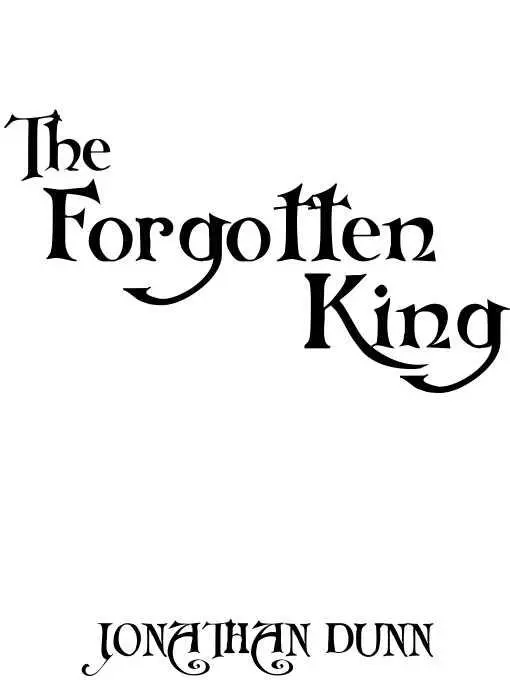
- Название:The Forgotten King
- Автор:
- Жанр:
- Год:неизвестен
- ISBN:нет данных
- Рейтинг книги:4 / 5. Голосов: 1
-
Избранное:Добавить в избранное
- Отзывы:
-
Ваша оценка:
The Forgotten King: краткое содержание, описание и аннотация
Предлагаем к чтению аннотацию, описание, краткое содержание или предисловие (зависит от того, что написал сам автор книги «The Forgotten King»). Если вы не нашли необходимую информацию о книге — напишите в комментариях, мы постараемся отыскать её.
The Forgotten King ebook is a history of the Dark Ages, of the forgotten ages that followed the fall of Rome. Civilization did not collapse with the Roman empire, however, but grew again on an island nation off the coast of Europe. It was called Atilta, a land of ancient forests and great, maritime capitals. At this time, it was at war with itself as its people fought for freedom. Yet the freedoms they desired were contradictory: some longed to overthrow their tyrannical king, others their tyrannical God. It was a fight of forest against city, and nature against civilization; of man against beast, and beast against God. But whom was the victor? For the island of Atilta is no longer to be found. Yet its history remains, embedded into the myths and legends of an exiled people. This is its story. This is the history of The Forgotten King.
The Forgotten King — читать онлайн бесплатно полную книгу (весь текст) целиком
Ниже представлен текст книги, разбитый по страницам. Система сохранения места последней прочитанной страницы, позволяет с удобством читать онлайн бесплатно книгу «The Forgotten King», без необходимости каждый раз заново искать на чём Вы остановились. Поставьте закладку, и сможете в любой момент перейти на страницу, на которой закончили чтение.
Интервал:
Закладка:
Yet the soldiers took no notice of them – they were foreign soldiers with a foreign mission. Rather, they followed de Casanova and the escaping cart. Their gallop far surpassed the wagon’s, and after a moment the fugitives came into view. They were half way down a long lane of houses that emptied into the customs house. It was a long, low rectangle with one end in the docks and one in the city.
“Vladimir,” de Casanova called out as they charged, “Take three men and circle around to the other end of the avenue. If we can trap them between us the battle will begin. So fly – fly like the anger of a prince, lest it come for you!” And Vladimir did, rushing forward at a deadly speed.
“Our horse is tiring,” de Garcia whispered to Patrick and Leggitt, who were looking back at the troop of horsemen thundering down the lane.
“Yes, and the promise of money will not motivate that poor beast,” Leggitt added, turning around and glancing at the driver. “Are you clever enough to have ten crowns?”
“Clever enough to say so,” and Patrick winked at his companions, who returned it with a laugh.
“A bad time for joking, children,” sneered the blue-eyed Lydia. Then she turned and her hazel visage said, “Yet laughter eases pain. Be glad the old man does not hear.” Indeed, the fat-eyed driver leaned forward on his bench and laid a challenge to the customs house, daring it to flee him.
Yet the horsemen were but ten yards away and quickly coming up. The row of buildings continued without a break in either direction. The customs house blocked the lane in front of them. The only escape was through the building itself or through a narrow lane to its right. But for them, neither was open.
“We are trapped!” Leggitt yelled, “They have circled around!”
Vladimir and his men charged through the narrow lane. Then they came to a stop in front of the customs house. The driver stopped the horse, having no where to turn, and de Casanova and the other soldiers formed a circle around the wagon, with de Casanova standing between the fugitives and the customs house. There were eight with de Casanova, as opposed to five in the cart, one of whom was an old man and another an unarmed woman.
“I cannot be defeated, Patrick,” and de Casanova dismounted and drew his sword, “In love or in war. Come, Lydia, return to my side.”
Lydia looked at them, her blue side facing de Casanova and her hazel Patrick. For a time she was silent, as if in deep thought, then she spoke in a hurry: “No, you are mistaken, old man. For I am already with my lover!” Blood charged into her face and its paleness retreated until it became as livid as her glowing hair. She went to Patrick’s side, holding herself with the grace of a princess, and sat down upon the hay with as much bearing as if she were a queen returning to her throne.
De Casanova was equally as livid, though from anger rather than love. “So it will be,” he whispered hoarsely, “I send you to death, my love,” and he raised his sword to carry out his threat.
But he was stopped by a solemn voice from behind him, from the steps of the customs house. “Silence, there! By whose right do you lift your sword, vagabond? By king or by tyrant? If by the first, I command you to heave away and flee to your den. But if by the second, then I command you to turn your face to me, for I dislike to strike down a man from behind!”
De Casanova spun around, as did his still-mounted soldiers. There, standing between them and the customs house, were four shrouded figures, hidden behind their dark robes. The first was over six feet tall and of equal girth. The second was only average in height, but he held himself with the strength of a king. The third was slender and curved, beautiful even when disguised. The forth was short and somewhat stocky, but he held himself with a strange courage. As they looked on, the fourth figure threw off his hood and revealed his face to those before him. Vladimir jumped back. His horse reared from the terror of its rider. Even the stolid de Casanova stepped backward, raising his drawn sword involuntarily to a defensive position. The figure only laughed.
“I am loyal, without a doubt,” it said, “But you are dead!”
Chapter 52
Sometime before this, in the Atiltian forest, there was a flurry of activity at the rebel city. In the shaded meadow beneath the four Great Goliaths, a train of wagons and carts stood waiting to enter the tunnel that led to the city above. The grass there was but ankle-high and the sun only came down through a spotlight the rebels had made, a beam that illuminated the waiting area below. The citizens of Eden with ties to the rebellion feared for their lives and property after the attack on the Castle Plantagenet, and crowded to the city for protection. There they were welcomed, but as the only entrance to the city above was a narrow underground tunnel and a steep climb, it was many days before they could all enter. In the meantime, there was a small, nomadic settlement on the meadow below the canopy.
A wide, spiraling tunnel was delved within one of the massive trees, circling around the heartwood into which the rebels never cut. From the underground tunnel that led to the base of the tree-tunnel, those entering the rebel city traveled upward two hundred feet until they reached the entrance hall that led between the tunnel and the city proper. This hall also wrapped around the center of the tree, but was wider and level. Therefore, it was easily divided into sections, through which an entering person had to pass: in all, a circle with the center filled and the rest broken into three sections that were separated by uncarved walls. These divisions were partly commercial and partly governmental. The first quadrant of the hall was a passport area, with a strong guard to prevent the entrance of spies. The second quadrant was a bazaar, with a host of merchants on hand to buy the goods of those coming in with the view of taking them above to the main market and selling them. For those without a private rope route, it was difficult to have wares hauled to the upper sections of the city. The third and largest quadrant was the stables, in which the animals were kept, for they could not walk the Treeway safely.
The third quadrant opened to the city outside, to the Treeway that connected it all together. It was a road made of sturdy planks attached to the branches. At this point it wound around the outsides of the trees in the same manner as the tree-tunnel had wound around the inside. Along this road were doors, each leading into a room delved into the tree. After the initial tunnel, the city was not connected within the trees: only the Treeway brought the rooms and structures together.
The city was entirely self-sufficient. For food, the rebels grew mellis upon the upper branches of the trees. Mellis was a plant that was found only in the forests of Atilta, for it could not be supported by the devolved climates of the mainlands. It was sweet in taste, much like the sugar cane or beet, except its taste was clearer and stronger. On the trunks of the trees they grew pomum , a rich fruit not unlike a combination of an orange and a pear, except that it had no outer peel or covering. It was purely fruit. These two foods were their favorites and were used to some extent in most of their dishes, not unlike sugar and salt in Eden. Yet their primary food was frondis . This was grown on giant nets that were stretched between the trees in a sort of horizontal terrace. The frondis , a vine similar to lettuce, was farmed by the Frondits: a lofty group, for they walked along the wooden frames to cultivate the plants.
For water, the rebels made a reservoir of the canopy above, channeling the rainwater along it until it emptied into wooden tanks for daily use. It came down like a waterfall into the tanks, where certain plants were cultivated to purify it. The water thus collected was transported throughout the city via wooden pipes, flowing downward until it finally came out into a stream on the ground below. A series of aquatic plants were grown in the stream: whatever contaminants were left in the water were quickly removed as it flowed to the ocean.
Читать дальшеИнтервал:
Закладка:
Похожие книги на «The Forgotten King»
Представляем Вашему вниманию похожие книги на «The Forgotten King» списком для выбора. Мы отобрали схожую по названию и смыслу литературу в надежде предоставить читателям больше вариантов отыскать новые, интересные, ещё непрочитанные произведения.










Обсуждение, отзывы о книге «The Forgotten King» и просто собственные мнения читателей. Оставьте ваши комментарии, напишите, что Вы думаете о произведении, его смысле или главных героях. Укажите что конкретно понравилось, а что нет, и почему Вы так считаете.